The good, the bad, and the monkey

The good, the bad, and the monkey (another update from the long-tailed macaque field research team) contributed by Elliot Capp

Over the past couple of weeks the team and I have been slowly but surely developing a list of all of the behaviours that we have seen the monkeys carry out.  This is with a view to creating an ethogram for use in our time-budget analysis and for future researchers to be able to use.  To start gaining a better insight into the behaviours that this species carries out, we had to sit and watch for hours on end, noting down anything and everything that we saw.

At the end of every day, we sat down and compared notes, and discussed what could be defined as different behaviours, and perhaps where there might be some potential overlaps in behaviour.

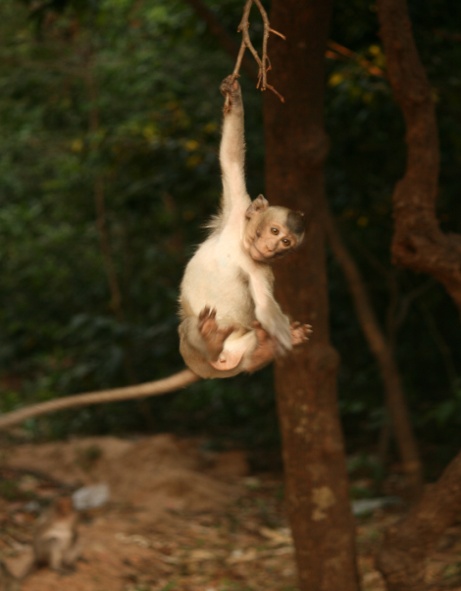
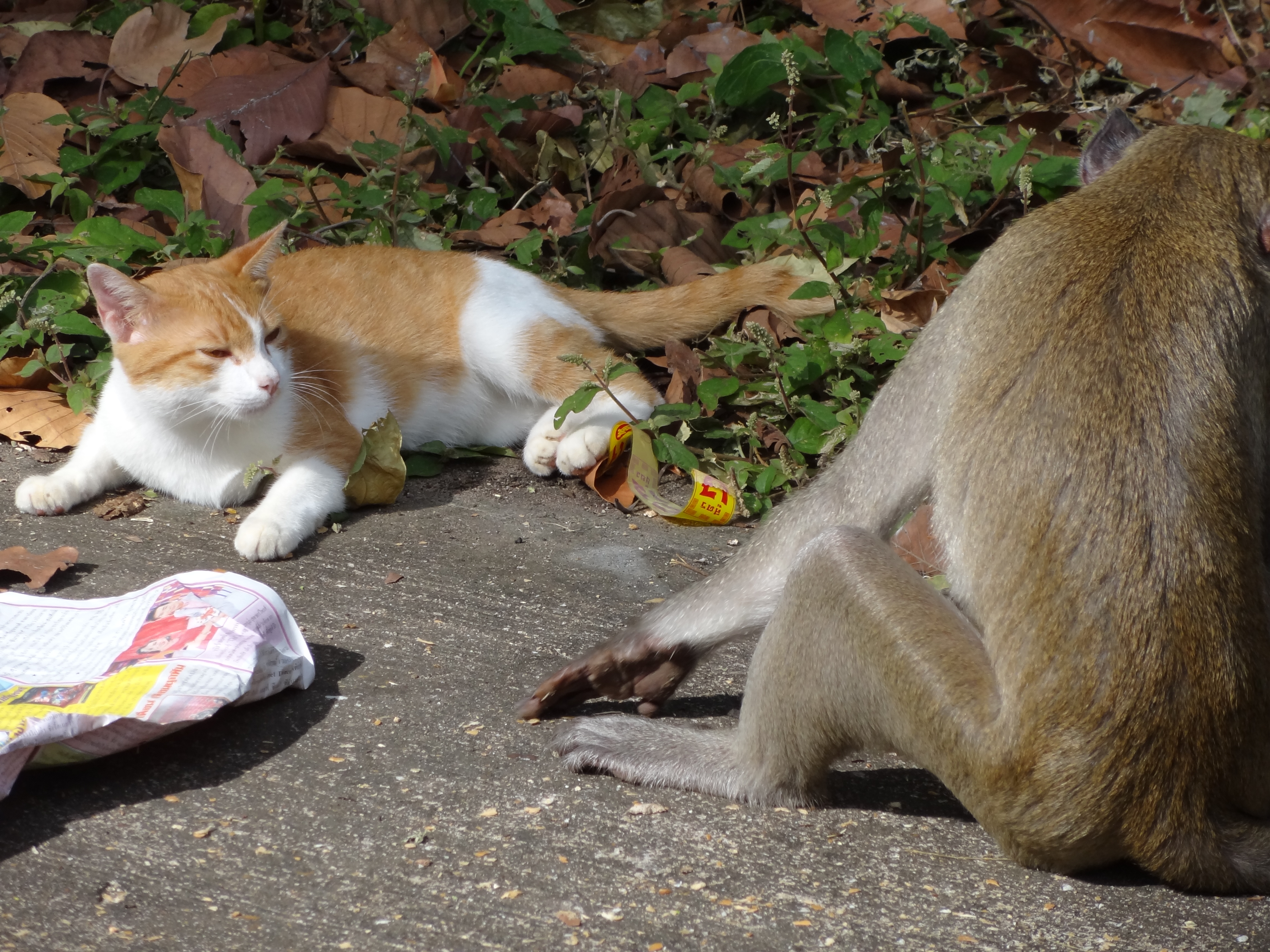
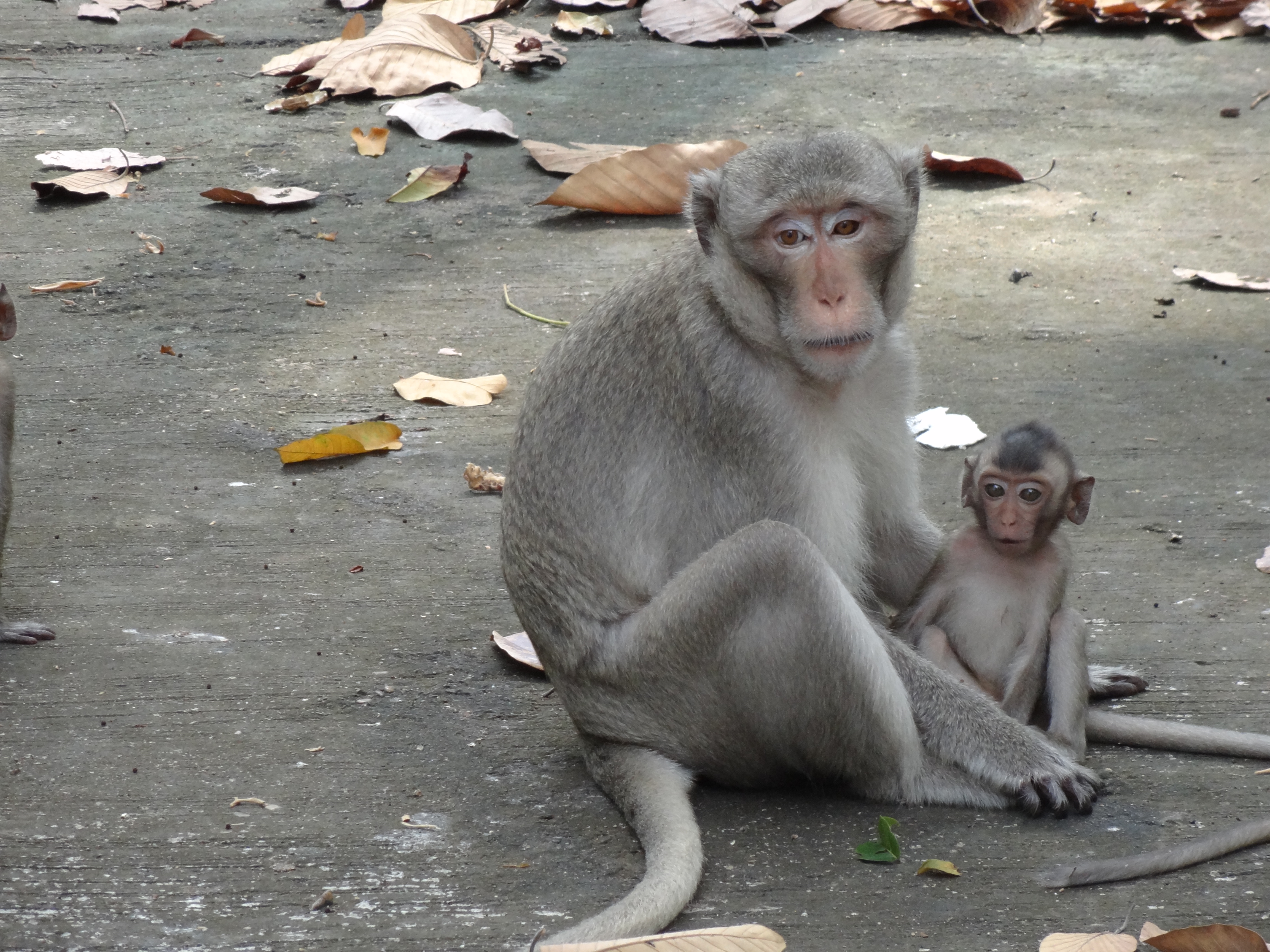
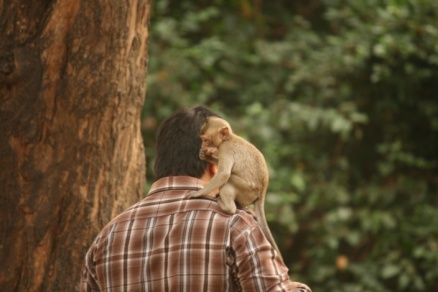
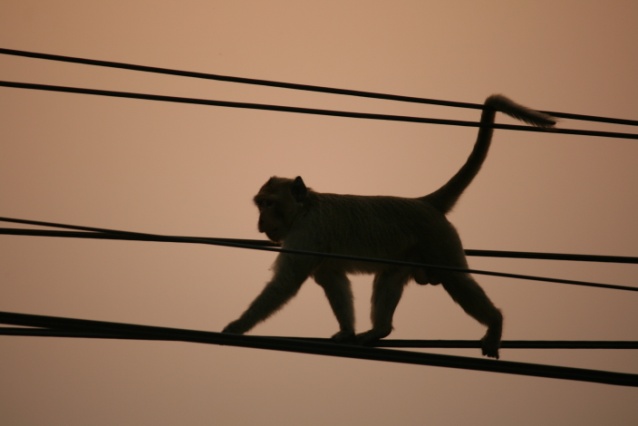
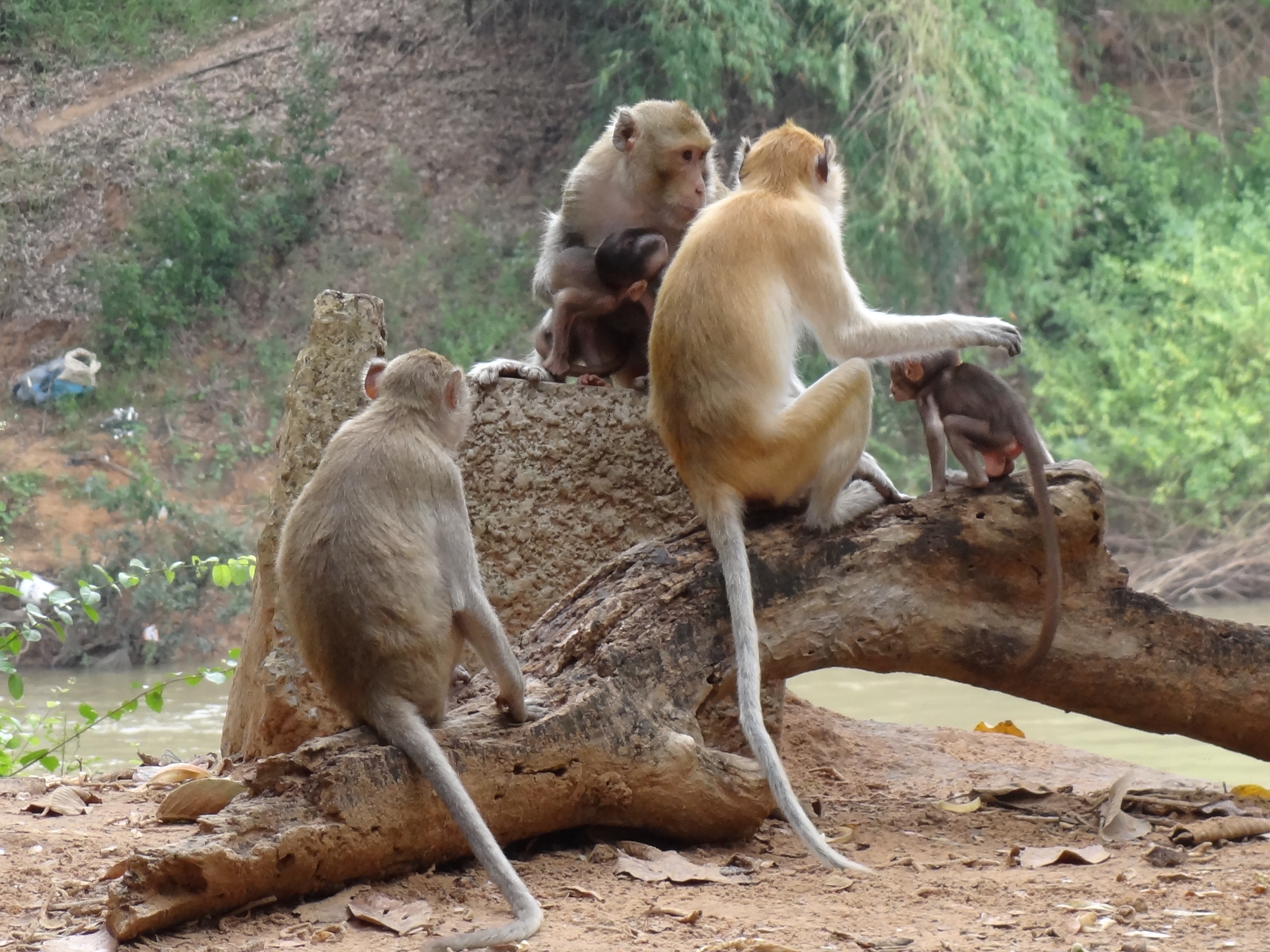
Figure 1: The king of the swingers

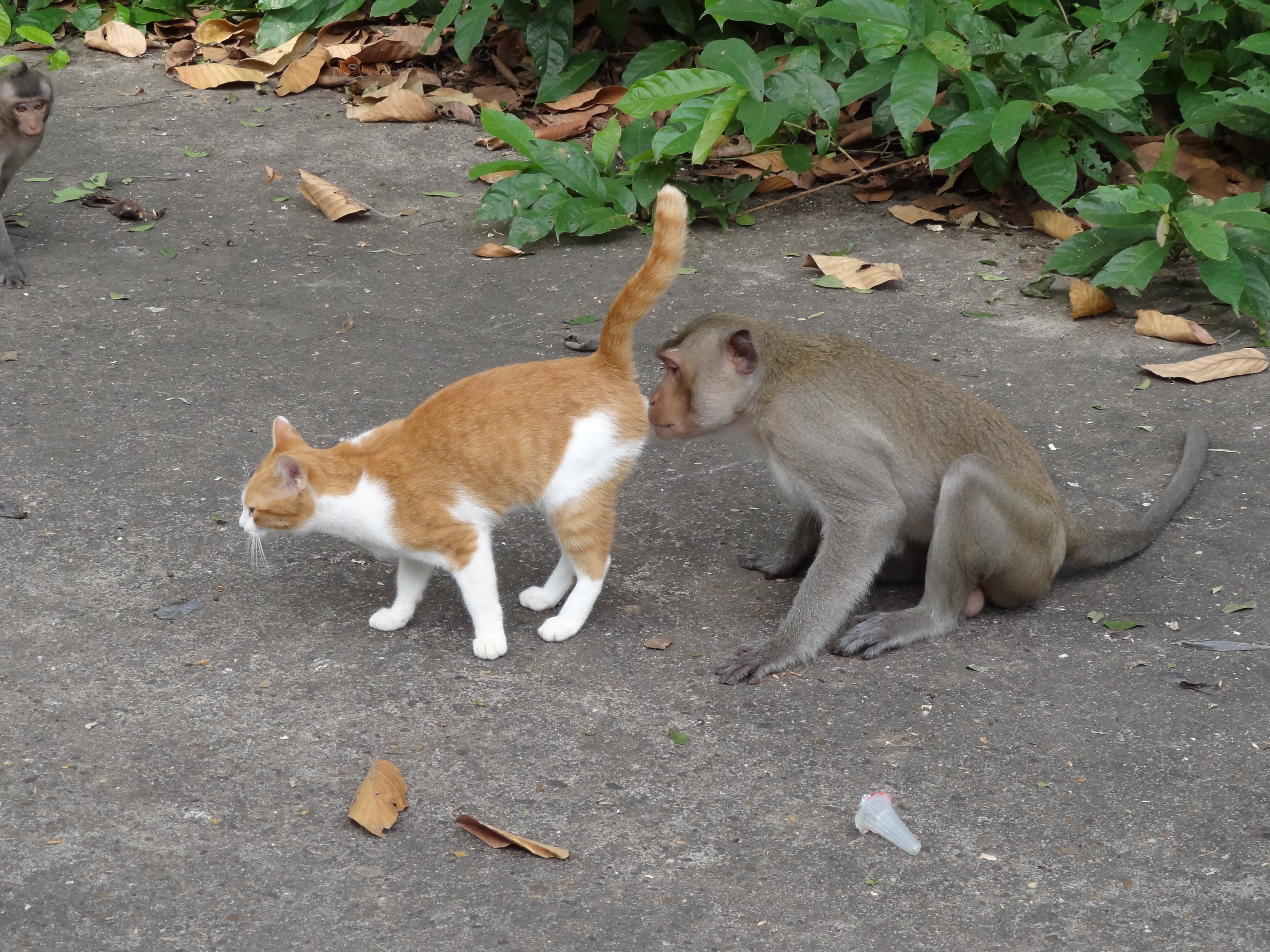
A couple of examples where our discussions about how to define certain behaviours went deep into the night were with different types of locomotion, and being able to define aggression.  What with all the differing types of movement that a monkey displays when getting about, such as walking, running, climbing, jumping, and the odd swing and cartwheel, we knew that if we had to write down every time they moved from a walk to a run to a jump, we would be constantly writing and most likely start missing behaviours in our observations.  Defining when a monkey was being aggressive was also difficult to decipher as with the younger monkeys it seemed to be a case of play, rather than an attempt to attack another individual, or warn them off.  Was this seeming aggression amongst the younger monkeys mere practicing for when they were a bit older?

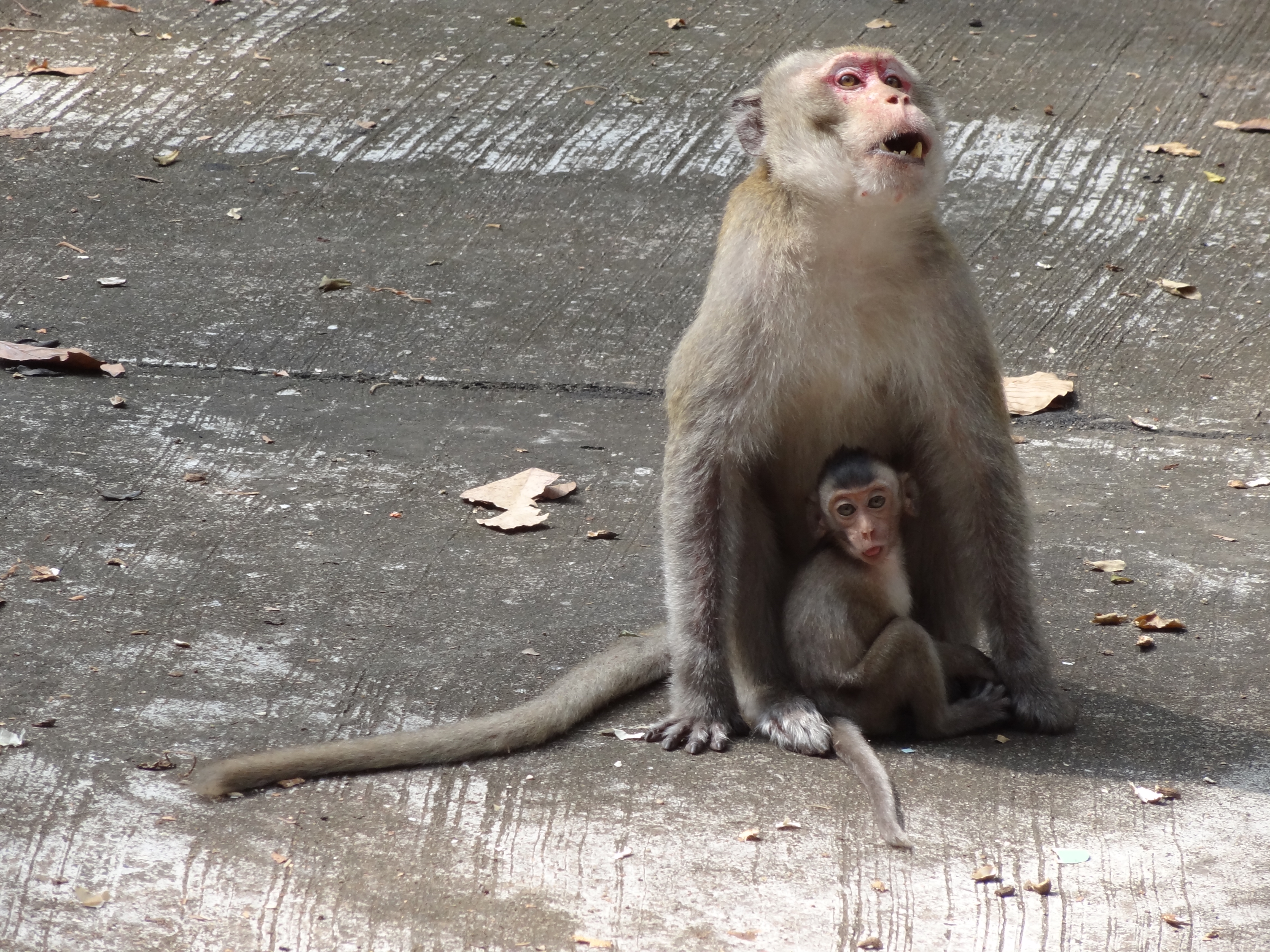
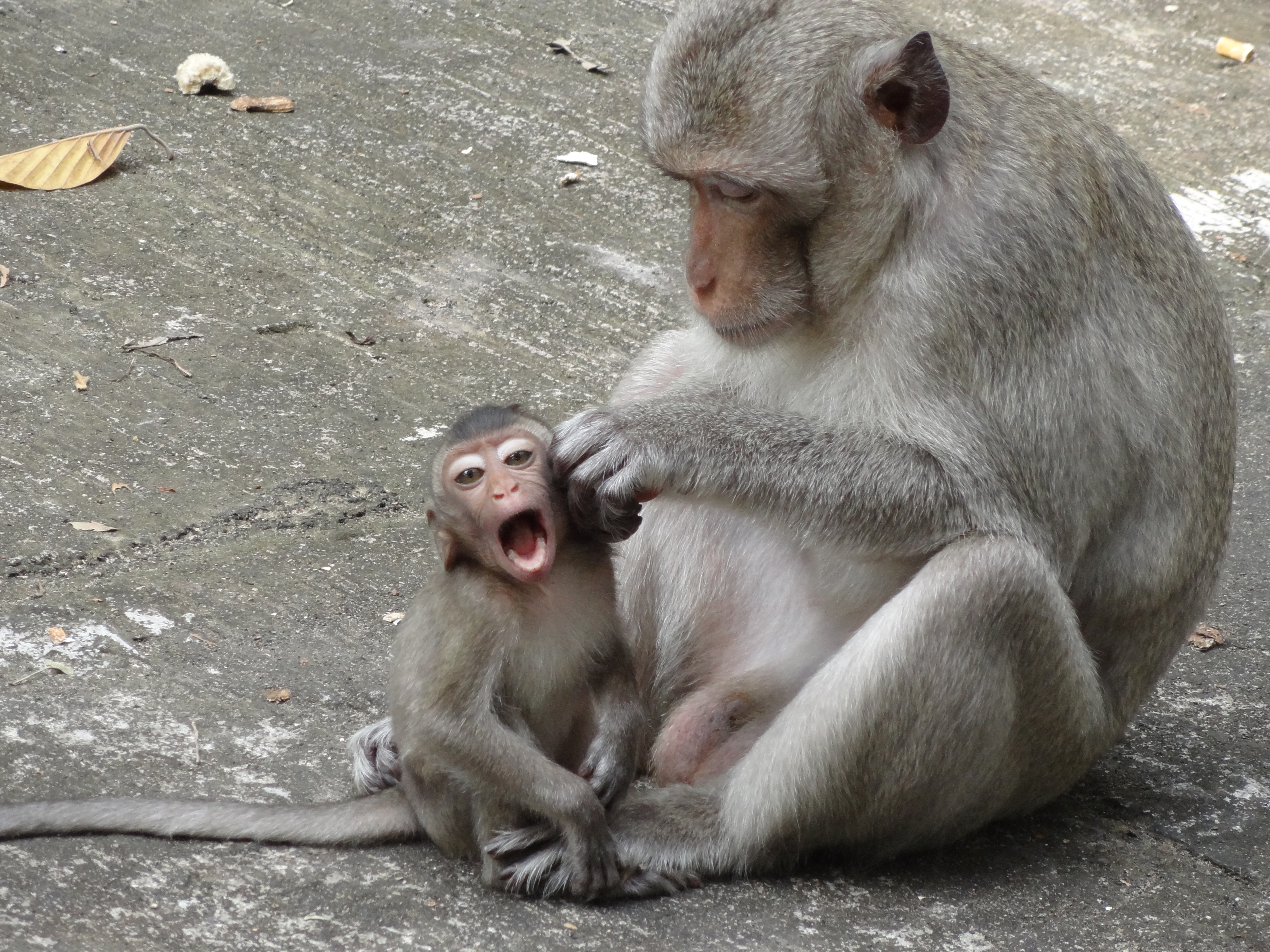
Figure 2: My, what big teeth you have

In order to create more reliable results, and an easier-to-use ethogram, we grouped all movement as locomotion, and then stated whether it occurred on the ground or up in the trees (arboreal).  When aggression occurred between younger monkeys it was defined as play, and in older individuals, it was defined as aggression.  We are aware that with more time observing the monkeys, overlaps between these will occur, and with more experience with the species we hope to be able to better define these behaviours.

In addition to writing all of the behaviours down and defining them, I have been endeavouring to photograph all of these behaviours in order to create a photographical ethogram for use by future researchers.  Some of these behaviours were a lot easier to capture than others.  For example, we knew that the monkeys could sometimes be found swimming, but this behaviour completely eluded us whilst we were there, although during the many hot days we came across some very wet looking monkeys.

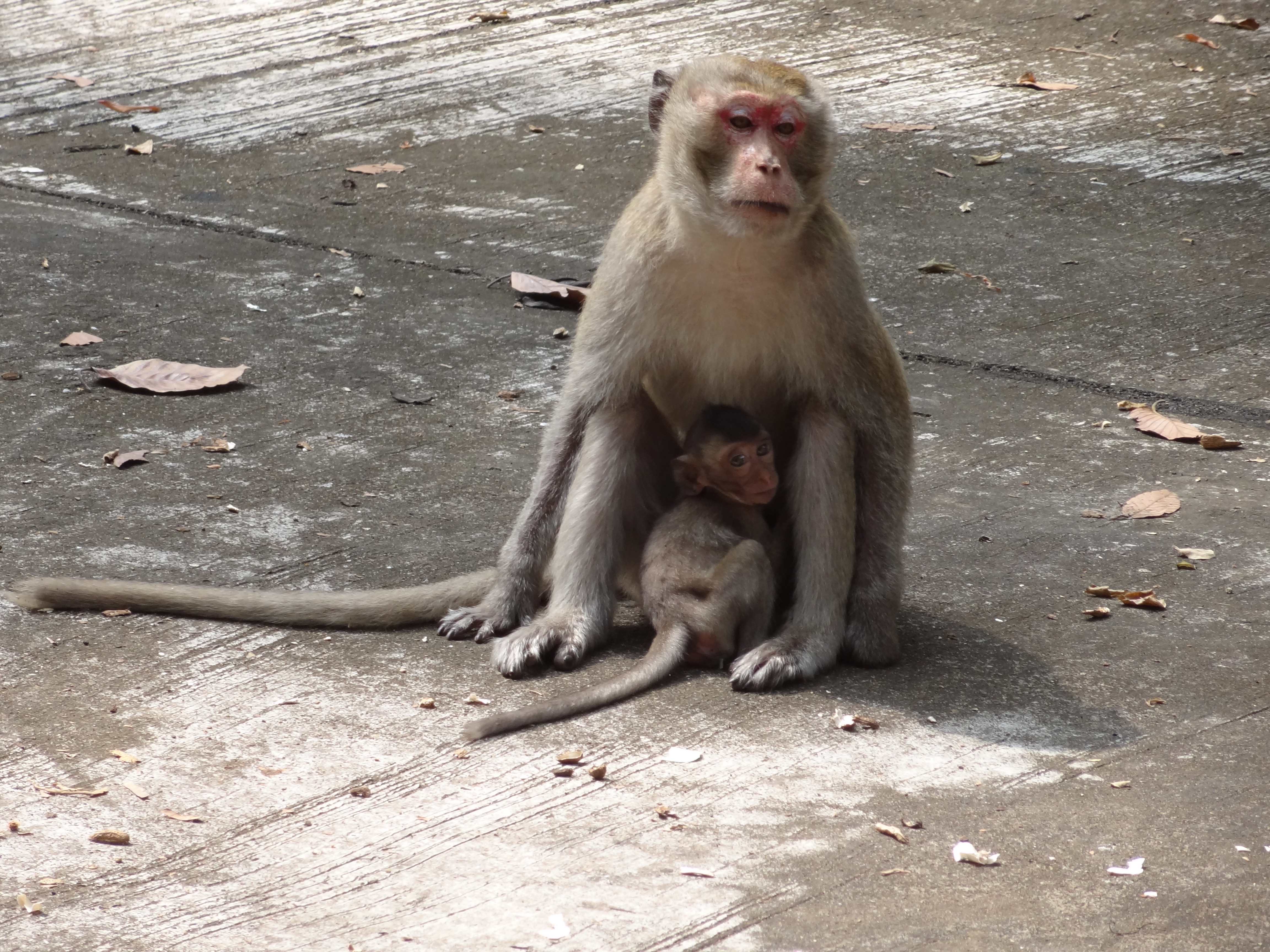
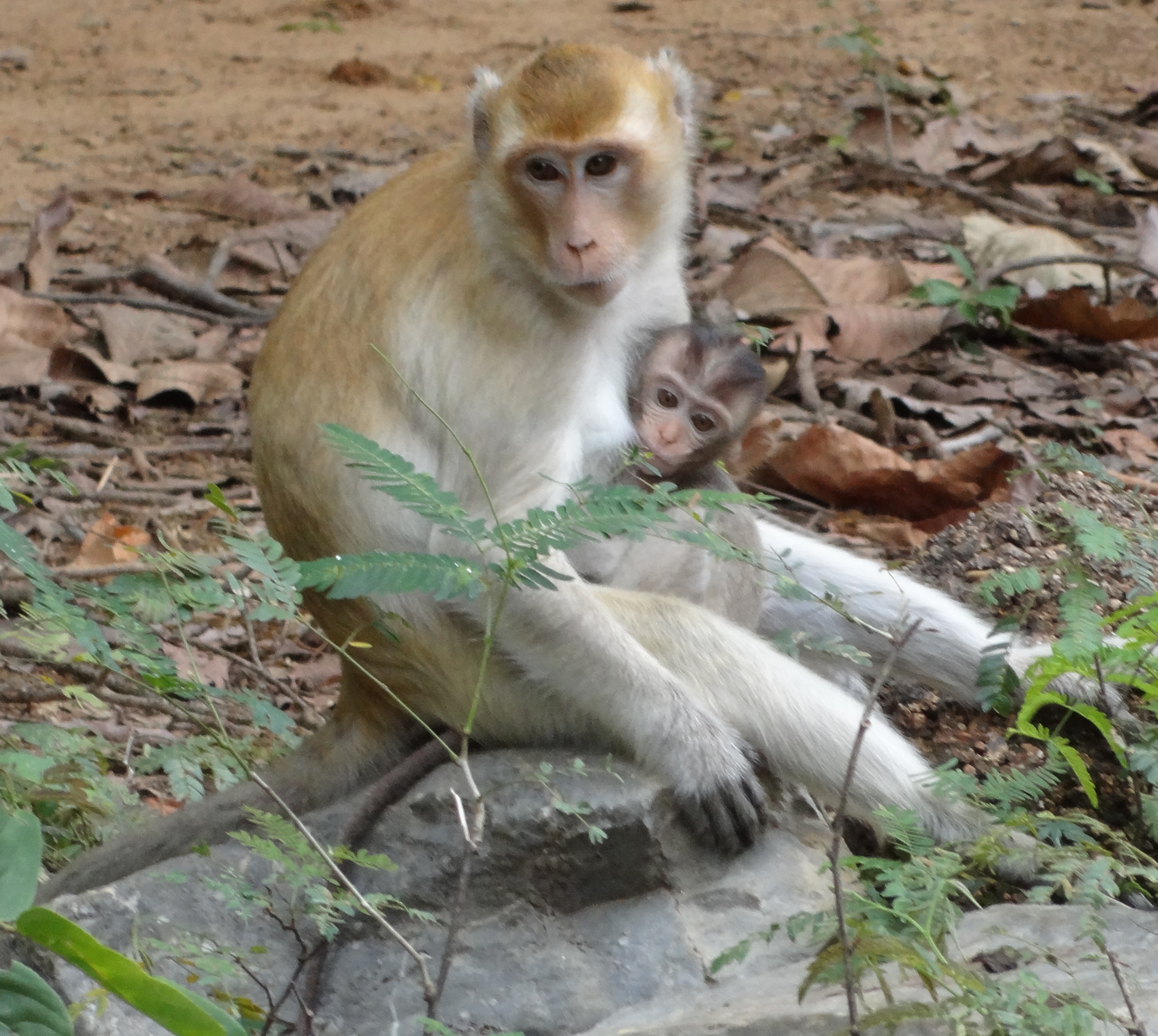
Figure 3: Female macaque defending food from male macaque

Writing this particular entry has got me thinking about all of the other problems that we have encountered during our time studying these monkeys.

The trials and tribulations associated with working with cheeky monkeys:

I couldn’t possibly go into all of the issues that are associated with working with these monkeys, but I shall try to cover the main ones.

First and foremost, the sheer amount of monkeys present in the forest (700+), although this was useful in terms of getting a greater sample size for our research, it did provide some problems with how skittish they were, and being able to keep track of the individuals that you were observing.  Great care also had to be taken not to bring any food or drink into the forest, as the monkeys were quick to spot this, which would lead to aggression directed towards us, and a bias in our research – this can be quite difficult when you are in temperatures exceeding 30°C all day.

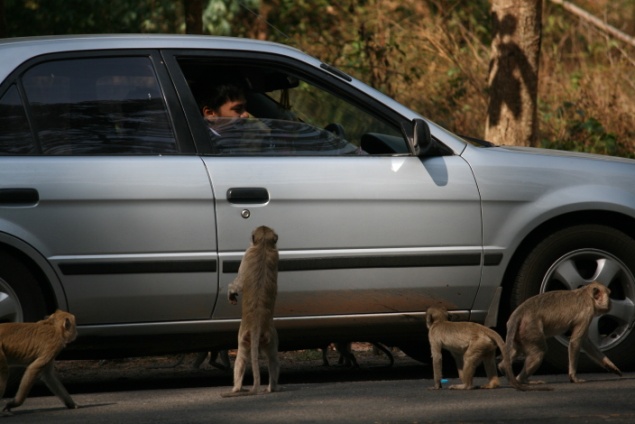
People provisioning the monkeys also tended to upset our observations somewhat.  For example, numerous times we would be observing some monkeys, then all of a sudden a car horn would sound and they would all sprint off in the hope of getting some food.  As stated earlier, the hundreds of monkeys that would run over to try and get some food would make it nigh on impossible to follow the monkeys that you were focusing on.

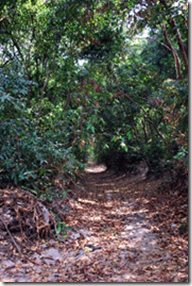
Observing the monkeys in the trees was also very difficult, so our observations when in the dense forest would be subject to ceasing suddenly as the monkey disappeared out of sight with an agile leap.

Figure 4: How many monkeys can you see? It can be very hard to spot monkeys when they go arboreal

Although there are a lot of difficulties associated with observing these monkeys, so far it has been a great learning experience, and I look forward to updating you further on how things are going in the near future.

Posted in Long-tailed Macaques, Macaques, monkey forest, Monkeys, Research | Tagged , , , , | Leave a comment

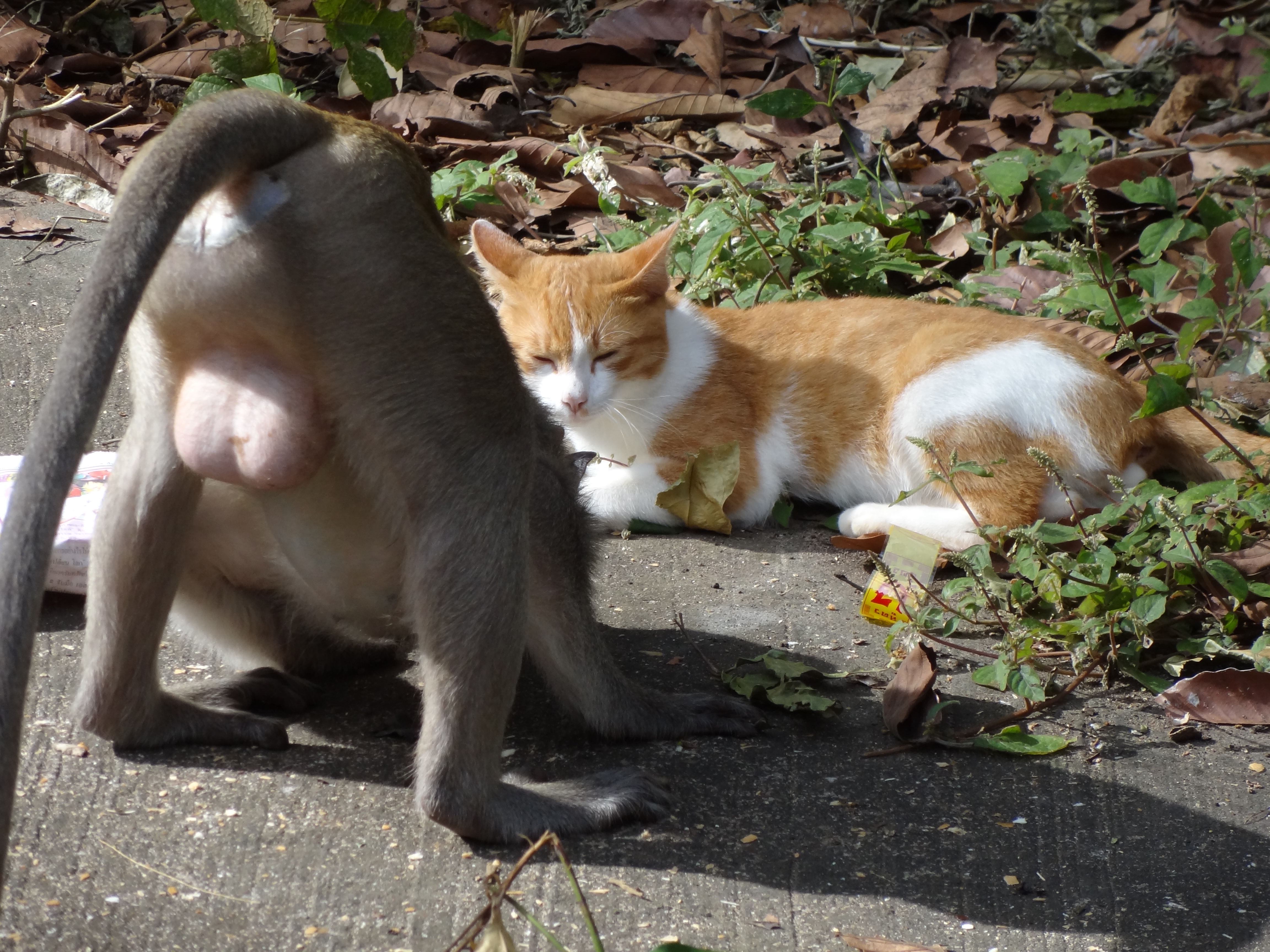
I just met a girl …

A beautiful friendship? Just the pictures (taken this morning) and the captions will tell this romantic tale.

Cats love to be stroked — who doesn’t?

… there’s something she is not seeing…

.. but she has now …

… and she’s off out of here!

Didn’t we meet just now?

Just want to get to know you better.

That’s better!

Are you OK?

I’ll be your friend.

My new friends! (Or are they family?)

Posted in Long-tailed Macaques, Macaca Fascicularis, Macaques, monkey forest, Monkeys | Tagged , , , , , | Leave a comment

Orphan macaque seeks foster parent

I watched an infant long-tailed macaque in Don Chao Poo Forest recently behaving  in a way that I had not seen before. When you look at the first few photos I took you may not notice anything strange. I didn’t.

The infant is seeking shelter and finding it. Both monkeys seem very comfortable with the situation.

However, after a few minutes, the adult monkey got up and walked away. The infant sought out another adult and the two of them stayed together for some time.

Again, the adult got up after a while and walked away and this time the infant
went along too. Look closely and you can see from the next  photo what was unusual about this encounter (and the same was true for the first, though I don’t have the photographic evidence for this).

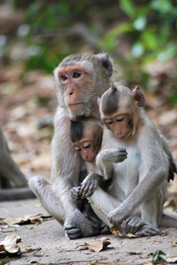
This infant had been taken care of by two adult males. There were two things unusual in my experience about this. Firstly, at least one of these males obviously could not have been the father. And secondly, there was no sign of a female looking out for the infant, or being protective of it, or being aggressive towards either of the males. I could only assume that this infant had lost its mother or been abandoned by her.

Posted in Long-tailed Macaques, Macaca Fascicularis, Macaques, monkey forest, Monkeys | Tagged , , , , , , | Leave a comment

Hear monkey, see monkey, count monkey (an update from the field):

Contributed by Elliott Capp

Here is a brief update about what the long-tailed macaque (Macaca fascicularis) research team in Phana (north-east Thailand) have been up to over the first month of their research project:

After being slightly overwhelmed upon our arrival by the sheer number of monkeys that were resident in the small forest, we decided the first course of action was to determine just how many there were and carry out a population census.  But how do you get an accurate representation of a species that spends a lot of its time in the trees? – We needed a plan! After a few days of general observations of the monkeys we noticed that when they were provisioned with rice by the local council twice a week, they all sat neatly in a line whilst feeding – this was to provide us a large proportion of the population.

Figure 1: Macaque eating provisioned corn

We carried out our population censuses at 7am, just after the monkeys had got up to try and ensure the least amount of disturbance as possible from members of the public provisioning the monkeys, and so that they would be at their hungriest and most tempted by the rice.  We informed the council how we would like the rice to be distributed to try and encourage as many long-tailed macaques to the ground. We carried out four counts, with 6 people counting in different areas of the forest to prevent overlap, to get a more reliable representation, and we were once again taken slightly aback when we tallied up the numbers and there were over 700 monkeys, with a massive female sex bias, present in this small woodland (48 acres).

Figure 2: Juvenile Long-Tailed Macaque

When we were not counting the monkeys, we were mapping the forest and carrying out phase one habitat surveys.  The forest map allowed us to plot where the monkeys were spending their time, and through random sampling we were able to gain a better understanding of the pattern of movements of the monkeys through the forest throughout the day.

Figure 3: Counting 700 monkeys up trees would prove difficult

To map the forest we used a combination of GPS, measuring tapes, and Google maps.  The phase 1 habitat survey was carried out using adapted Phase 1 Habitat Survey Procedure (JNCC, 2010).  We gridded the forest into 25 equal areas and then used this to gain a greater understanding of where they were. To find out where the monkeys were during the day, over a period of 2 weeks, we used a random number generator to select a part of the forest, we then spent ten minutes in these areas establishing if long-tailed macaques were present, and if so, how many, and of what age and sex they were.

Figure 4: Feeding time at the forest

So what’s the next step? –  Over the next few weeks we want to gain a greater comprehension of what the monkeys spend their time doing.  To do this we are going to create an ethogram of the behaviours that they carry out, through ad libitum sampling, and then perform continuous focal sampling on them to see which behaviours they are using, in order to be able to compare macaques of different sex and age.

Figure 5: Monkeys patiently waiting to be counted

As a side project I am trying to carry out a butterfly biodiversity study, so I will let you know the trials and tribulations that are associated with the task!fers

NB This post refers to research carried out in Phana January – April 2012.

Posted in Long-tailed Macaques, Macaca Fascicularis, Macaques, monkey forest, Monkeys, Research, wildlife photography | Tagged , , , , , , , | Leave a comment

Getting the monkey off your back

Getting the monkey off your back (An introduction to the research to be carried out in Don Chao Poo Forest, Thailand)

 Post submitted by Elliot Capp MSc, Exeter University

This post, the first of a series, relates to research carried out at Don Chao Poo Forest, Phana, between January and April 2012.

When habitat destruction occurs, there is bound to be an increase in interactions between humans and other species.  A species that seems to thrive in fragmented habitats is the long-tailed macaque Macaca fascicularis).  This species of monkey is often found at tourist attractions, and can be quite aggressive in its pursuit of food, or getting things of interest from people.  These aggressive interactions can be caused by habituation of the monkeys to humans due to provisioning. When humans and other species clash there can be detrimental effects, such as the spread of disease (zoonosis), injuries, and loss of crops.

Figure 1: Juvenile being provisioned

When my colleagues and I (four researchers who have recently completed our master’s  degrees in animal behaviour at the University of Exeter) were invited to the north-east region of Thailand to carry out some research on a population of previously unstudied long-tailed macaques, as well as aiding in the set-up of a research centre, we jumped at the chance. The population was in a sacred forest (Don Chao Poo Forest), in the Phana district of Amnat Charoen Province.  This population is unique in some ways as although the monkeys were habituated to humans, it was rare to have adverse interactions.  In recent times the monkeys had been seen to be moving into town more frequently on the hunt for food, and they had been reported to be stealing from local shops.

Figure 2: Male macaque on his way back from town

One of the aims of the project is to carry out research that could be used to aid the creation of action plans to prevent undesirable exchanges occurring in the future. We are hoping that with a greater comprehension of where the monkeys were going, what they were doing, and of the interactions that they were having with people we would be able to contribute to not only the creation of a new research centre, but to the maintenance of a non-aggressive population of long-tailed macaques that the villagers could learn from and gain a greater respect for.  We are eager to change the attitudes of some people that see this species as a pest, through education via the new research centre that is being launched.

Figure 3: Macaques in the road begging for food

Now that we have arrived in Thailand and spent some time getting to know the place and the monkeys, we have set ourselves a number of targets that we hope to achieve during our time here. We hope to be able to complete the following: Population census; mapping the forest; phase 1 habitat survey; butterfly biodiversity study; ad-libitum sampling to create a comprehensive ethogram and a basic ethogram for the usage of by future researchers; time budget analysis; nearest neighbour analysis.

Figure 4: The monkeys have been known to damage vehicles

Our first tasks will be to get used to the forest and the monkeys, to find out how many monkeys there are, where they tend to spend their time and what sort of groups they are in.  Once we have established when they get up and go to sleep and where, we will be able to establish an effective timetable for carrying out our research.

Over the next three months I am hoping to be able to keep you updated on our progress in the field, how successfully our research is going, anything exciting we might stumble upon, and any problems that we might encounter along the way.

Posted in Amnat Charoen Province, Macaca Fascicularis, Macaques, monkey forest, Monkeys, Research | Tagged , , , , , , , | 1 Comment

Long-tailed macaques at Kosamphi Forest Park

The long-tailed macaques at Kosamphi Forest Park in Mahasarakham Province are the nearest troop to Phana as far as I know. They are also the troop living furthest north in Thailand.

The monkeys at Kosamphi were strikingly different from the monkeys in Don Chao Poo in two ways. Firstly, a significant minority of them were golden in pelage colour. Take a look at these>

Long-tailed macaque at Kosamphi Forest Park, Thailand

The second difference which was immediately apparent was that the preferred way of carrying infants was on the back. Not all the infants were particularly adept at this, but they tried.

In Don Chao Poo, infants are customarily carried beneath the mother, even when they get to the age of the ones you see here. We did not see a single instance of am infant carried beneath its mother in the time we were in Kosamphi Forest Park. It suggests that imitation may be more powerful than instinct, doesn’t it?

I will leave you with a very beautiful female. She has her eye on you!

Female ‘golden’ long-tailed macaque

Posted in Long-tailed Macaques, Macaca Fascicularis, Macaques, monkey forest, Monkeys | Tagged , , , | Leave a comment

Initial Assessment of Don Chao Poo

Initial Assessment of Don Chao Poo,

Amphur Phana, Amnat Charoen Province, Thailand

Phana Monkey Project

Researchers:

E. Capp, R.L. Cope, C. O’Brien & R.J.Southon

1.1 Introduction

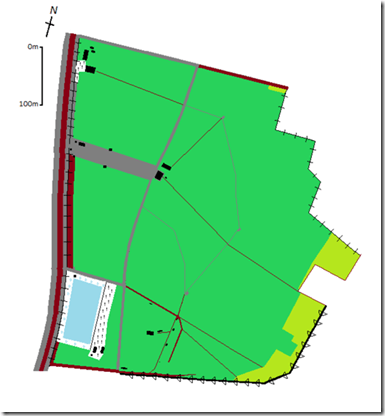
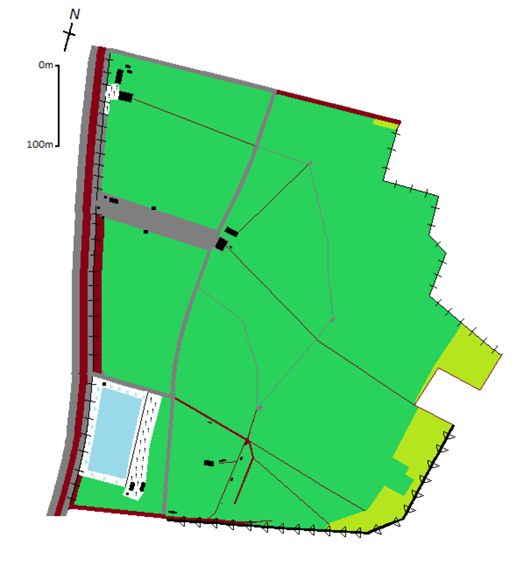
Don Chao Poo, a sacred forest, is located in the Phana District of Amnat Charoen Province, Thailand (N15° 36’ 36.4”, E104° 50’ 53.1”). The forest covered a larger area some 60 years ago, but has gradually shrunk to its current state. The area is considered protected under the local Tetsaban (town council), although there has been recent urban development on the habitat by the construction of Phana Hospital. To the west of the site runs the Highway-2049, whilst the south & east is surrounded by paddy fields with unclear borderlines. The hospital is located on the north-east edge, and a hardstand/dirt track runs along the northern perimeter.

The site is considered of spiritual and tourist value to the local populace of the Phana District, due to the population of long-tailed macaques Macaca fascicularisthat inhabit the forest, known locally as the children of Chao Poo. As well as being locally fed by locals within the forest grounds, it is common for visitors to buy food from vendors along the Highway-2049 to feed either within the site or along the roadside.

The initial site assessment was conducted by researchers from the Phana Monkey Project, with the aim of evaluating the impact of visitors and local use on the forest and the suitability of the forest to sustain the M. fascicularis population. This section is conducted in the hybrid-format of a Phase 1 Habitat Survey, commonly conducted in the British Isles as a rapid methodology for recording wildlife habitats with indications for further assessments (JNCC, 2010), adapted for the environment of Thailand.

1.2 METHODOLOGY

An ecological walkover survey was conducted between 4th February 2012 and the 2nd March 2012. Using adapted Phase 1 Habitat Survey procedure (JNCC, 2010), habitat types within the target site were noted with description along with GPS measurements of the site parameter (m). A combination of tape & GPS measurements (m) were used to survey the extent of footpaths within. Findings are illustrated on the habitat survey map (Figure 1., Section 2.1). A rapid assessment of visitor and local impact was performed and flora and fauna of interest were noted, with particular attentiveness to species that may be of visitor interest and support the local M. fascicularis population. Photographic evidence is provided in Slides I-X. Additionally, from 09:00 on the 2nd March 2012, during provisioned of rice by the local Tetsaban, a population count of M. fascicularis was conducted 15minutes after they had gathered and settled around the spread provisioned food along the western hardstand pathways.

1.3 HABITAT TYPES

The following habitats were identified:

Broad-leaved Woodland
image

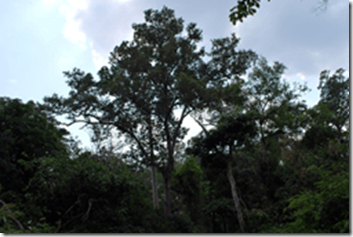
Fig I: Emergent Dipterocarpaceae

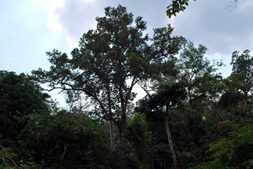
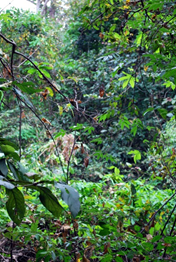
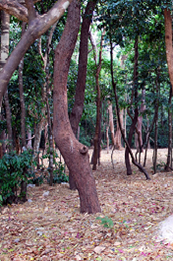
The majority of the site is comprised of broad-leaved woodland (48.6 acres). This woodland is likely to be semi-natural due to the vicinity of the town of Phana and maintenance of the wood by local residents. The age of the woodland is unknown, but local reports claim it was around before Phana was built, which if true would date it older than 300 years. The trees species are densely distributed throughout the woodland, with canopy layer at ˜25m high (Fig I), that shades most of the space below the understory. The woodland flora tends to be densely distributed (Fig II), and only broken up by hardstanding paths. Some clearings have been created to facilitate human usage of buildings located to the south of the site (Fig III). The woodland contains various broadleaved evergreen species, with Dipterocarpaceae being dominantly found throughout the canopy layer. Although no endangered or rare flora was specifically identified, due to the cultural significance of the site, locally it may be seen to be of high nature conservation interest.
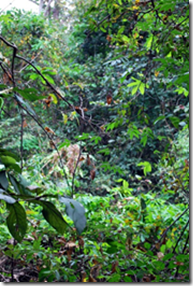
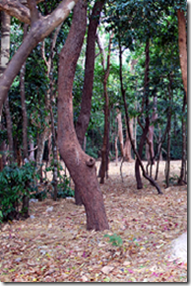
image    image

Fig II: Dense Flora                           Fig III: Clearing

Dense ‘High’ Scrub

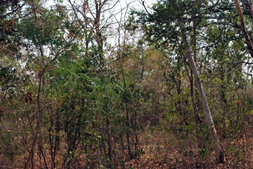
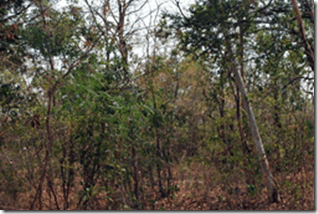
Although higher than 5m and possibly being defined as woodland, the category of dense highscrub has been created due to best representing local definitions (Fig IV). A small portion can be found along the northern road along the top of the site leading to Phana Hospital, although the majority is found on the south-eastern edge of the site, bordering the paddy fields. The ‘canopy’ is opened, allowing much light to reach the ground surface. Dominant species include Eucalyptus and patches of bamboo thickets (along the far south of the site). Due to the lack of flora and fauna of note, the habitat is considered of low nature conservation interest, although it does provide the site with a ‘natural’ boundary line along the south-eastern edge where the old barbed wire fence has fallen down and is in a state beyond repair.
image

      Fig IV: Dense ‘High’ Scrub

Open Standing Water/Marginal Vegetation

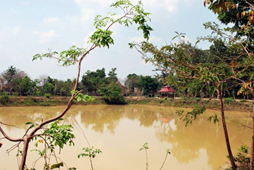
A 5325m2 lake is found close to the south-western edge of the site (Slide V). The local M. fascicularispopulation has not been witnessed drinking from the lake (other than one specimen observed on just one occasion) and no water-based flora or fauna of note has been observed at the habitat. Based on observed evidence, apart from being beautification to the site, the habitat is of low nature conservation interest. Surrounding the lake (1-10m width) is marginal vegetation composed of grass species and some sporadic Eucalyptus. The habitat could be classified as poor neutral grassland and hence of low nature conservation interest.
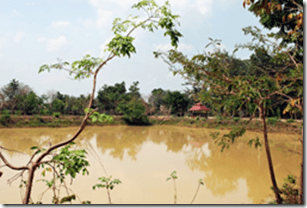
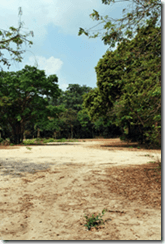
image        image

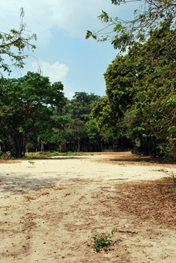
   Fig V: Lake & Marginal Vegetation                  Fig VI: Bare Ground by Lakeside

Bare Ground

Bare ground is found on the western edge of the lake (Fig VI) and entering the most northern gate. Due to the small percentage of cover on the site, is of no concern or conservation interest.

Hardstanding

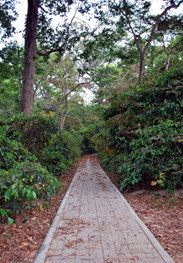
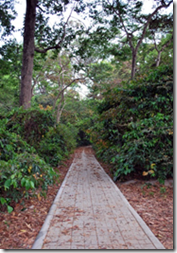
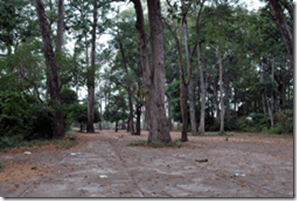
The woodland contains both sand/gravel, bare and hardstand paths. Hardstanding is mentioned specifically here due to the high percentage of cover on the site. A small 1m wide path runs through the north-east side of the site (Fig VII), although it is located mainly on the western side of the site, in particular going into the woodland from the 2nd northern gate where it reaches a width up to 29m (Fig VIII),. It also warrants attention due to the majority of the M. fascicularis population being found here during the daylight hours between 06:30-19:00 (during dark hours they tend to roost in the surrounding woodland). Whether the M. fascicularisactually prefers hardstanding habitat to woodland during daylight is unknown, but a plausible explanation is that they gather on the hardstanding due to the knowledge that they have been / will be fed here by the local Tetsaban and visitors. Whilst of no nature conservation interest, the hardstanding does provide good walkways for visitors and is easier to keep tidy by the Tetsaban and local volunteers.
image

Fig VII: North-Eastern Hardstand Path
  image

             Fig VIII: Hardstanding following from 2nd Northern Gate

1.4 FAUNA OF NOTE
image

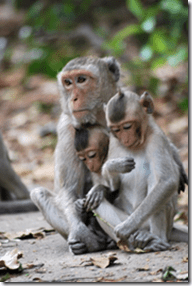
Fig IX: Long-tailed Macaque  (Macaca fascicularis)

Long-tailed macaques Macaca fascicularis (Fig IX) were found in relatively large numbers in comparison to the size of the site, and following from Dr Suchinda Malaivijitnond et al.’s report, we also confirmed cases of genetic and behavioural stress from the dense numbers. On the 2nd March 2012, during provisioned 09:00 feeding by the local Tetsaban we counted the population to be at least 698 individuals. M. fascicularis was found throughout the woodland and hardstand habitat during daylight hours, although they tended to occupy the western hardstand in mixed sex ‘groups’ up to 100+ in number, whilst lone and small n3-5 groups of males were observed further away, around the perimeter habitats of the mixed sex groups. On multiple occasions during dark hours before 06:30 and after 19:00, it was observed that they roost in the tree canopies of the woodland in the west & east. Further details on local M. fascicularis distributions are found in Section 3 of this report. In addition to the artificial provisioned and visitor feeding, we observed M. fascicularis naturally feeding on Dipterocarpaceae, golden shower Cassia fistula and various other tree fruits. Whether this natural food resource is abundant enough to support the local population or contains enough nutrition needs further investigation.

In addition to the M. fascicularis population, the woodland habitat is suitable for the nesting and feeding of many birds specie, such as white rumped-shama Copsychus malabaricus and common myna Acridotheres tristis. On occasion bird watchers have visited the site during observation, suggesting the M. fascicularis population is not the only fauna of interest for visitors. The site also contains an abundant and diverse number of lizards of various species including monitor lizards (Varanus bengalensis) and geckos (Gekko spp.), butterflies (numerous species including grey pansy Junonia atlites and blue tiger Tirumala limniace), bees (honeybee Apis sp. and bumble Bombus sp.), various ants (Formicidae) species, unidentified termites (Blattodea) specie/s and a small population of Indochinese ground squirrels (Menetes berdmorei). There have been reports by locals of snakes on the site, but only one brief observation was made during the period of an unknown species, suggesting they seem to be rare on site (or at least rare during this period). Whilst these species do not seem initially to attract visitor attention, they add to biodiversity of the site and may attract scientific interest, due to the ease of access and observation of these species in a naturalistic setting.

1.5 VISITOR IMPACT

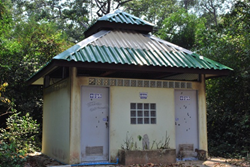
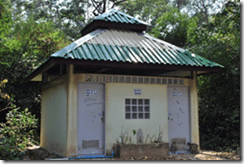
The western side of the site receives daily visitation from locals and tourism, as well as being host to a multitude of annual festivals. The site contains many buildings for this purpose, either being cultural in nature (e.g. shrines & temple like) or to facilitate visitors (toilets & sheds for housing cleaning tools, Fig X). The most frequent visitation is from people coming to feed the macaques. A usual ‘trip’, lasts approximately 10 minutes, with a car stopping at the vendor stalls opposite the 2ndNorthern Gate to buy food, which they then hand out between the gate and the shrine located at the junction of the hardstanding. Apart from annual festivals, the locals can also be found in the site, engaging in such activities like collecting wood and gathering plants & small fauna. Although the high usage of the site produces a large amount of visible rubbish on site, the Tetsaban and local volunteers are actively engaging in cleaning duties. In contrast, the eastern side of the site receives little visitation and no festivities are held there. The occasional rubbish pile can be found amongst the scrub habitat. Whether this is from the surrounding farmland or fly-tipping is unknown.
image

Fig X: Toilet Facilities between 2ndNorthern gate & Shrine

1.6 SUMMARY

The site contains a large portion of woodland habitat, with smaller areas of dense ‘high’ scrub, open standing water/marginal vegetation, bare ground, and hardstanding. These areas may be of low nature conversation interest, but contain an array of fauna that may be of public and scientific interest.

Some species of Dipterocarpaceae are listed on the ICUN red list, although due to the abundance of the site species found in and around the surrounding areas, these are unlikely to be the same. In addition, it would be advised to run a phase 2 type habitat survey to gain more knowledge of the flora structure and its suitability in sustaining the M. fascicularis population. The local populace make a visible effort in maintaining the site, and due to their dedication it could be recommended to set up a ‘citizen scientist’ scheme, such as is found in sites of importance in the UK. This would help in gathering annual information once further species identification is discovered.

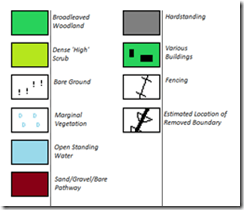
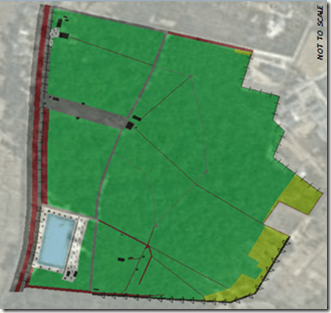
2. SITE MAP

Site Map

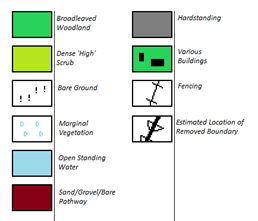
Key
image

image

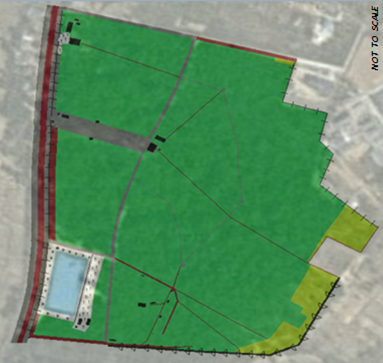
visual representation of the map against google.com’s photographic map service
image

3.1 References

JNCC, (2010). Handbook for Phase 1 habitat survey – a technique for environmental audit. ISBN0 86139 636 7.

Prof. Dr. Suchinda Malaivijitnond, Report on Monkey Survey at Phana (Sept 2011)

3.2 Appendix

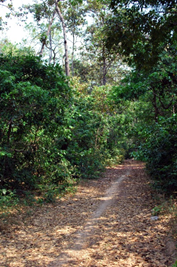
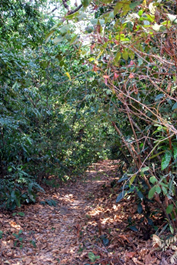
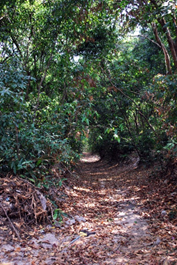
Figs XI-XIII: Documentation of sand/gravel (Fig XI) and bare (Fig XII) pathways. Fig XIII represents what is probably a dried-up waterway, converted into a bare path by locals/visitors.
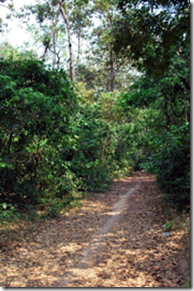
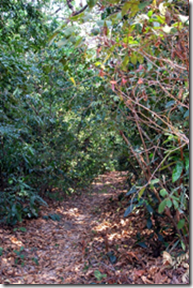
image    image    image

Fig XI                                                      Fig XII                                         Fig XIII
Posted in Bio-diversity, Butterflies, Indochinese ground squirrels, Litter, Long-tailed Macaques, Macaca Fascicularis, Macaques, Monitor lizards, Monkeys, Research, Tetsaban Phana | Tagged , , , , | Leave a comment

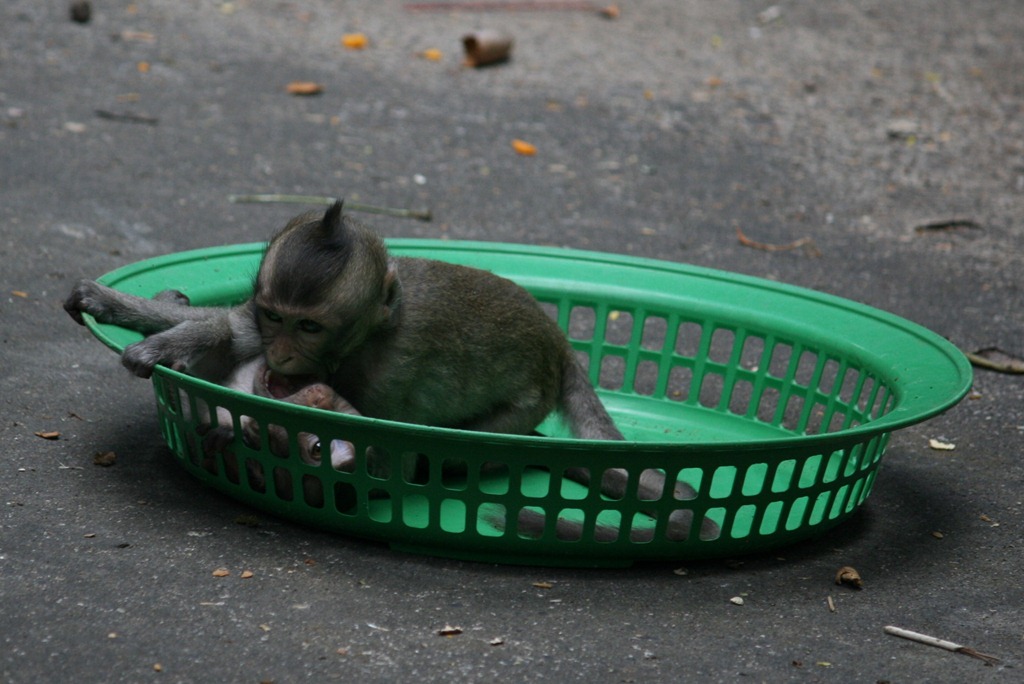
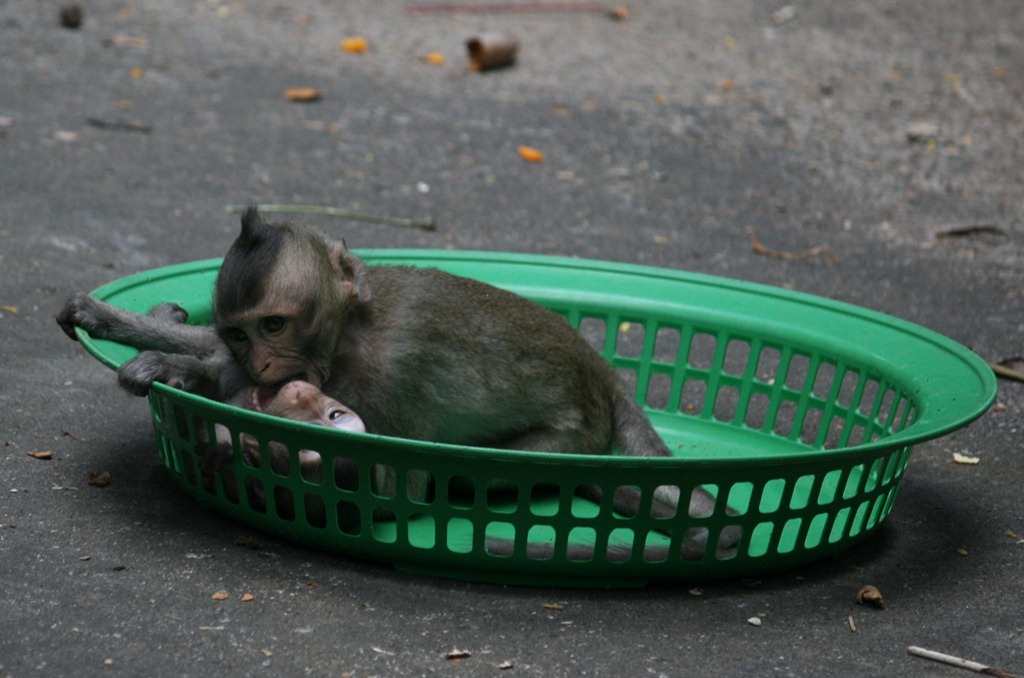
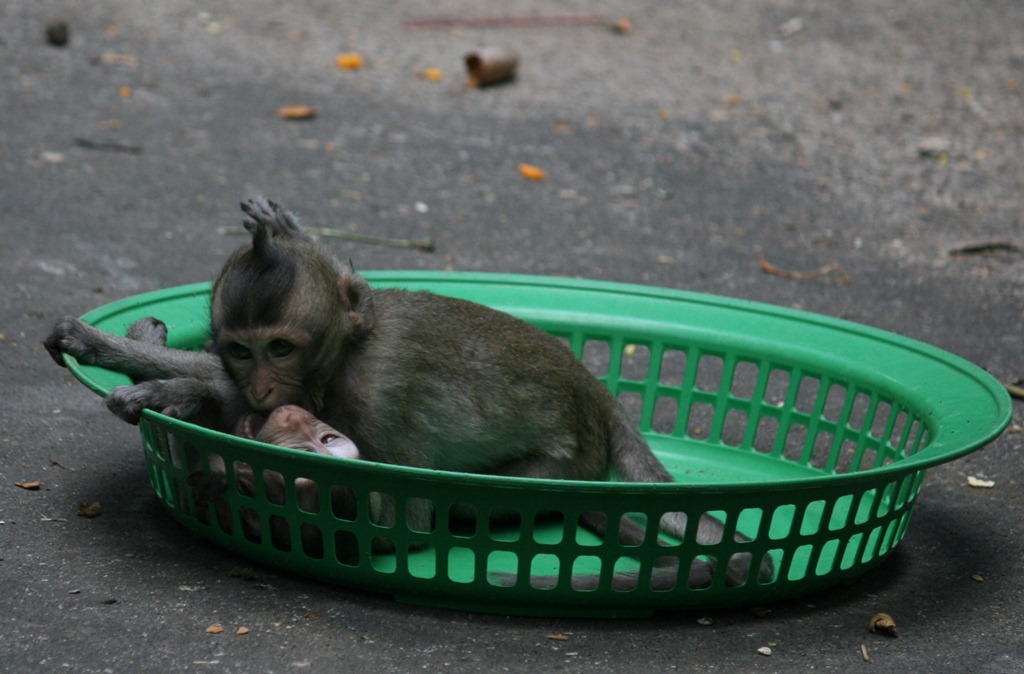
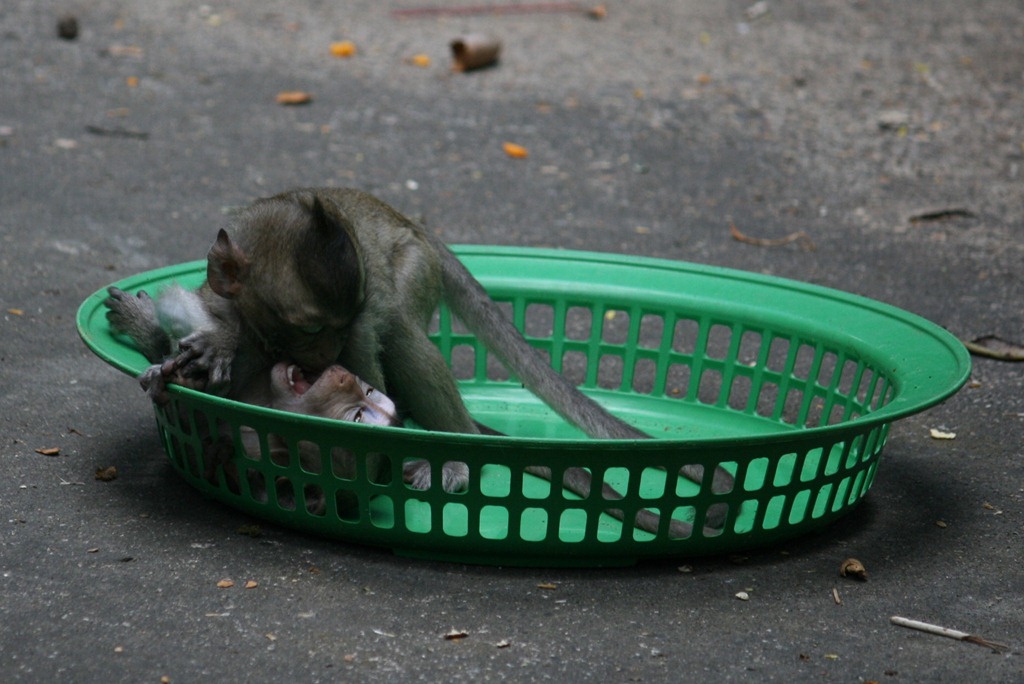
Young male long-tailed macaques at play

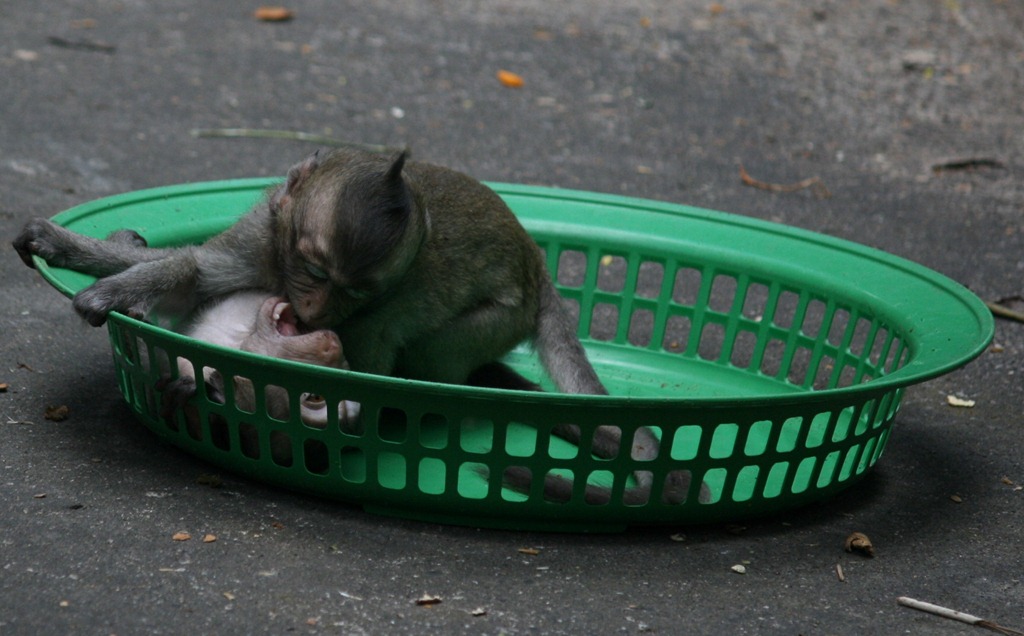
Young male long-tailed macaques spend a lot of time playing. And long-tailed macaques of all ages seem to enjoy exploring and using human-made artefacts. In this sequence of photos by Elliot Capp two young male long-tailed macaques in Don Chao Poo forest, Phana, combine the two pleasures. You can also see  the “play face” that primates, human and non-human, employ to indicate that they are only engaged in play-fighting. CLICK on the images to see an enlargement.

B0000566B0000567B0000568B0000569B0000570B0000571B0000572B0000573

Posted in Long-tailed Macaques, Macaca Fascicularis, monkey forest, Monkeys, wildlife photography | Tagged , , , , , | Leave a comment

Butterflies in Don Chao Poo Forest, Phana

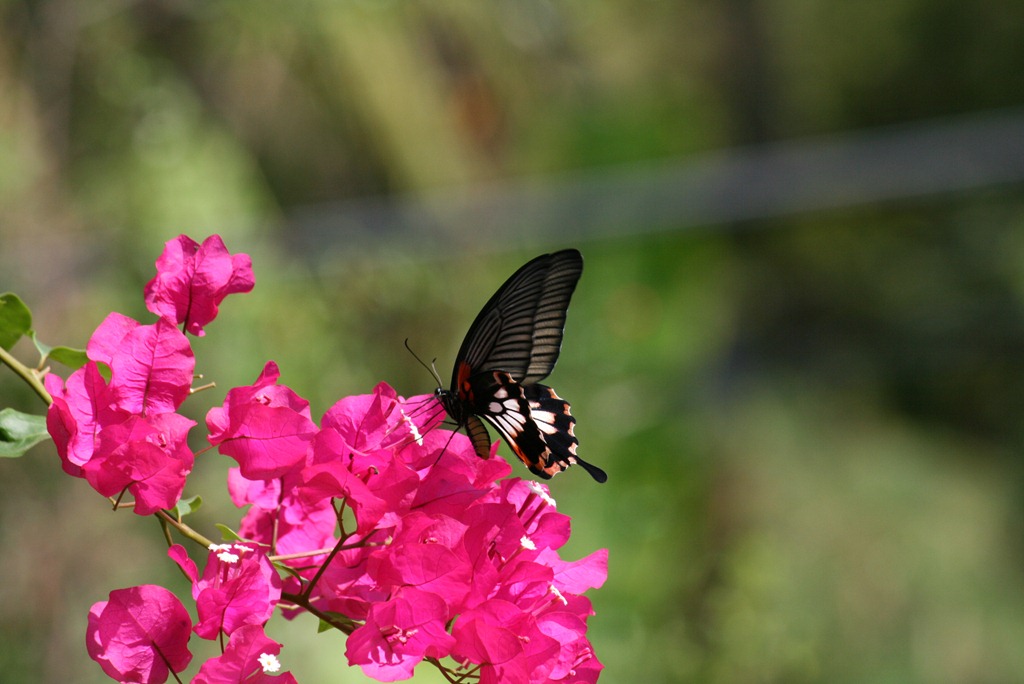
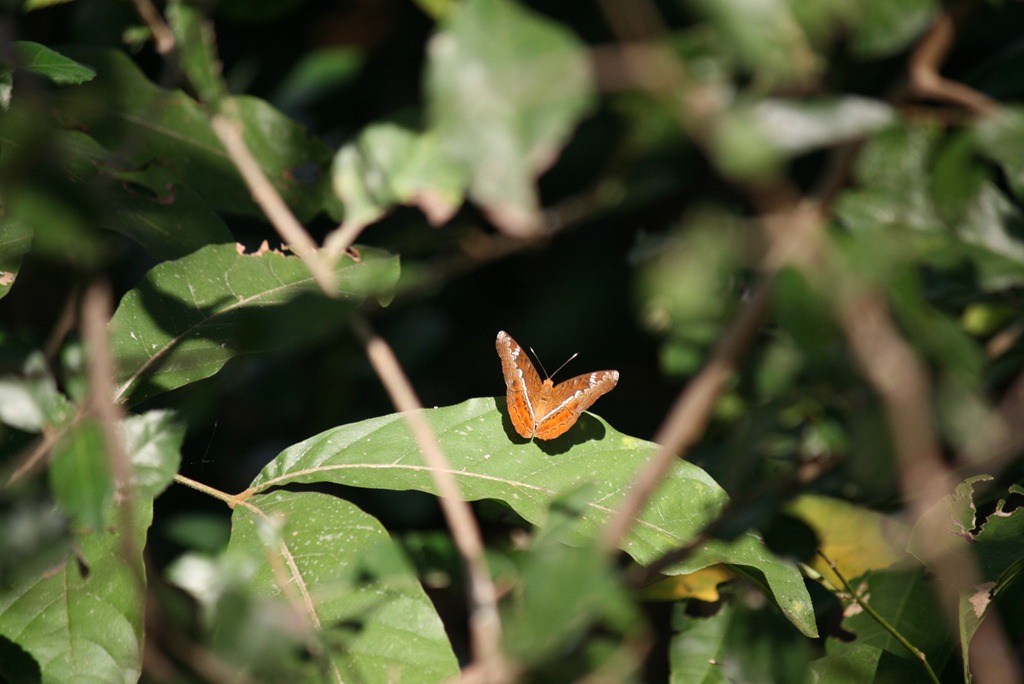
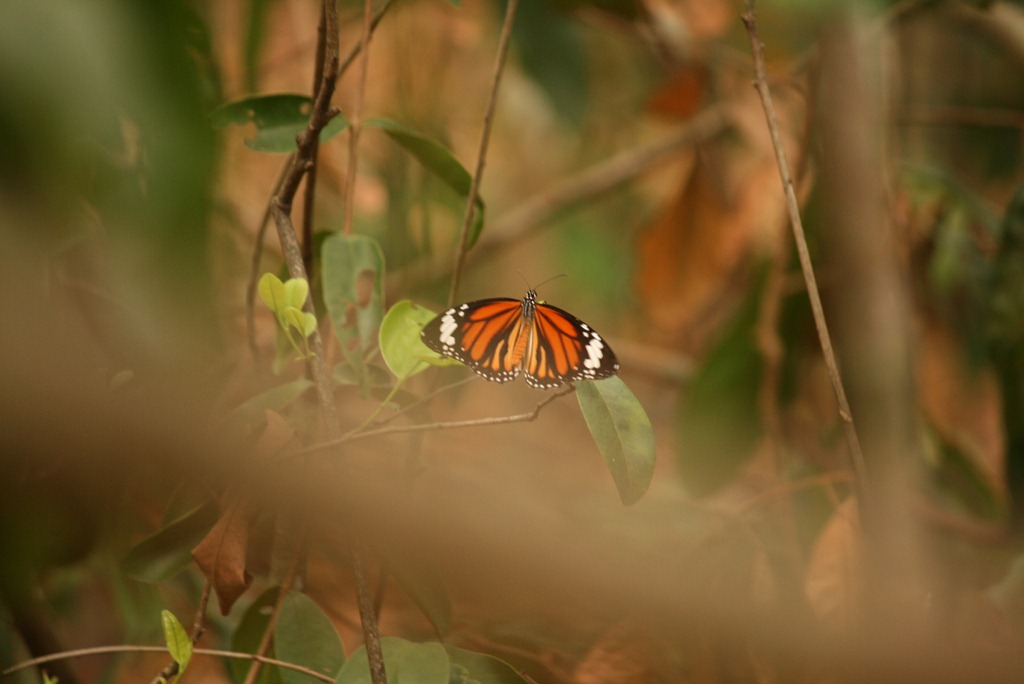
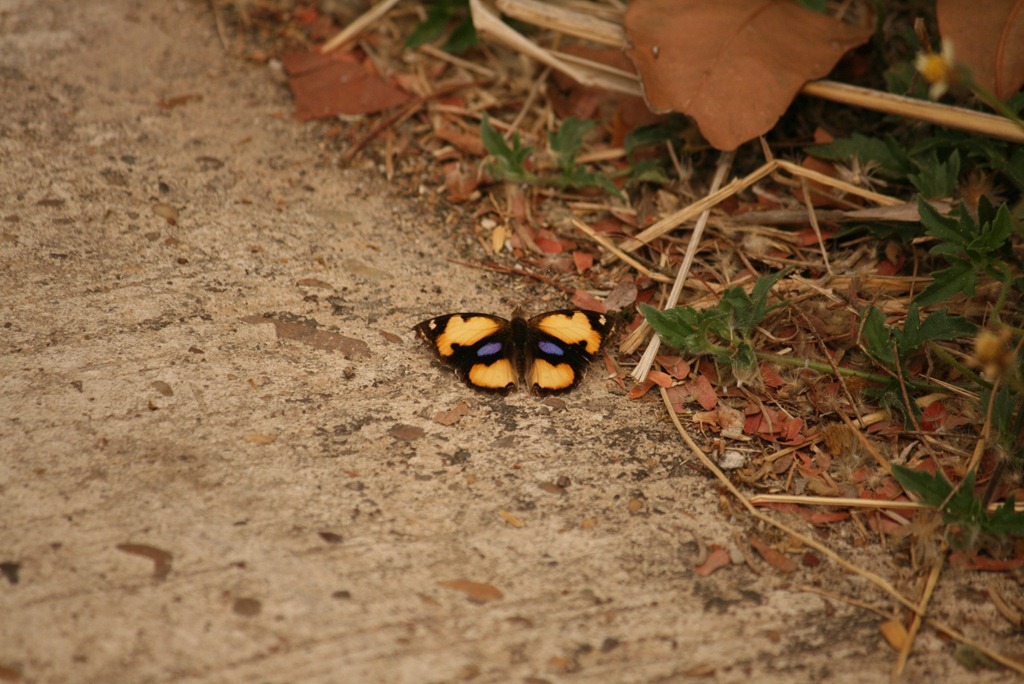
Elliot Capp, one of the researchers from Exeter University who spent three months in Phana earlier this year, has identified twelve species of butterfly from the photos he took in Don Chao Poo Forest. There are a few more that he has not yet identified but here are the ones he has identified so far.

IMG_4571 papillo memnon Papilio memnon – Great Mormon

 IMG_4584 Precis atlites or Junonia Precis atlites – Grey Pansy

IMG_4588 Catopsillia pyranthe male  Catopsilia pyranthe male – Mottled Emigrant male

IMG_4675 Catopsillia pyranthe female  Catopsilia pyranthe female – Mottled Emigrant female

IMG_4725 lebadea Martha  Lebadea martha – The Knight

IMG_5271 Cheritra freja  Cheritra freja – The Common Imperial

IMG_5398  Lexias dirtea male  Lexias dirtea male – The Archduke male

IMG_5745 Pachliopta species  Pachliopta species

IMG_6070 Danaus genutia  Danaus genutia – The Common Tiger

IMG_6090 Danaus Limniace Danaus limniace – Blue Tiger Butterfly

IMG_6201 Precis hierta Precis hierta hitrea– Yellow Pansy

IMG_6224 Precis hierta Precis hierta hitrea– Yellow Pansy

IMG_6825 Eoploea core Euploea core – The common Crow

Thanks to Elliot for drawing attention to the diversity of fauna in Don Chao Poo Forest – and for his wonderful photos.

Posted in Bio-diversity, Butterflies, monkey forest, Research, wildlife photography | Tagged , , , , | Leave a comment

More Bins for Don Chao Poo Forest

Our efforts to reduce the amount of litter in Don Chao Poo have been somewhat successful though it is difficult to quantify it. Certainly litter is being picked up and removed more frequently by tetsaban staff and volunteers and the vendors have been encouraging visitors not to drop litter. Taking the mayor and his two deputies to see  our first bin helped this process. We had talked to them a lot about the litter problem, but they had never seen it for themselves. And now we have another four bins in the forest, making five in all. As with the prototype which was the subject of the previous post, these were purchased from  the technicians at Phana District Hospital who built and delivered them for us. So many thanks to them and to the Director of the hospital, Dr Patompong Prupong, who suggested they could do the work and sanctioned it.

We placed them at the three spots where most of the feeding by visitors takes place: at the main gate (we put our original bin just inside and a new one outside); near the Chao Poo Shrine; at the crossroads near the third gate.

Monkeys 15 July 2012 007   Chao Poo Shrine    06 July 2012 Phana 010 

We put the other bin next to the small sala near the third gate.

06 July 2012 Phana 013

There is not a  great deal of litter here because monkeys are not generally fed here. But this sala is popular with teenage couples and  they tend to bring drink cartons, packets of crisps and biscuits  and takeaway food containers with them. With no bin to hand, these have just been thrown down around the sala and some of them have then been carried off by monkeys.

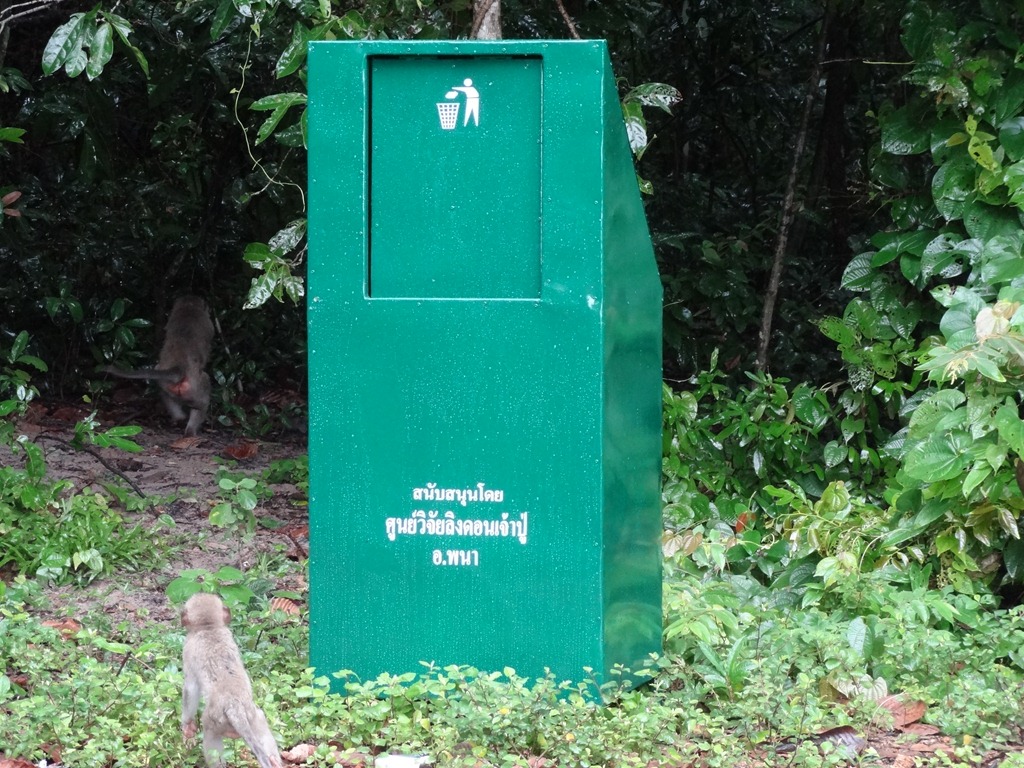
The legend on the front of the bins states that they  have been provided by the Don Chao Poo Research Centre, Amphur Phana. Raising brand-name awareness, we hope.

06 July 2012 Phana 011

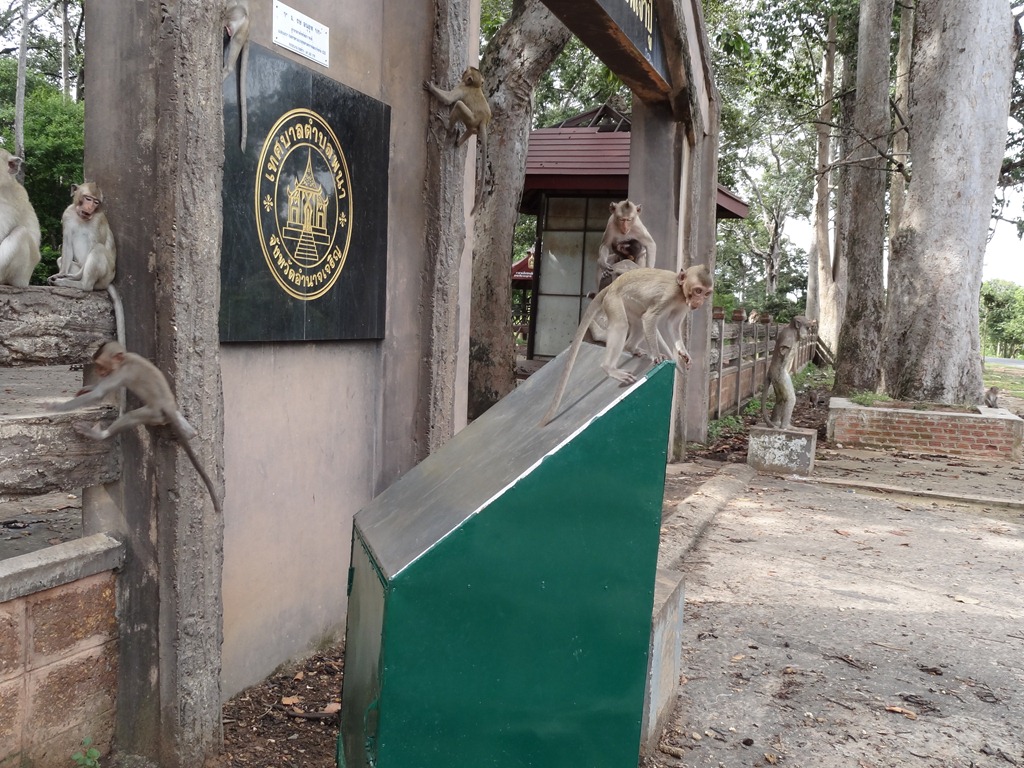
A closer look at the bin outside the main gate tells us something about the monkeys who hang out there.

Monkeys 15 July 2012 010

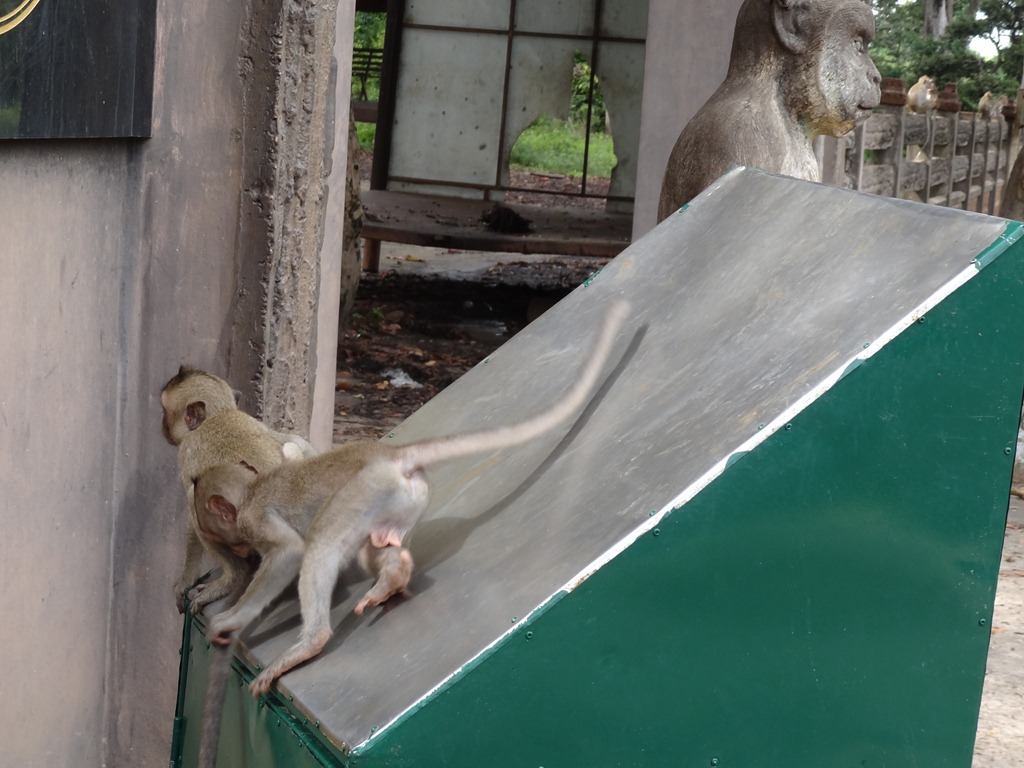
The sloping surface has been completely stripped of paint after just three days. Young monkeys were having a great time using the bin as a slide. The odd thing is that this has not happened to any of the other bins. We will see whether the idea catches on elsewhere as time goes by. It has made us wonder whether we could/should perhaps provide some ‘playground’ items for the monkeys.

Posted in Litter, Litterbins, Dustbins, Long-tailed Macaques, Macaca Fascicularis, monkey forest, Monkeys, Tetsaban Phana | Tagged , , , | Leave a comment