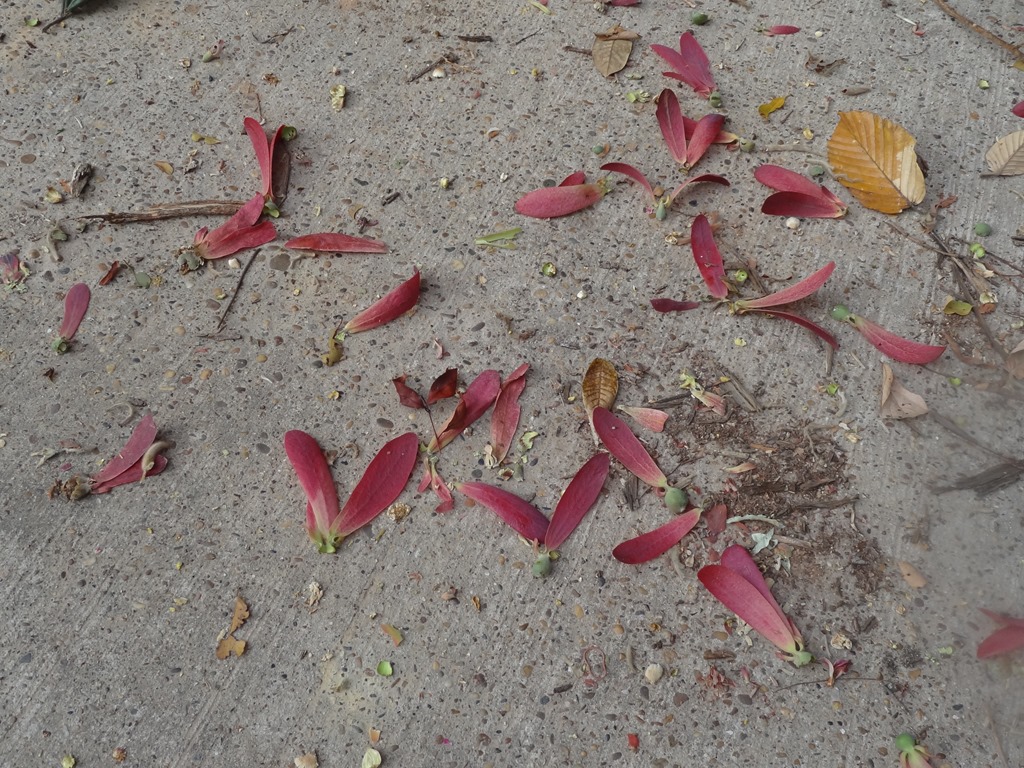
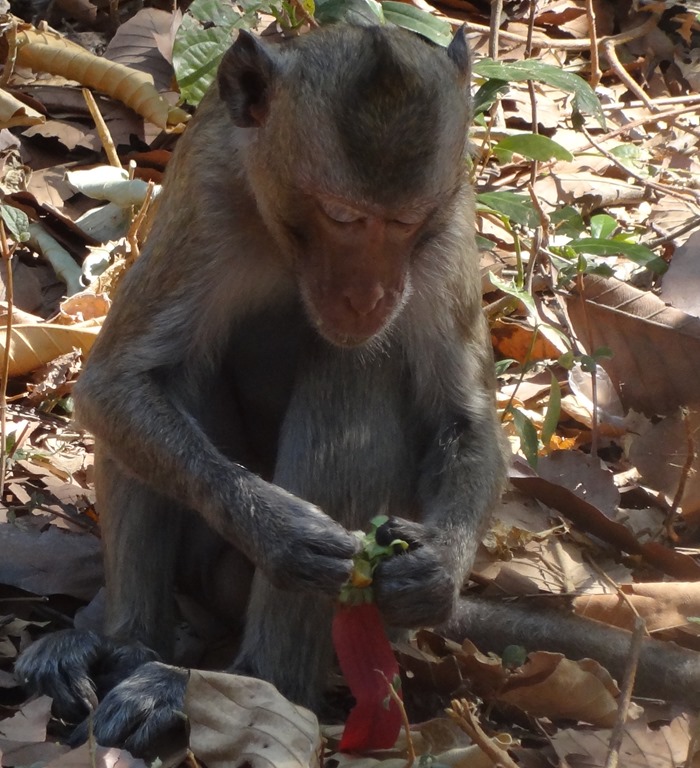
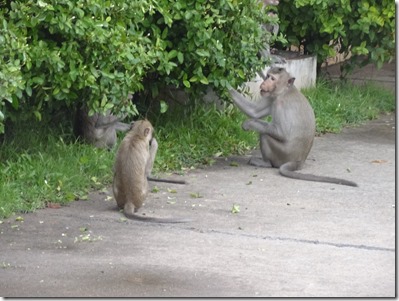
Long-tailed macaques in Don Chao Poo Forest, Phana, have been finding natural food available in the forest since late January. They can be seen foraging on the ground for insects or eating leaves and flowers in the trees. For many, a useful source of food is the seed pods that drop from the tall yangtrees (dipterocarpus alatus).
Long-tailed macaque (adult male) foraging on the ground in Don Chao Poo Forest, Phana, Amnat Charoen Province, Thailand
The trees are taller than these monkeys like to climb, so they wait until the food-source has fallen to the ground.
On the morning of 31st January 2014, I was doing the routine count at 10 o’clock when I stumbled across an adult female who appeared to be in pain, so I thought. She was standing tall on her two legs and was pushing so hard that blood was coming out. Getting more concerned, I called James, a fellow volunteer, over and he said she was probably just having piles. Three other monkeys had gathered around her by this point and seemed to be comforting her so we decided to leave her to it and come back later and check. About 30 minutes later, I walked back and she had given birth!! What an extraordinary sight, my eyes filled up. I was so happy and felt so very lucky to be here and to be able to see this. Then I ran to tell James and tried to call Lawrence to come and see. The Mum was now holding her newborn and was trying to chew away the umbilical cord. She was holding and cleaning him/her (time will tell !) with all her strength. After letting me watch her for a few minutes, she ran into the forest with her baby.
I already loved monkeys before coming to Phana…this particular occurrence has only reinforced that feeling.
Lawrence adds: I am sure that James now realises that pregnancies and births are much more prevalent than piles amongst our long-tailed macaque population!
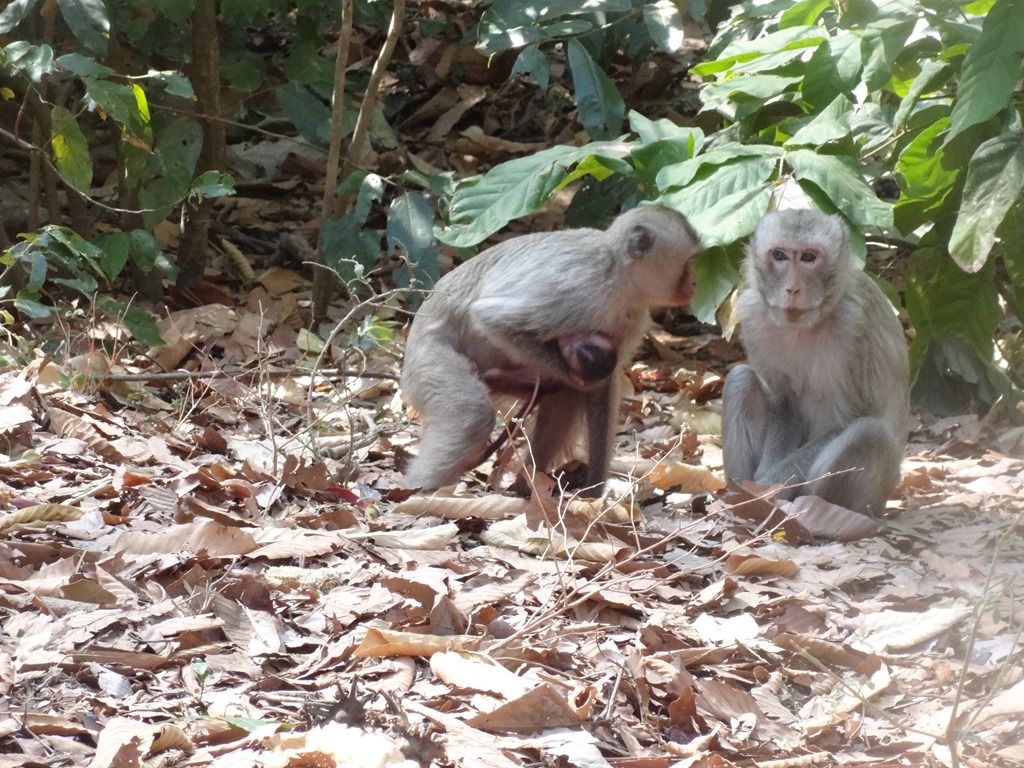
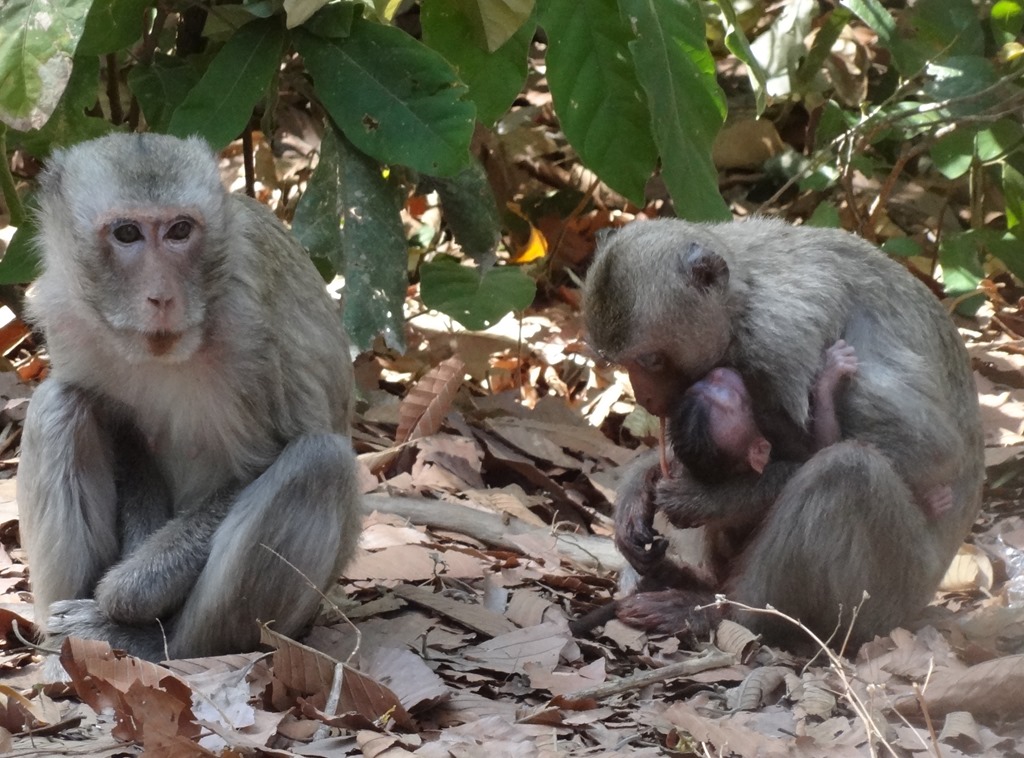
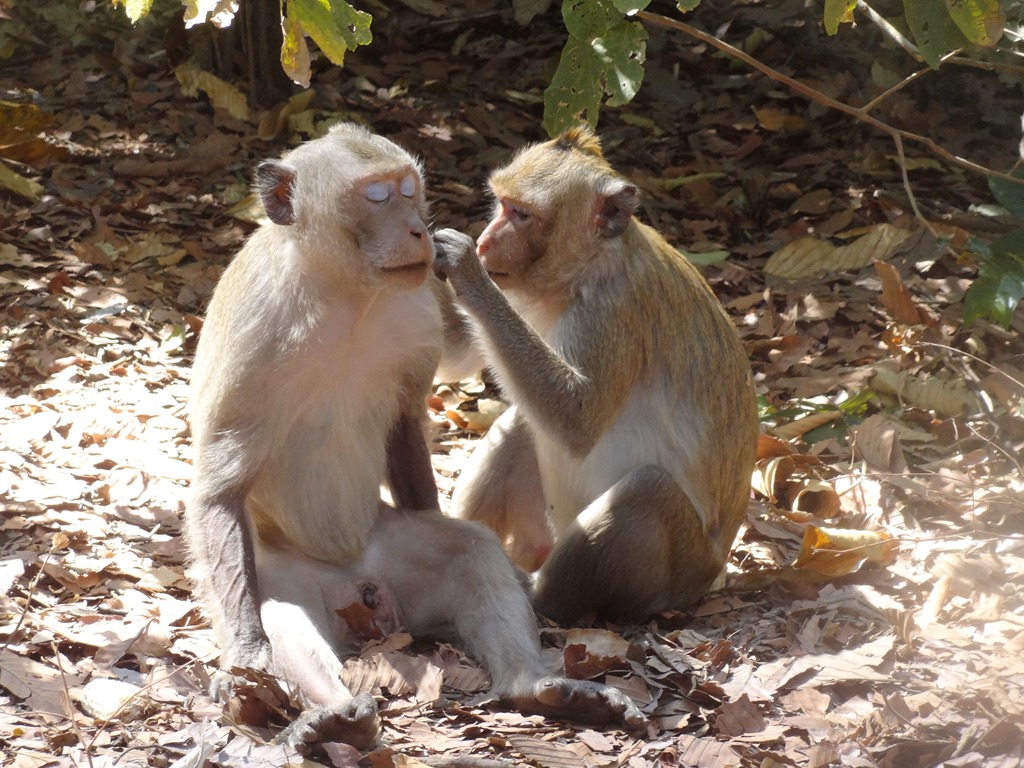
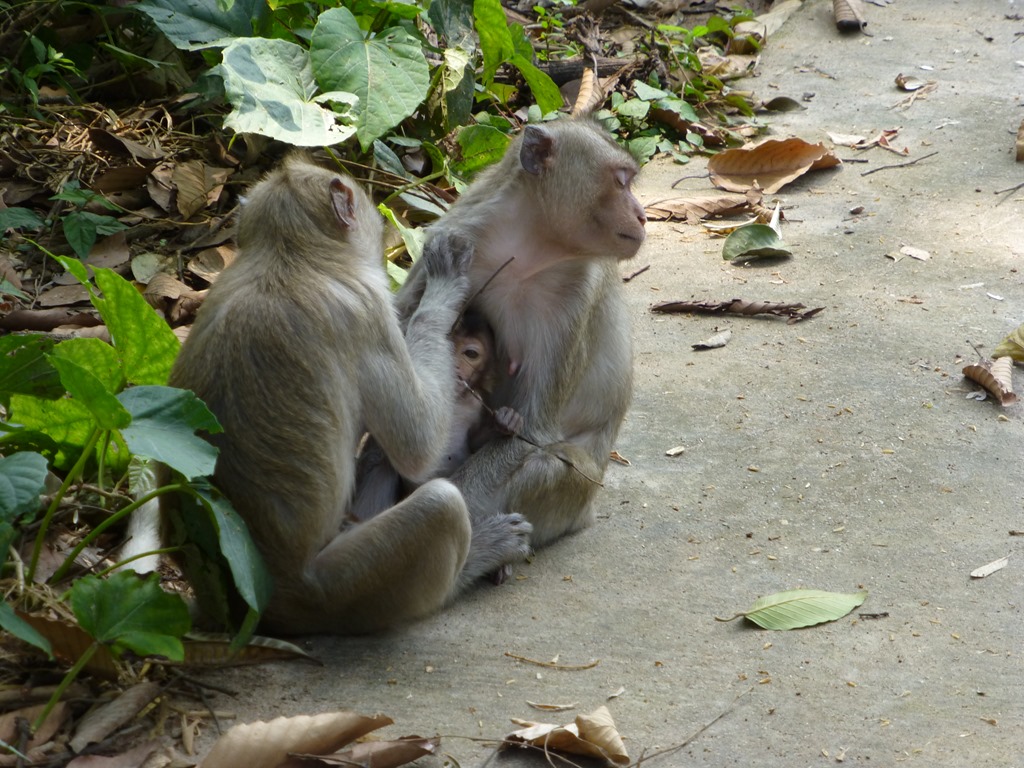
I came on the scene about 35 minutes after the birth, and unlike Laura and James I had my camera with me. In the pictures below you will see the new mother’s “support group” almost certainly made up of her close female relatives. The one male present received close attention from an adult female the whole time I was there.
I saw the new mother and newborn infant arrive and sit down next to an older female, quite possibly the babies’ grandmother. These three stayed close next to each other the whole time I was observing the group.
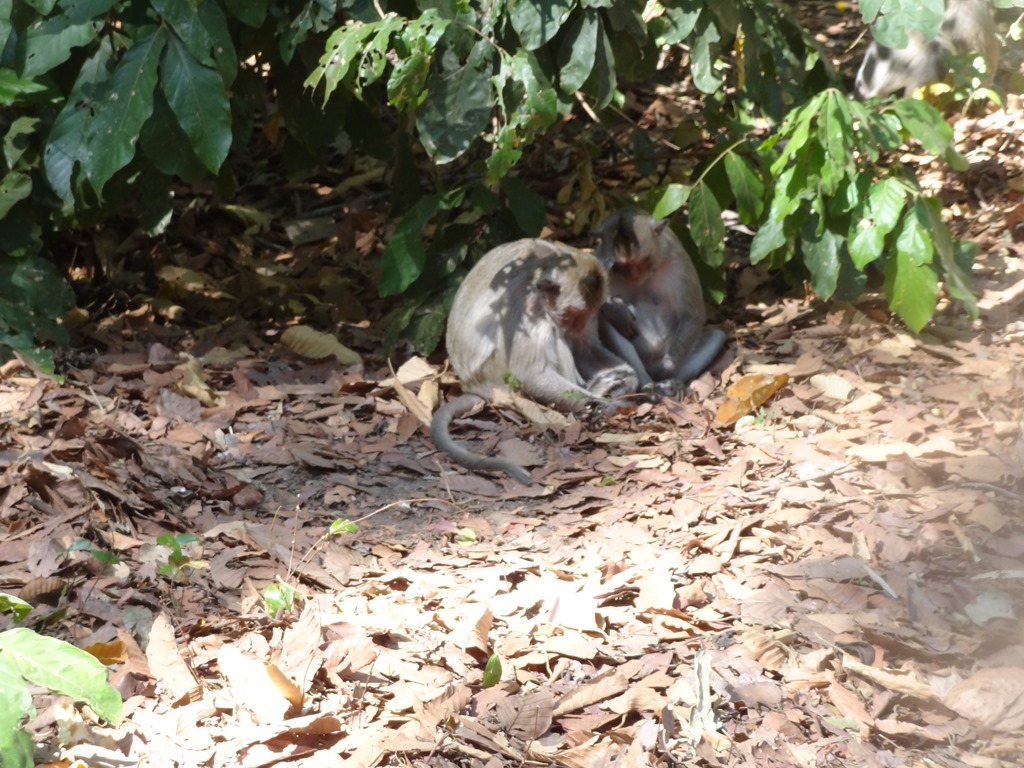
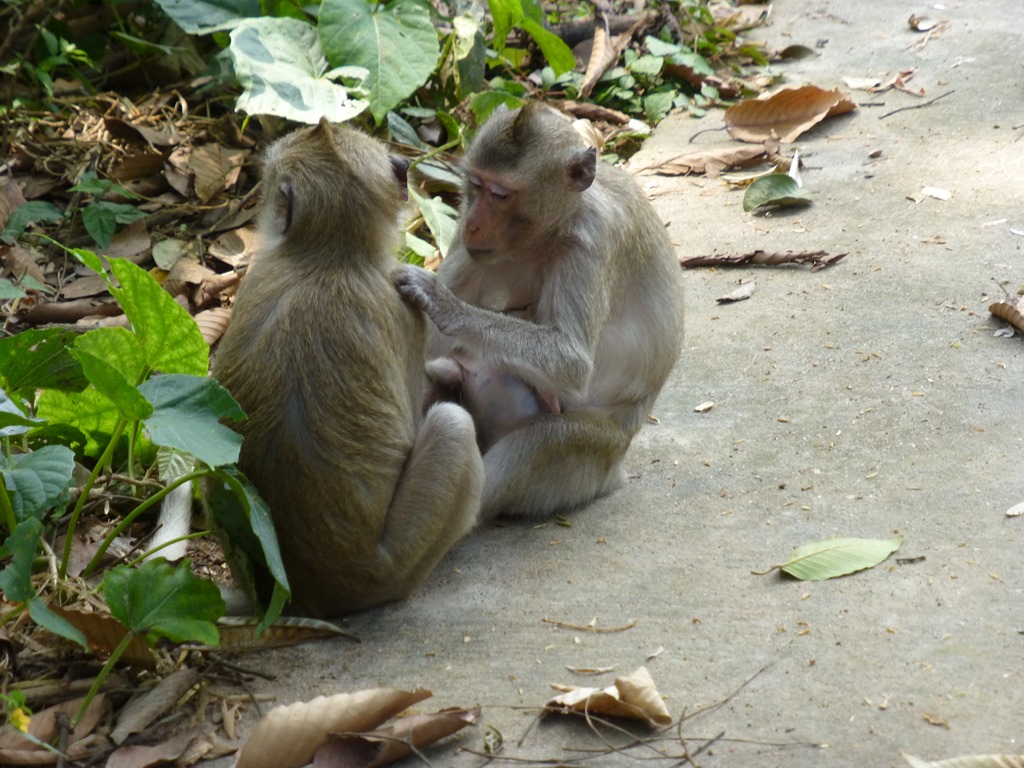
Another adult female present (below left) received grooming as well as the male (below right). This may have been in order to divert attention from the mother and baby in order to avoid any jealousy, perhaps.
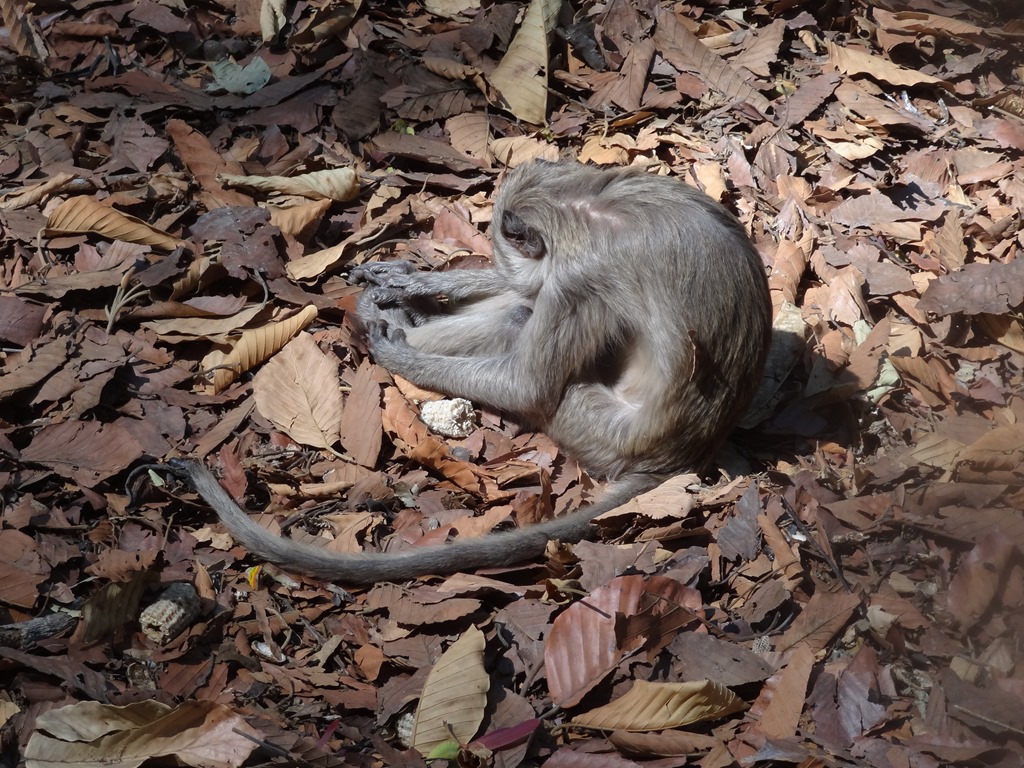
The younger members of the “support group” spent much of the time sleeping – as did ‘Granny’ off and on.
Here is a short video of the mother and newborn long-tailed macaque as the mother consumes the umbilical cord.
Long-tailed macaque mother with infant less than one hour old
Back in December we were approached by a film company based in Ubon which had been commissioned by the TV channel Thai PBS to make a film of the Phana Monkey Project. They were with us for three full days and recorded several hours of video, in Don Chao Poo Forest and in the Rin-Homhuan Mahanil Study Centre.
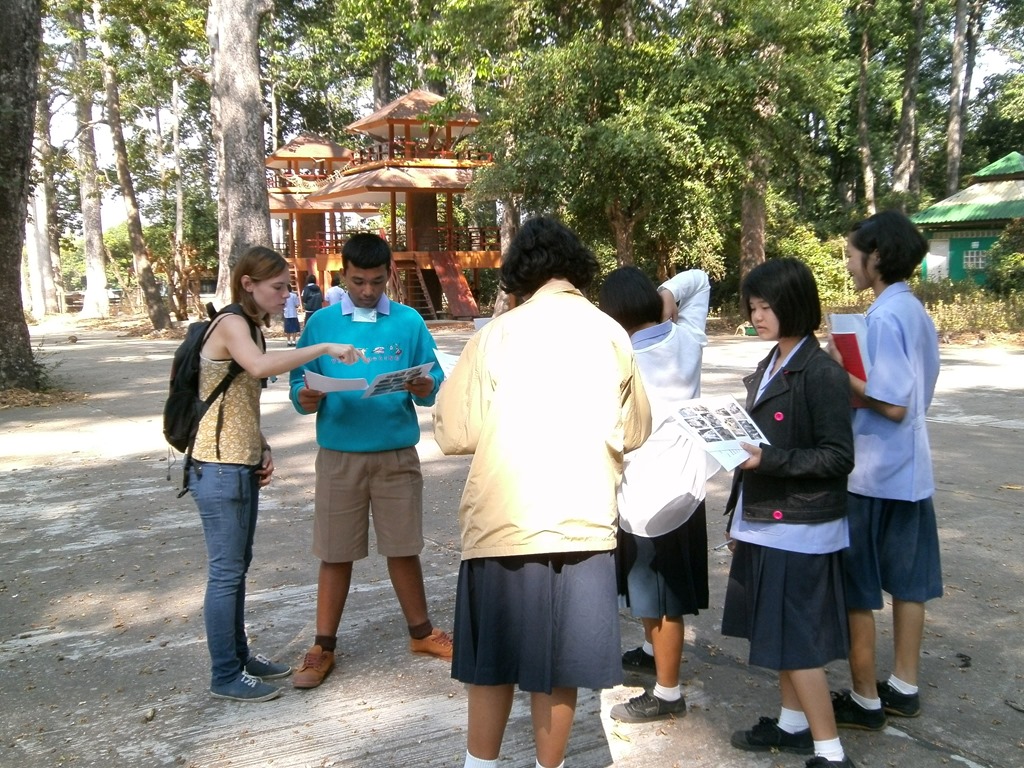
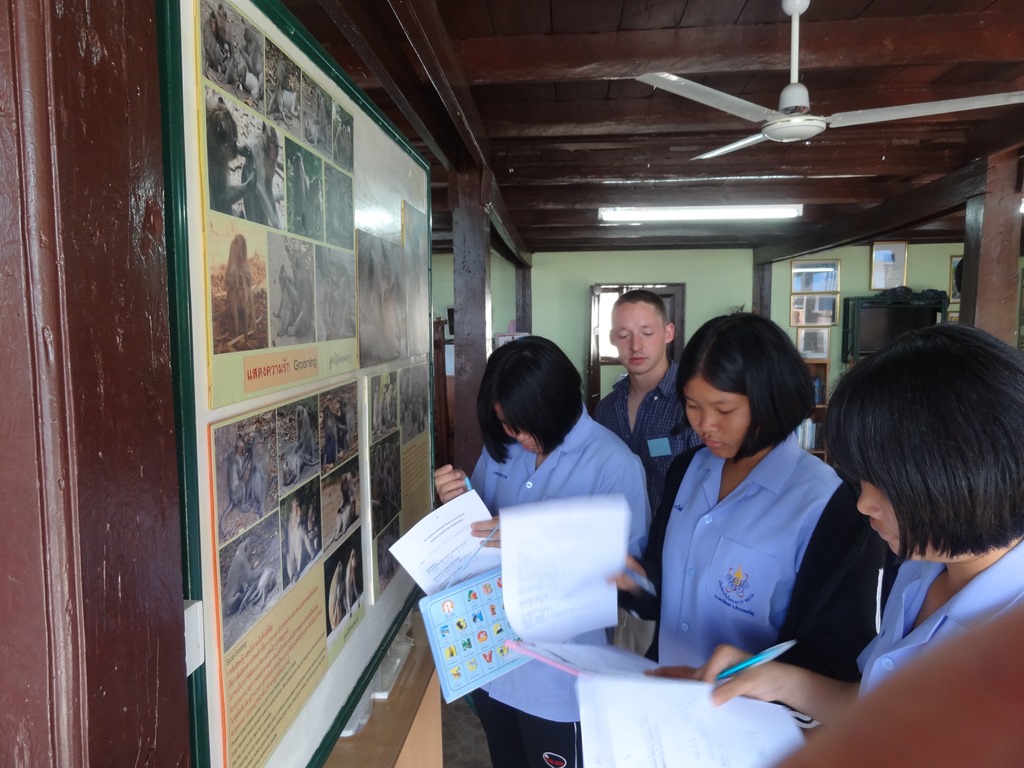
Elliot, Julia, Tessa and Lydia all took part, as did students from Phanasuksa School who came to us for Science lessons relating to the forest.
The film as shown here has been split into two parts. We hope you will watch both, though much of it is in Thai, of course. We intend to add English subtitles, but that will take some time. When we have done that, we will post the film again.
As 2013 draws to a close, the Phana Macaque Project (aka Phana Monkey Project) looks back at the researchers and volunteers who have made this a wonderfully productive year for us.
After the first four volunteer researchers helped us to set up the project in 2012, we started advertising for volunteer researchers on the University of Wisconsin’s PIN (Primary Information Network) http://pin.primate.wisc.edu/ site and in December 2012 we advertised for volunteers through http://www.worldwidehelpers.org/. Midway through 2013 we added http://www.volunteerworkthailand.org/ to the sites where we advertised. But it seems that our advertisements have been taken up by several other platforms, unbeknownst to us.
We have welcomed 24 researchers / volunteers in 2013 and they have stayed for between a week and three months. Our first volunteer arrived on 3rd January 2013 and he stayed with us a month. Yiannos spent all day and everyday in the forest, completely absorbed in the life of the monkeys. He left us with some valuable information about dysmorphic monkeys (about nine of them, old females mostly but also some younger ones as well as two males) and injured monkeys. But no photograph of himself.
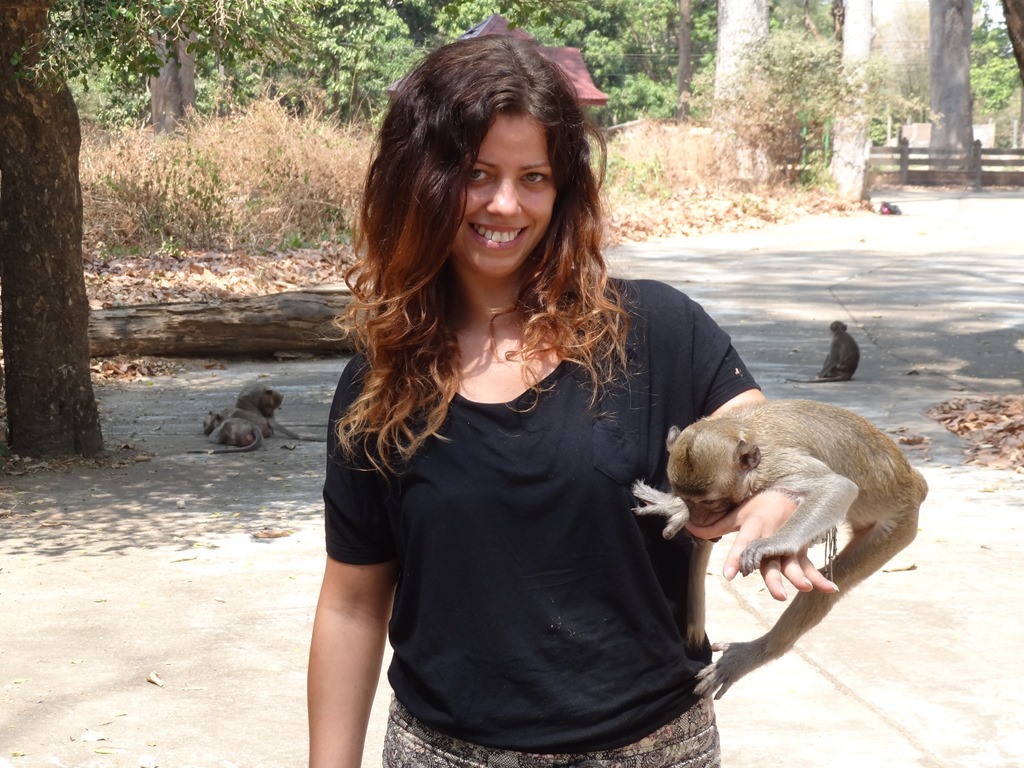
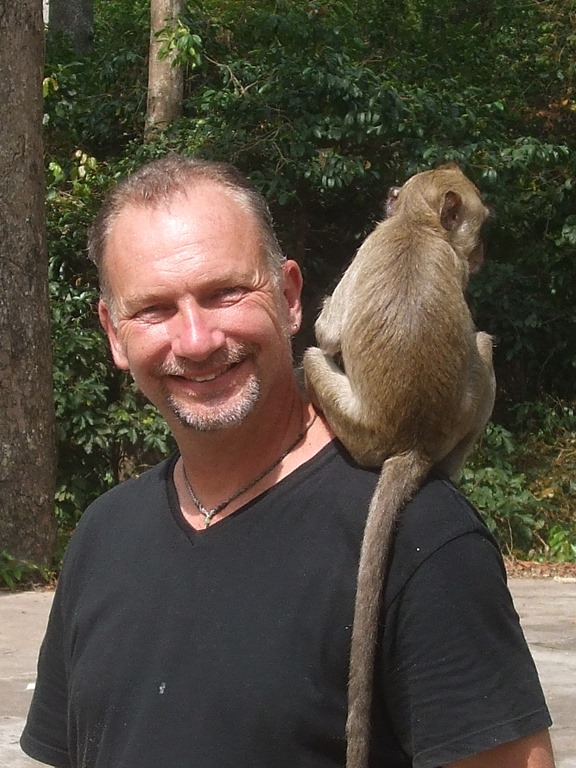
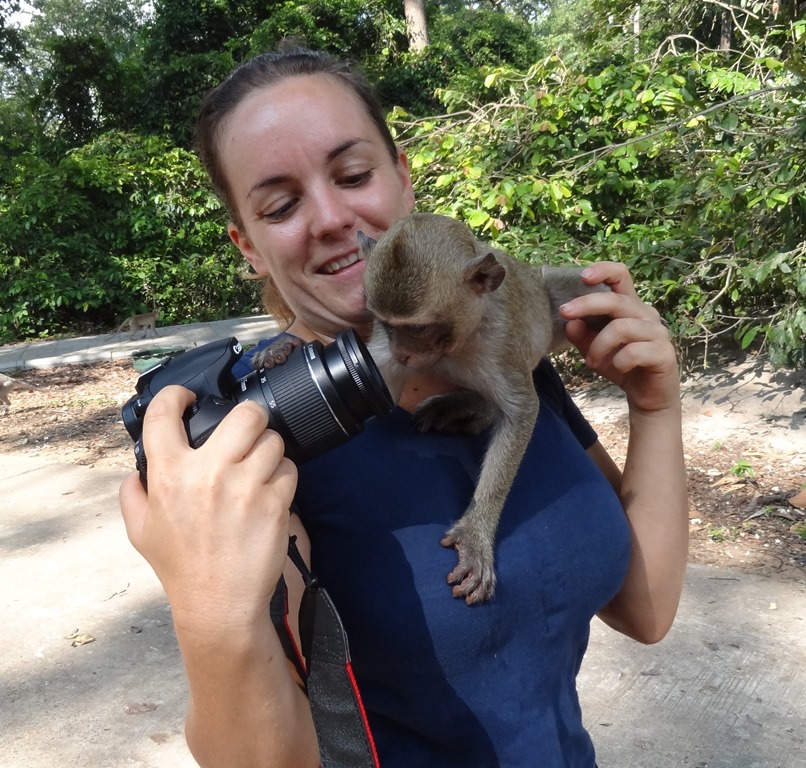
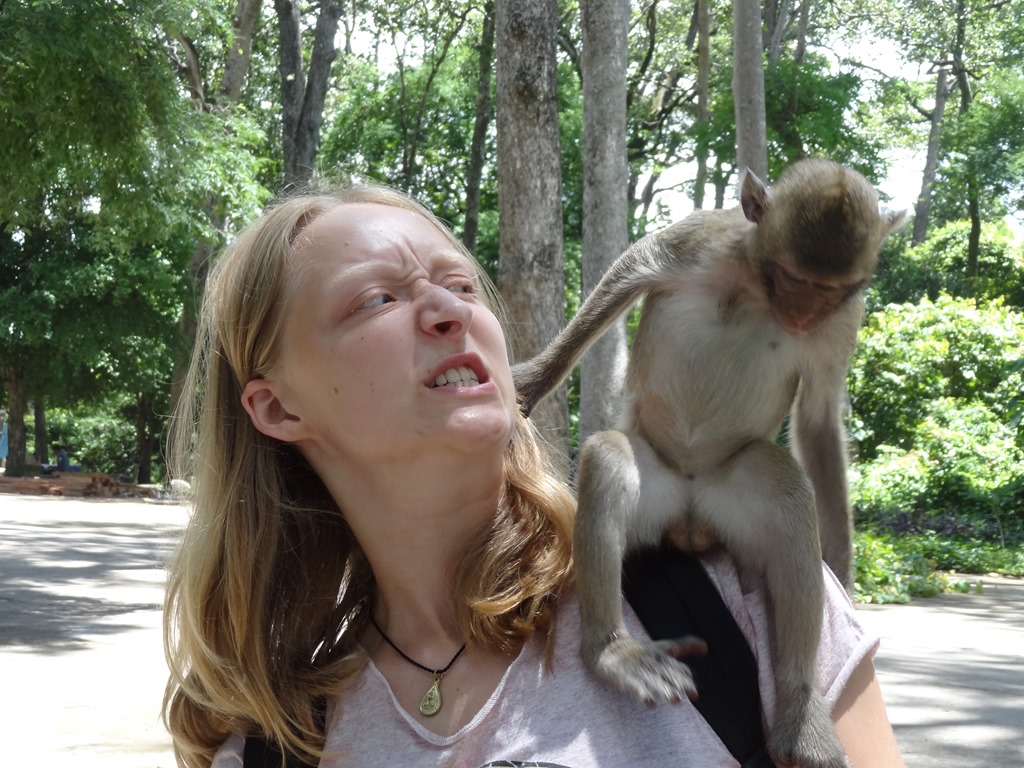
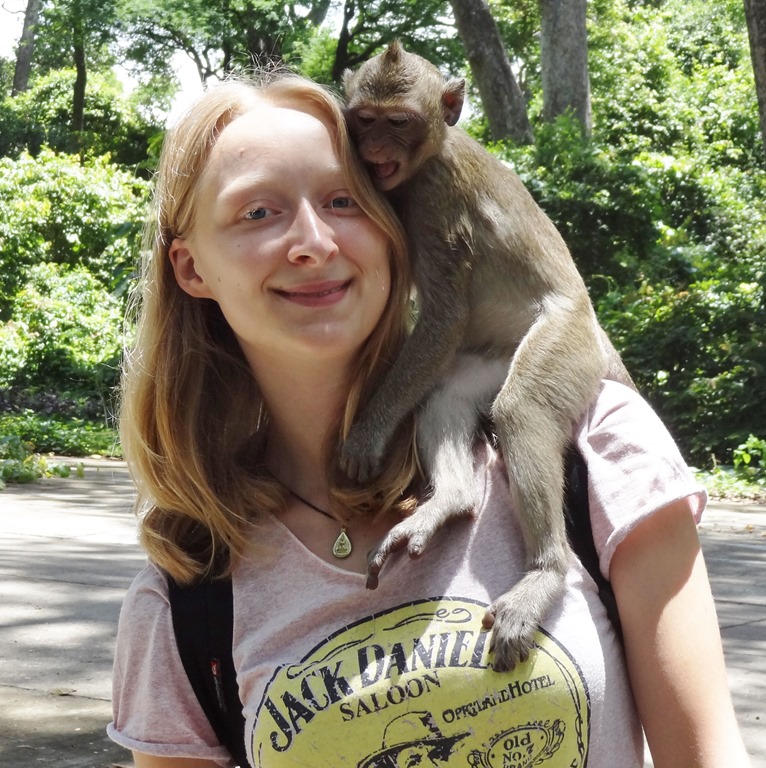
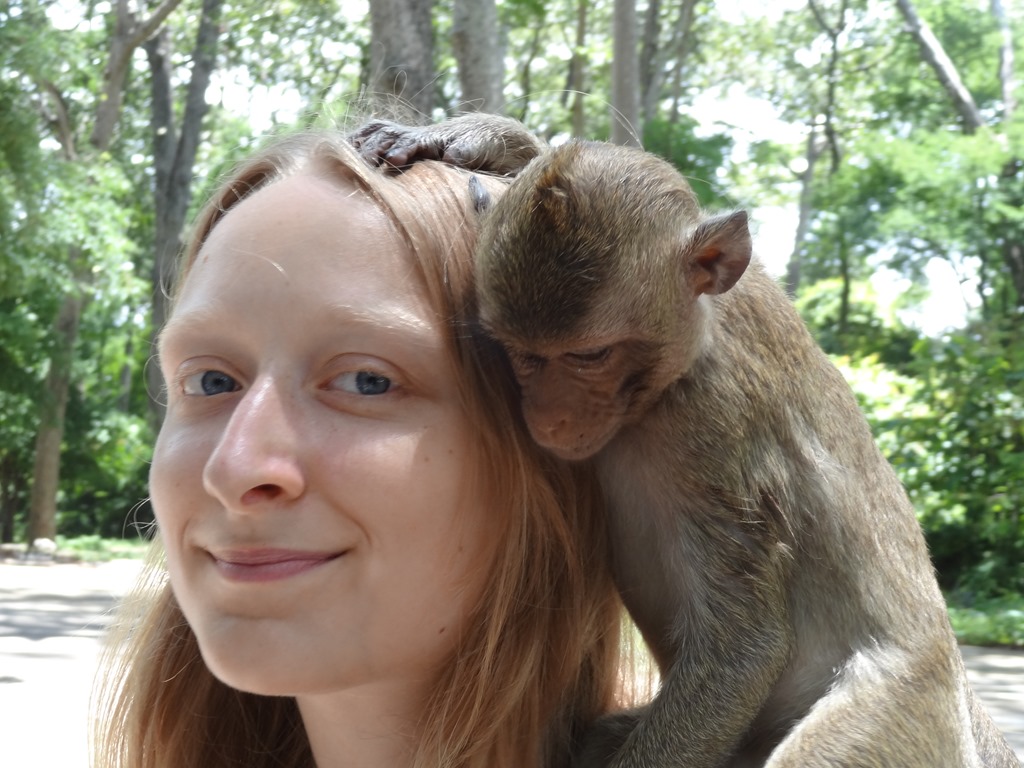
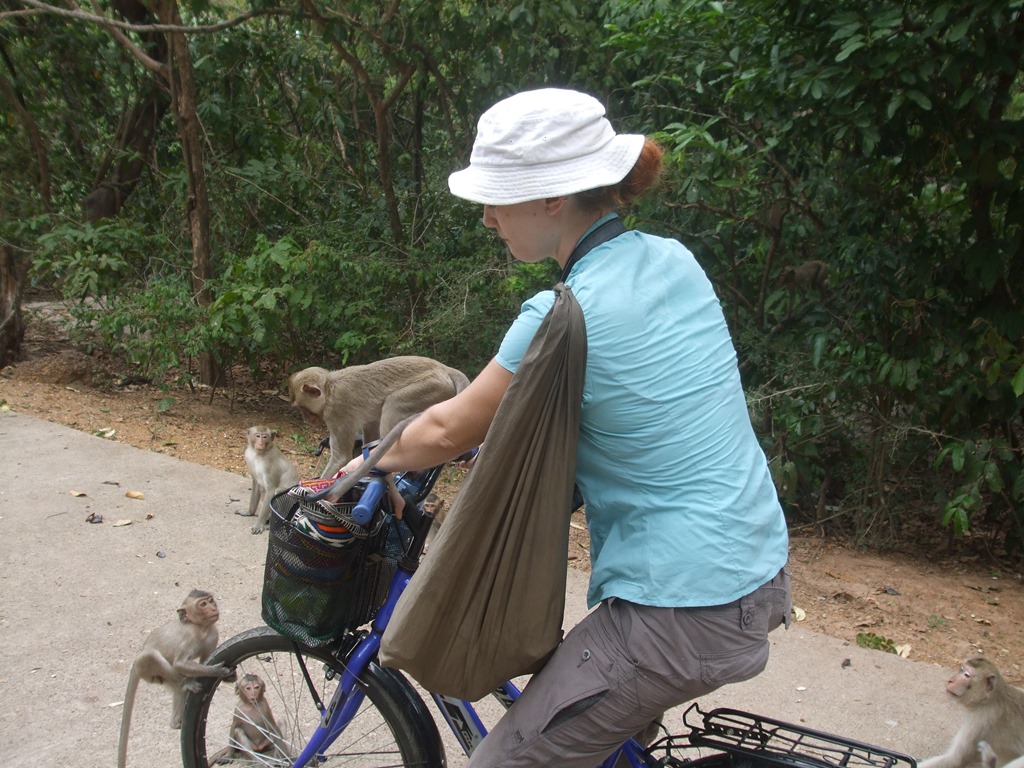
Steve and Sarah taught for a month at Ban Muang Sawat Primary school and the local council-run kindergarten, as well as spending time in the forest. It was about this time that a young male monkey got into the habit of climbing on us, not something we encourage but it was difficult to prevent. As 2013 closes we are a little pleased that he seems to have outgrown the habit. Here he is with Sarah, who was well prepared for him:
Sarah was a hit with lots of the local children she taught, too:
But Steve was a somewhat Big Friendly Giant (BFG) presence in the forest:
They were both giants by Phana standards:
The Little Friendly Monkey (LFM) got to know many of the volunteers who came after Steve and Sarah.
Liz Bekah
Simon
Manuela
Antoine
Joy Amy
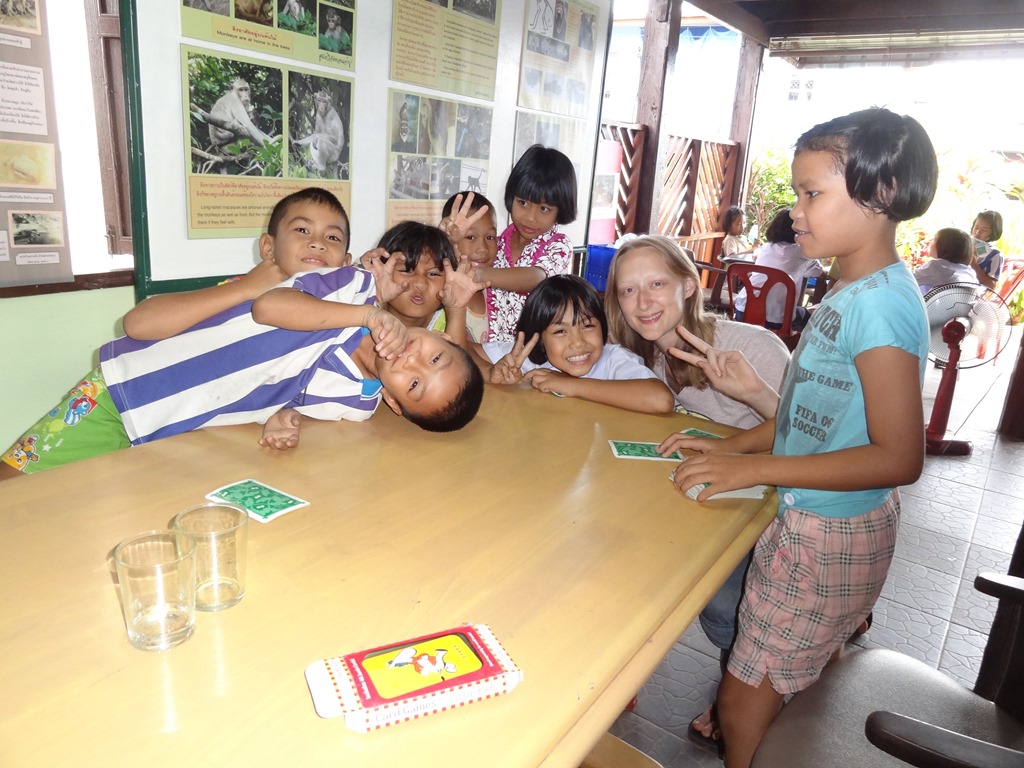
Antonio and Bekah … and two of the girls they taught
Amy taught too (though it may not look like that)
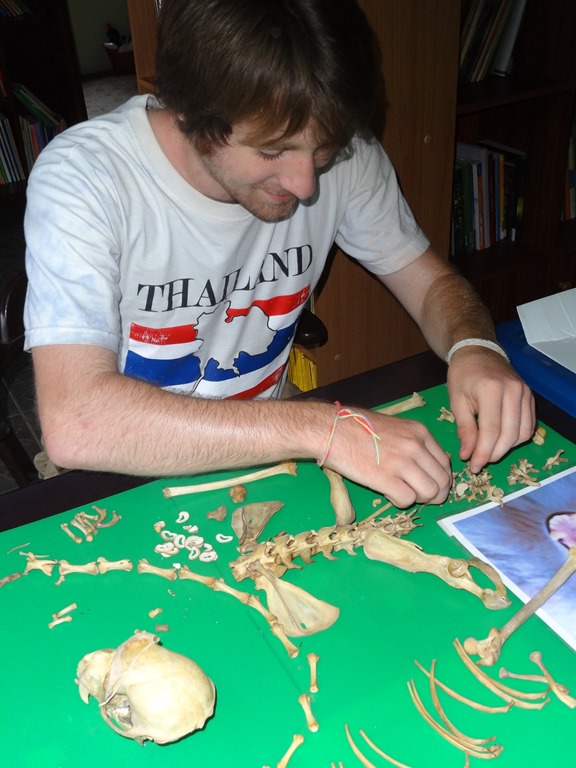
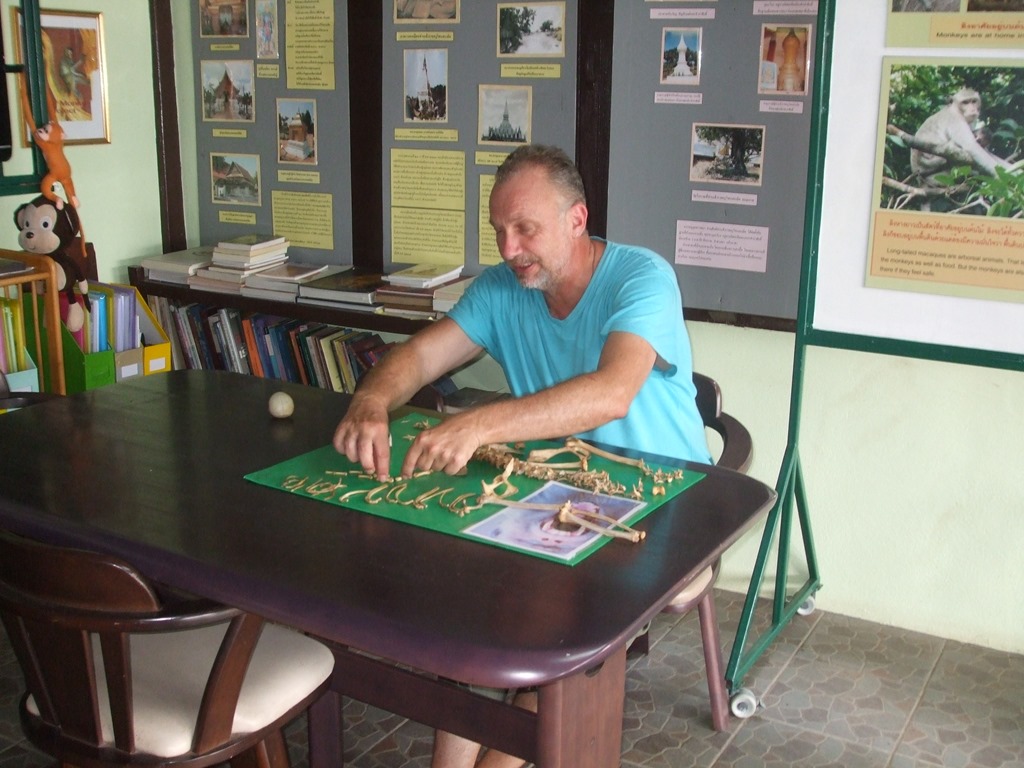
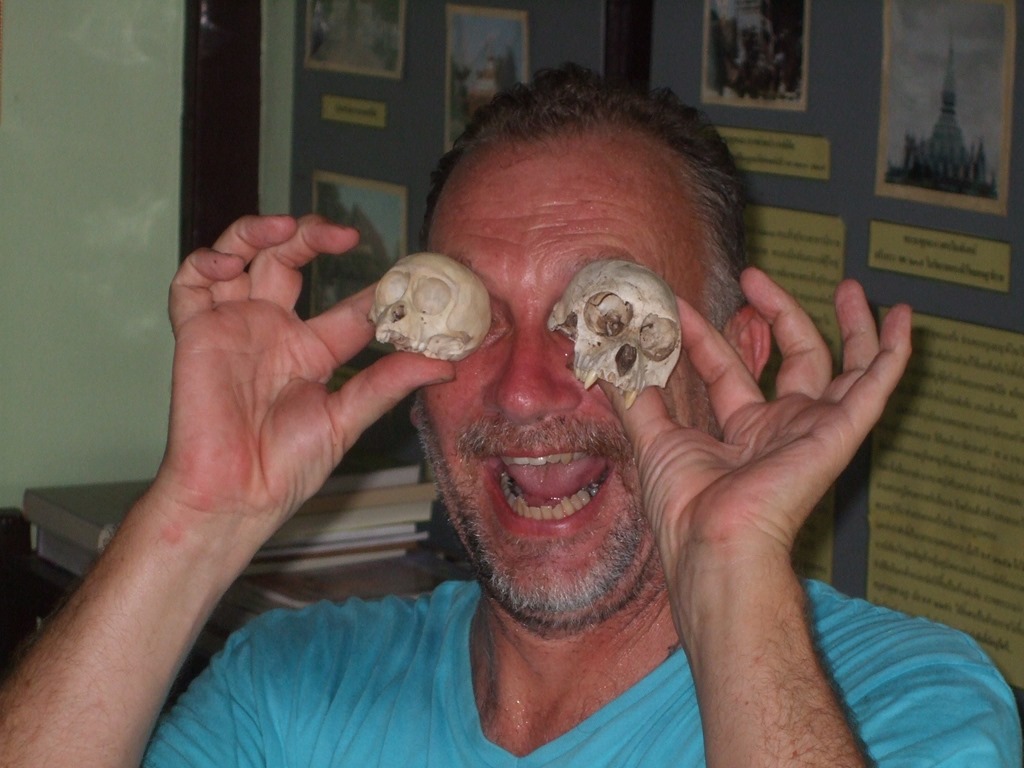
Thomas worked on skeletons … and so did Simon
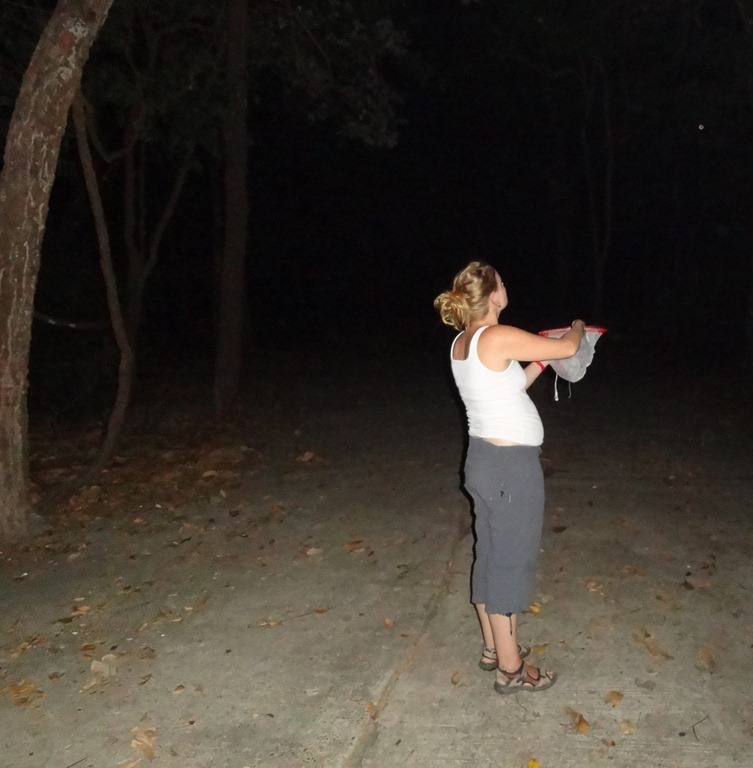
Carol-Ann was only photographed in the forest at night
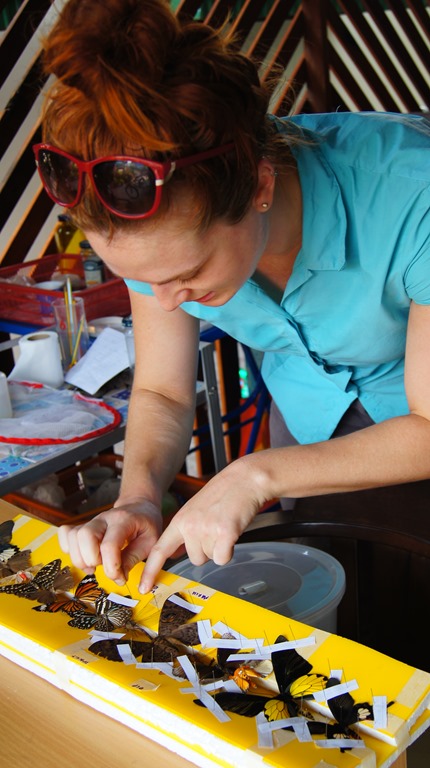
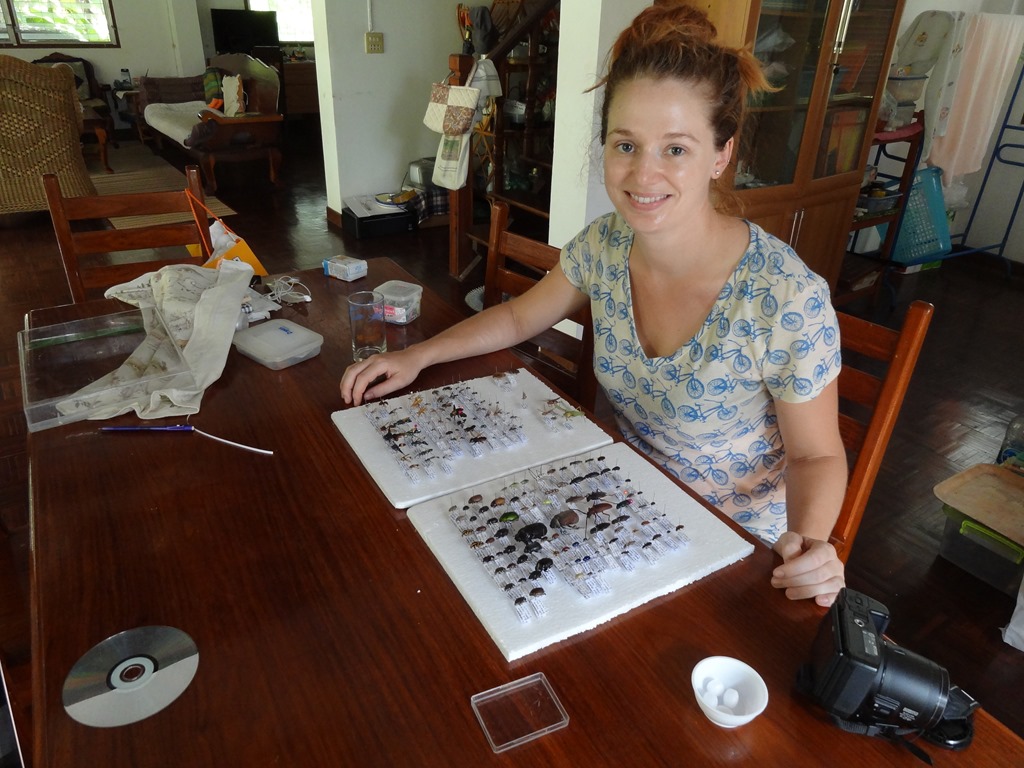
Liz came to Phana to get away from insects … but she couldn’t resist them and made us a wonderful collection
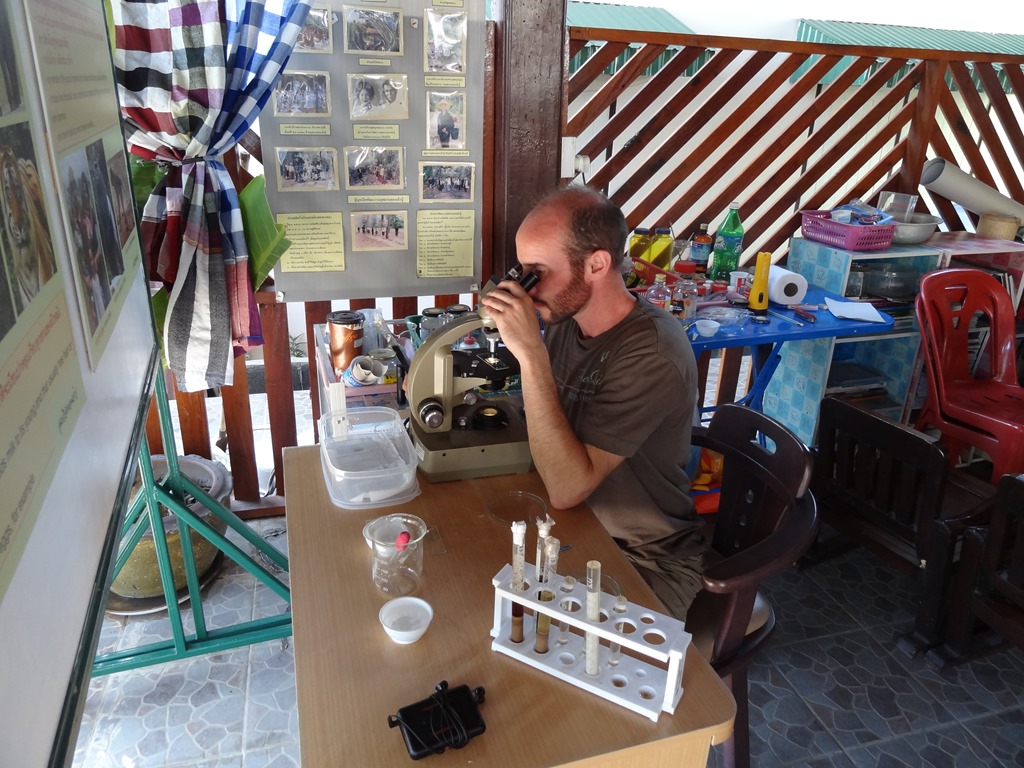
Ethan became fascinated by monkey poo … and found some interesting specimens
Felipe spent several weeks tracking a troop of monkeys and you can see his research paper above. But first he conducted an autopsy on a female monkey that had been found recently dead only an hour or so before he arrived.
Everybody got to ride a bicycle but not everyone was shot doing so
Liz Ethan
Felipe
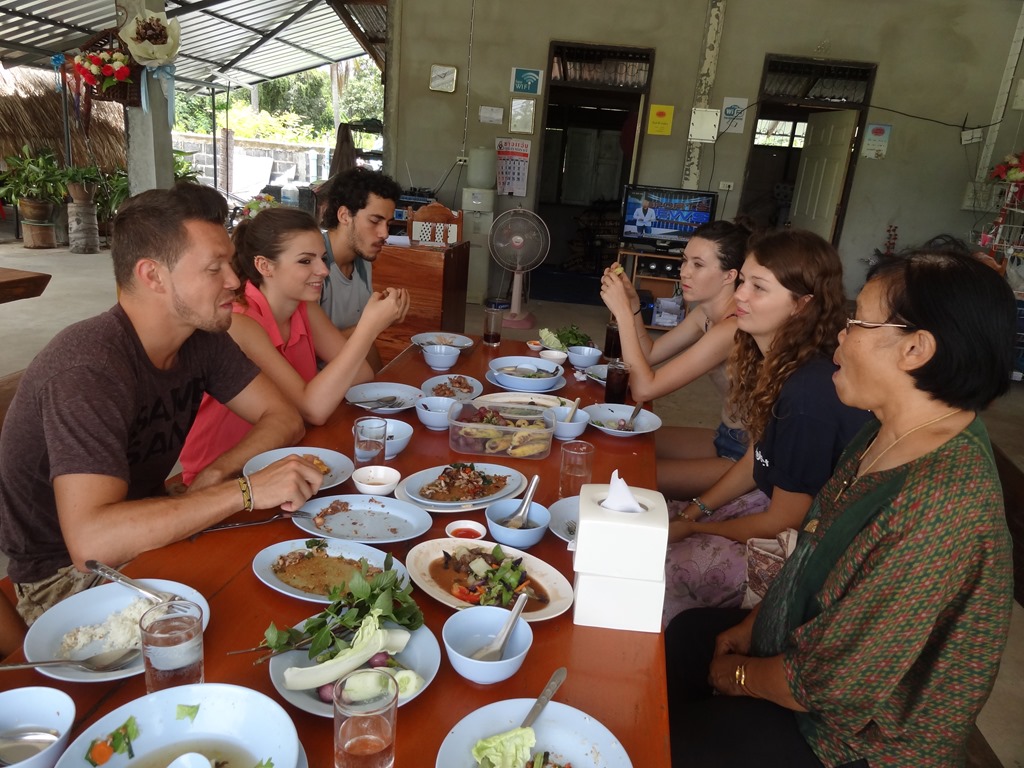
Several people got to sample Kalyani’s breakfasts but Ethan did better than most:
Eating obviously plays a big part in one’s life in Phana – and everywhere in Thailand):
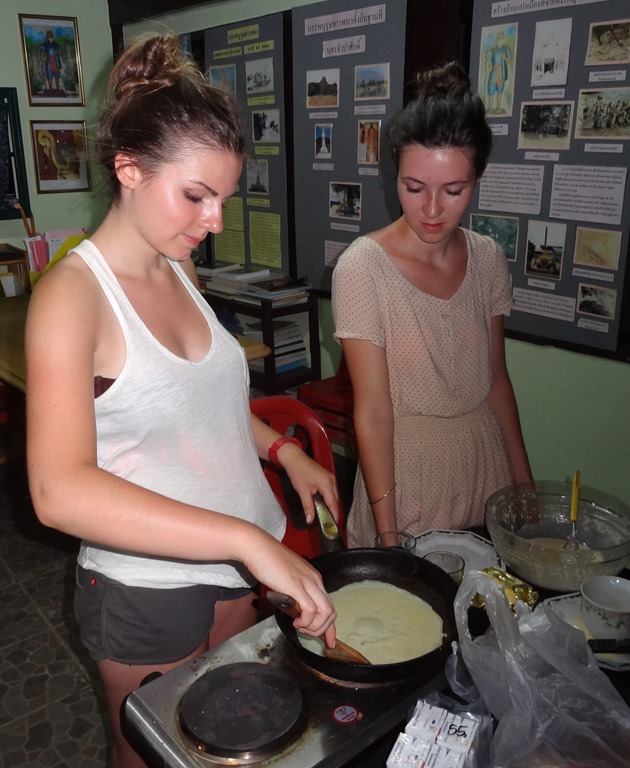
French Crepes prepared by Joy and Lauriane were a highlight:
And for Tessa and Julia, these fried crickets were, too!
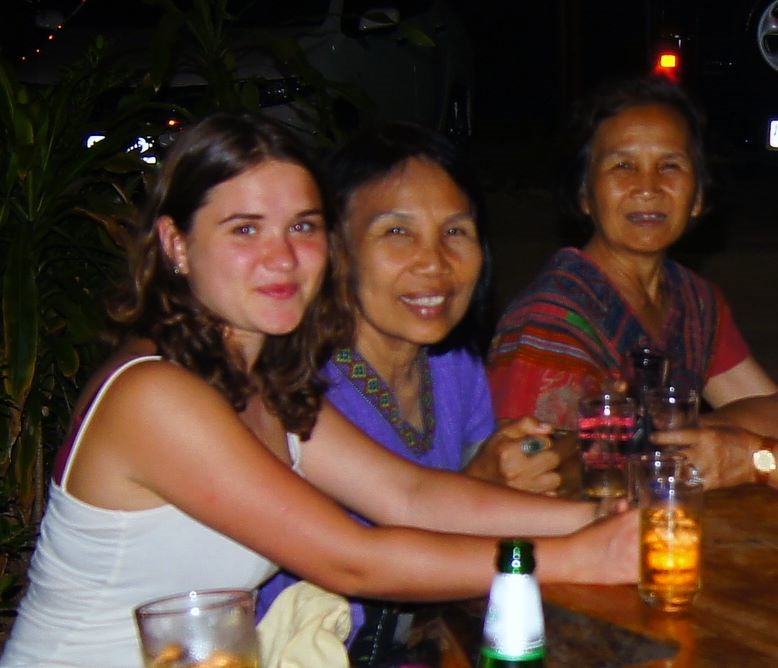
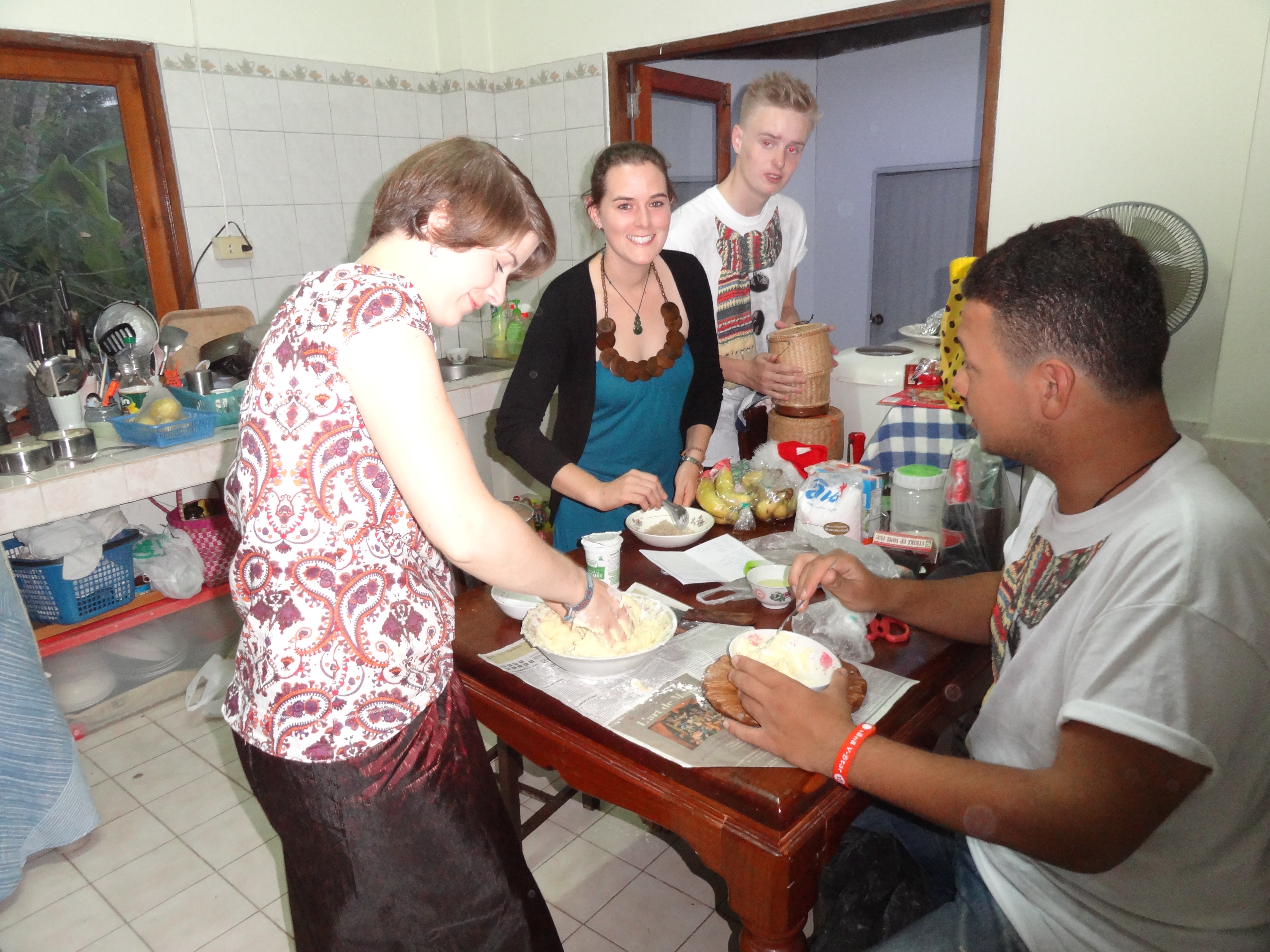
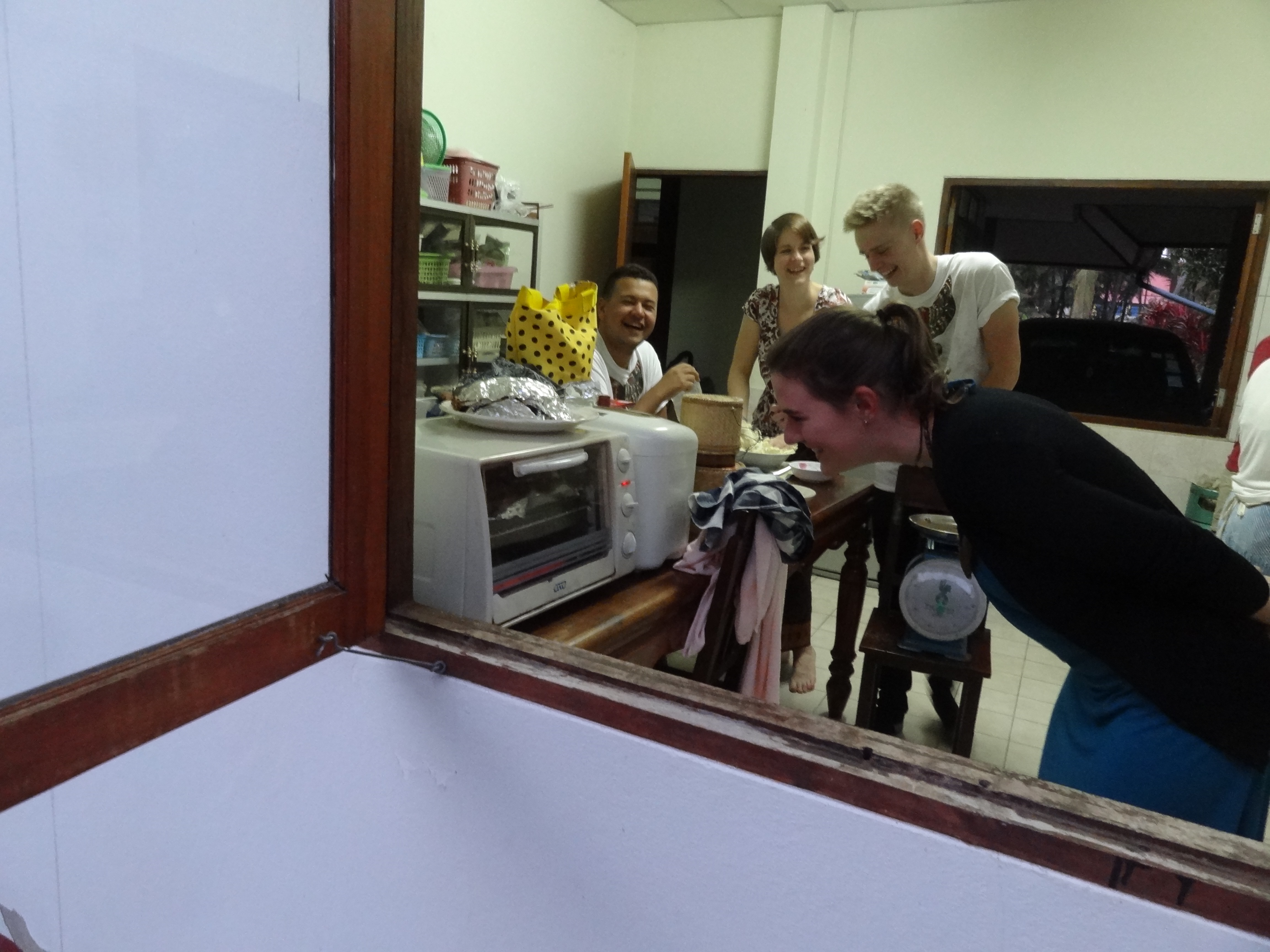
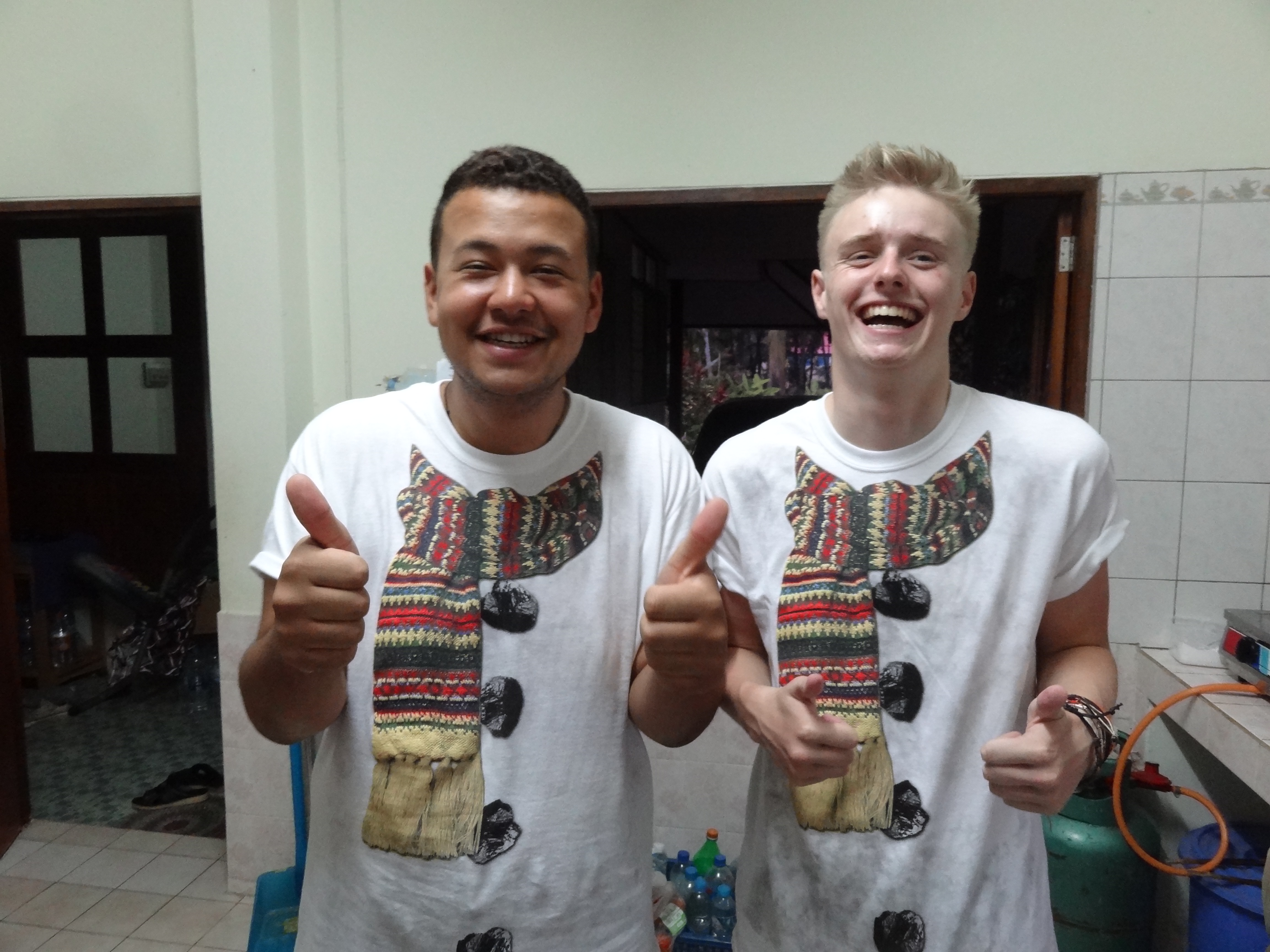
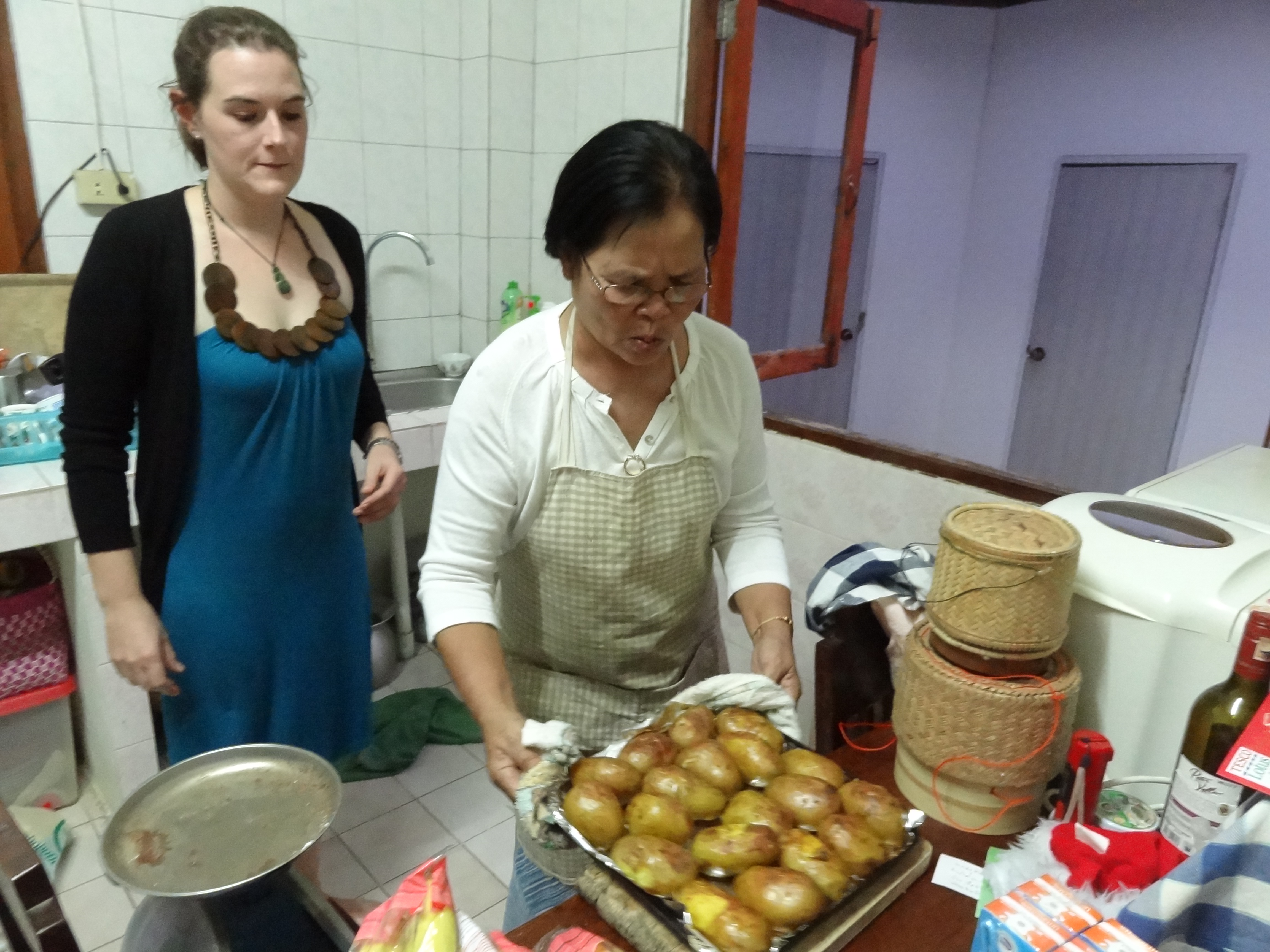
At CHRISTMAS 2013 Pensri and Lawrence were joined at home by Julia, Lydia and Tessa and by the two Project Trust volunteers Cameron and Kevin. The kitchen was very crowded indeed!
TEACHING is one of the things that we like to get involved with. We put on a one-day course for the Continuing Education Centre with the help of two Project Trust volunteers, Claire Mitchell (seen here, standing) and Robyn Stewart:
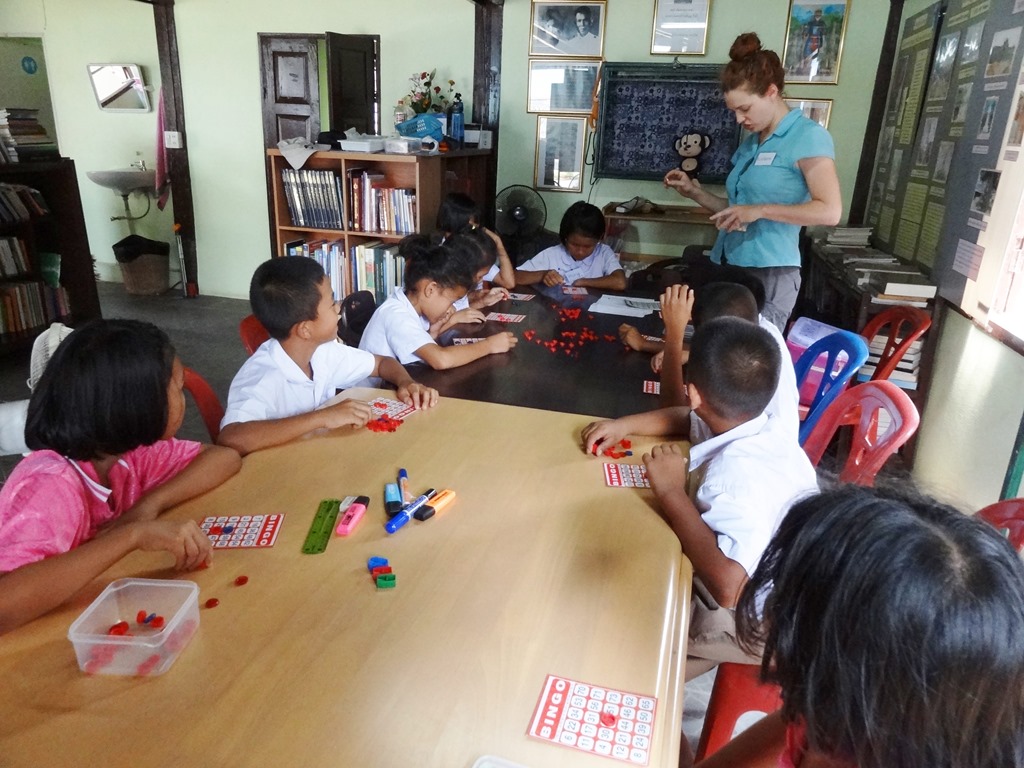
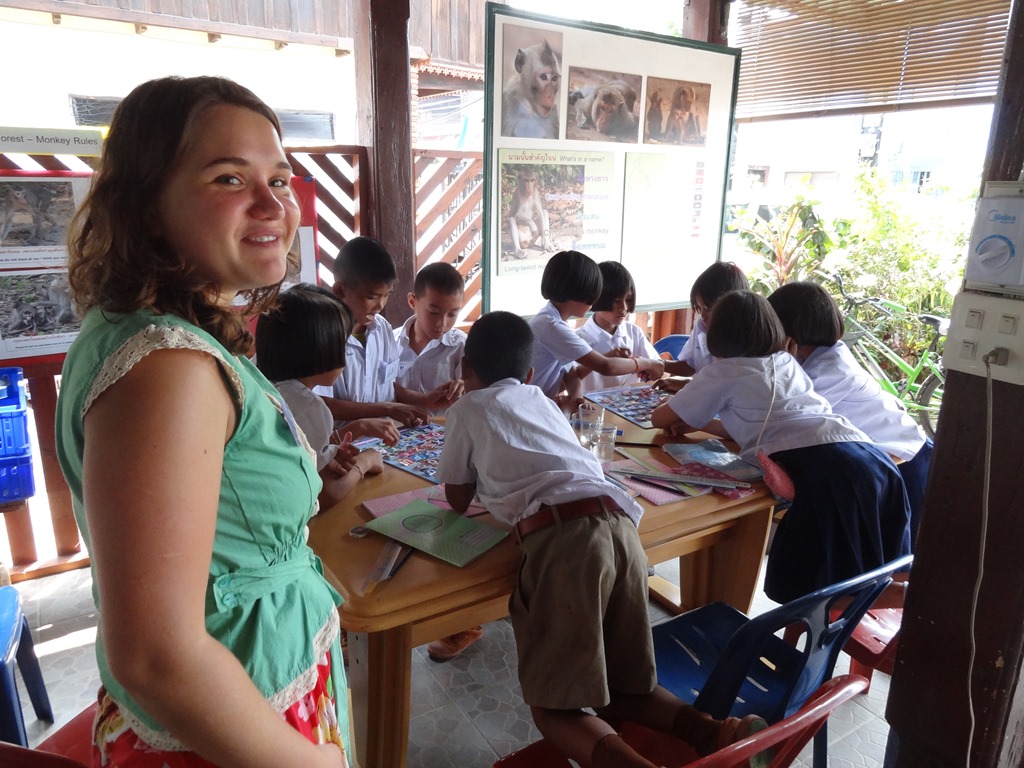
Liz and Maria helped with teaching Ban Tham Yae Primary School who came to us for classes
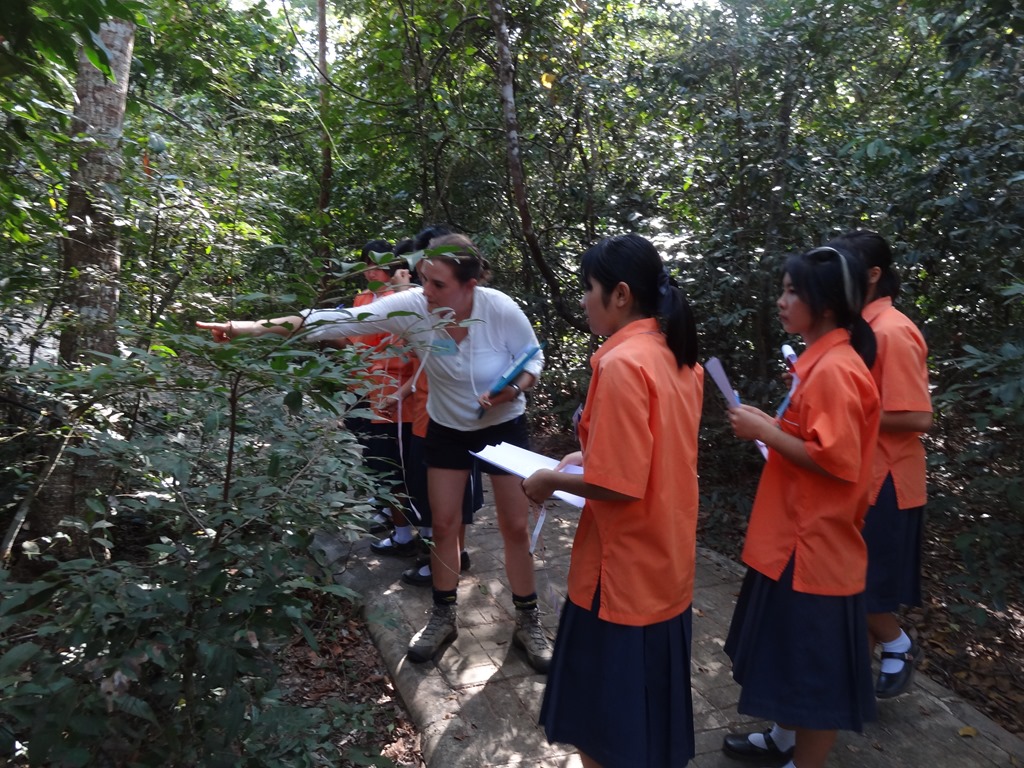
Lydia, Julia, Tessa and Ellliott all taught Phanasuksa students who came for Science lessons in English focussing on the monkeys of Don Chao Poo (M1) and Bio-diversity of the forest:
Amy and Jeff came and produced dissertations for their MSc in Animal Behaviour:
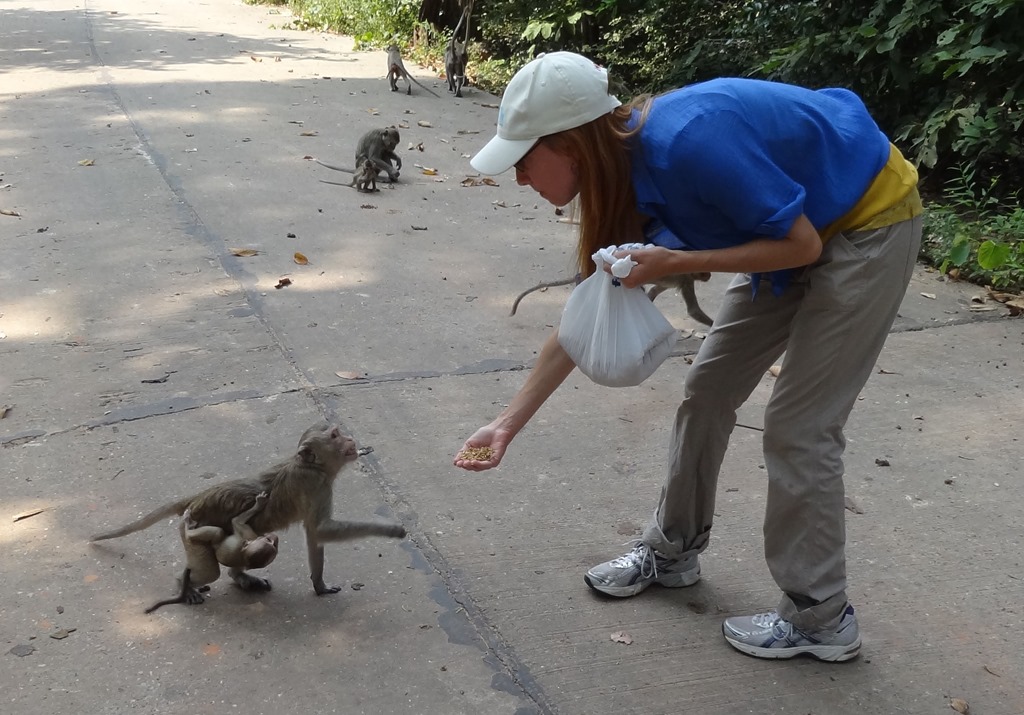
We fed the monkeys
Emma Lydia
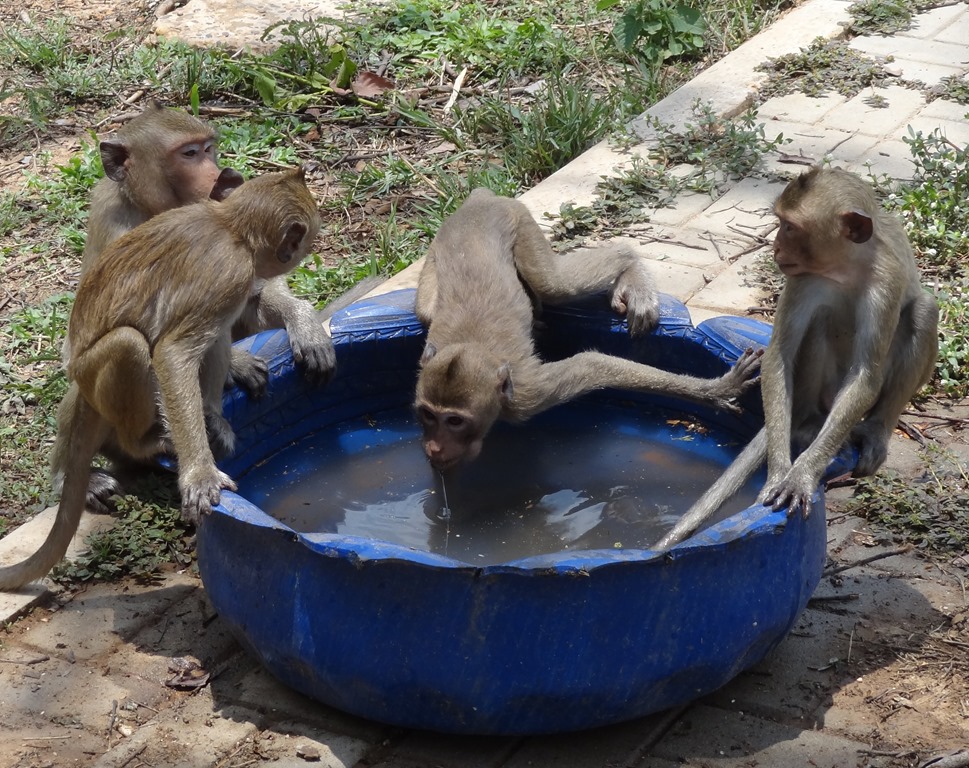
We gave them water
and we counted them, followed them, watched them, photographed them, picked up litter after them … and loved them!
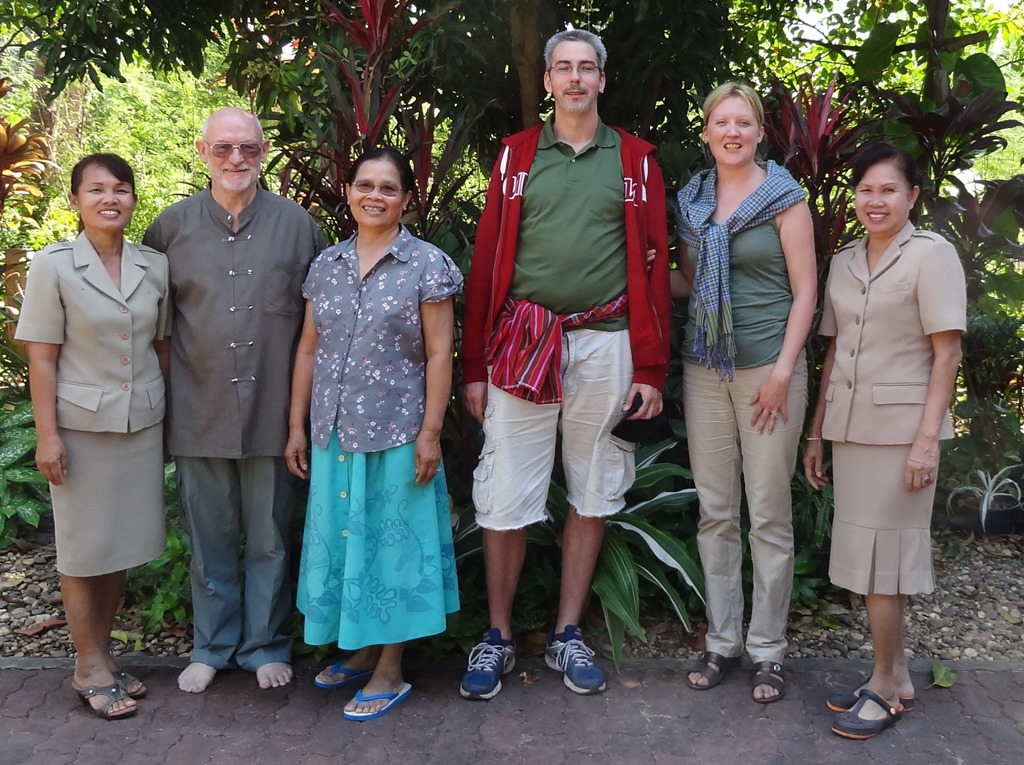
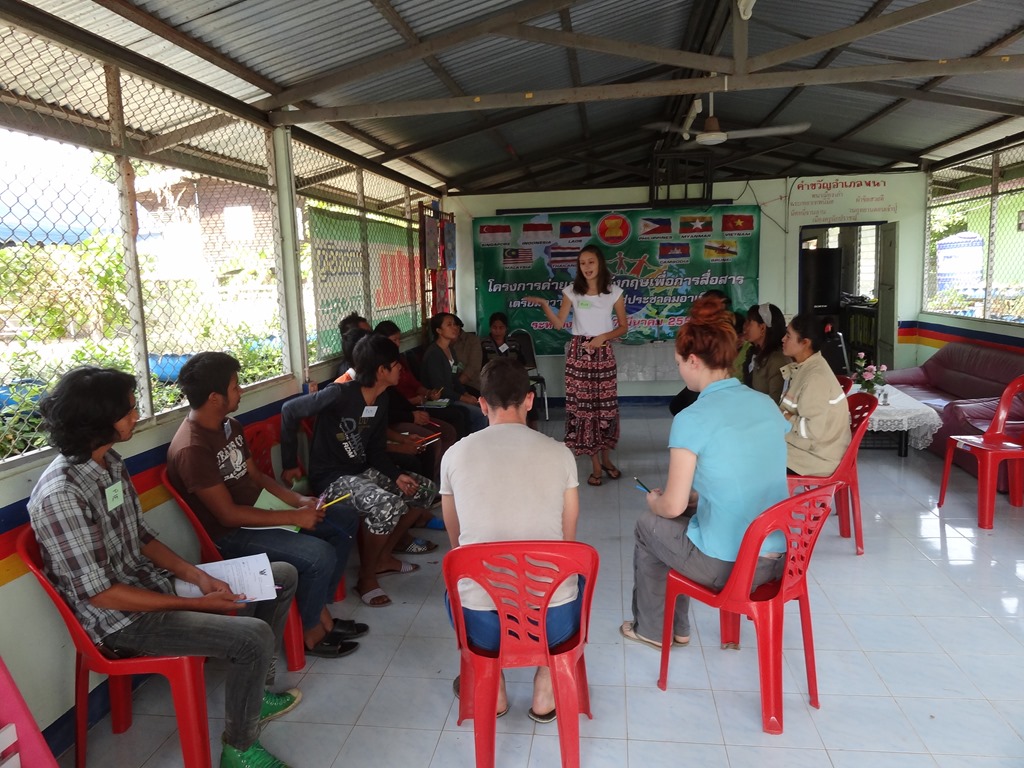
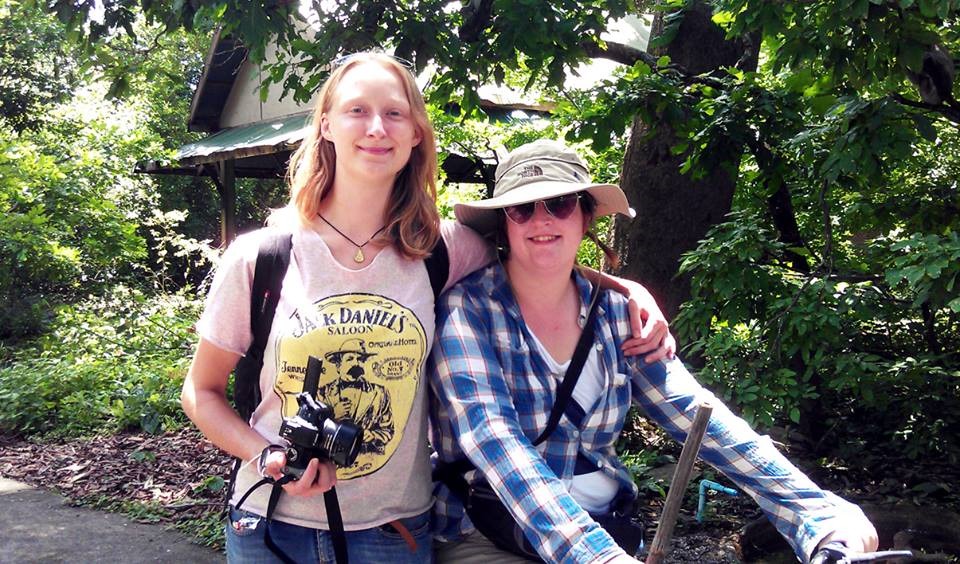
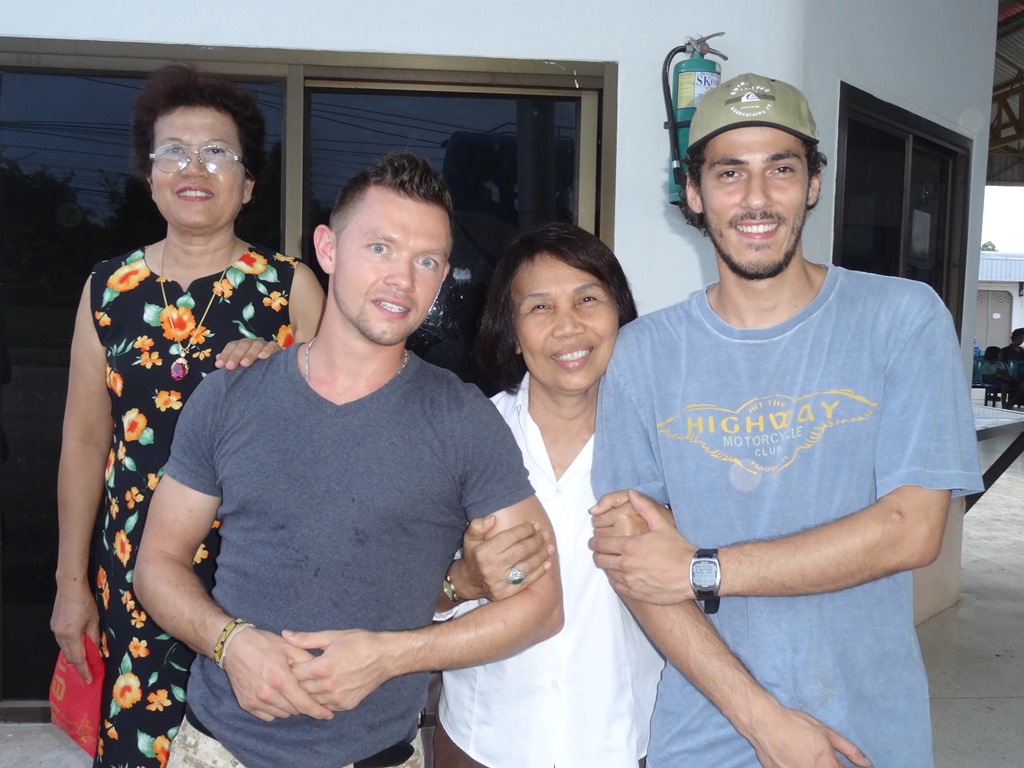
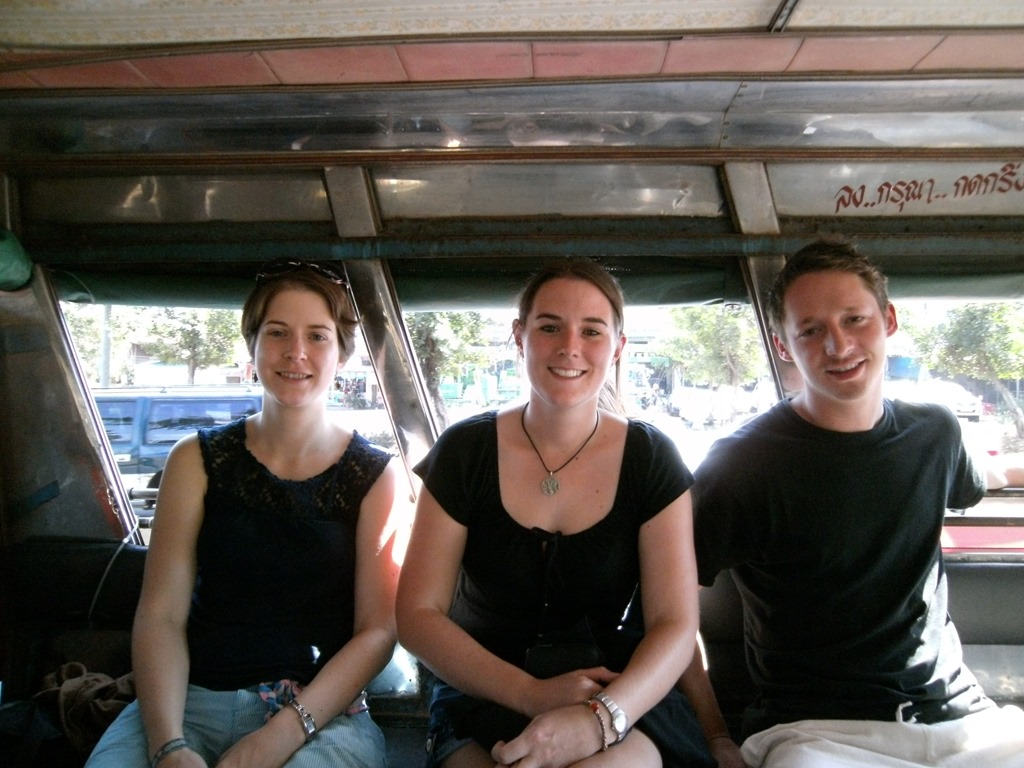
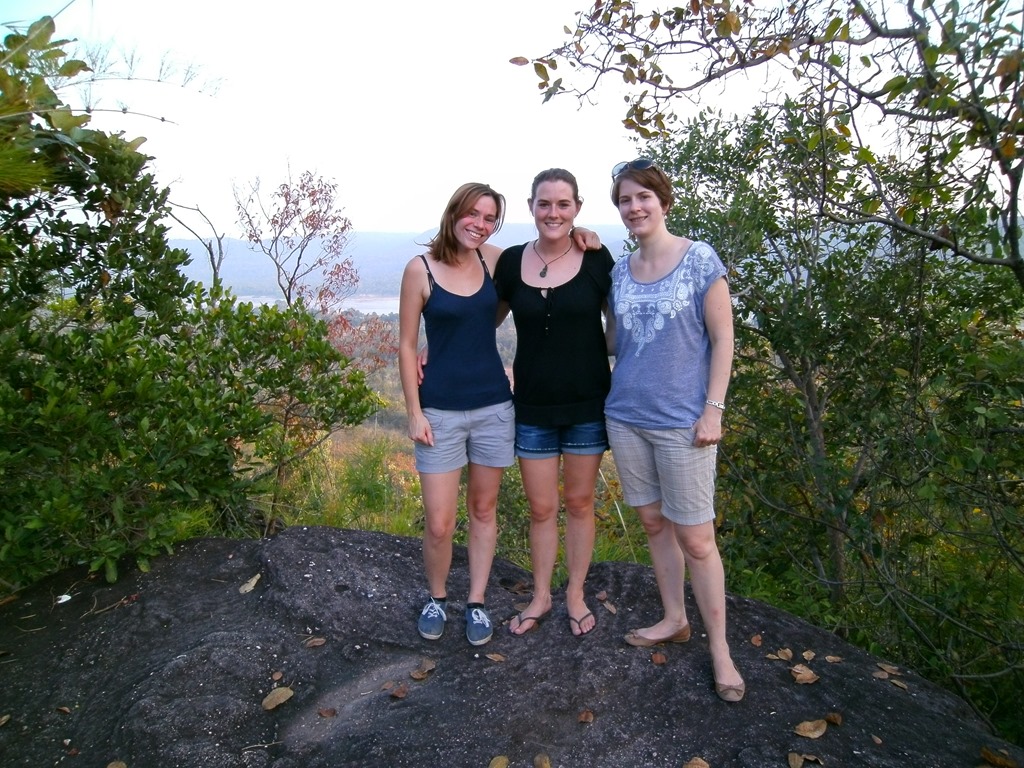
Phana Monkey Project is a small project but it seems to foster togetherness in its volunteers. Here are some of them together:
But maybe the two outstanding memories of 2013 have nothing to do with the monkey forest, but everything to do with music.
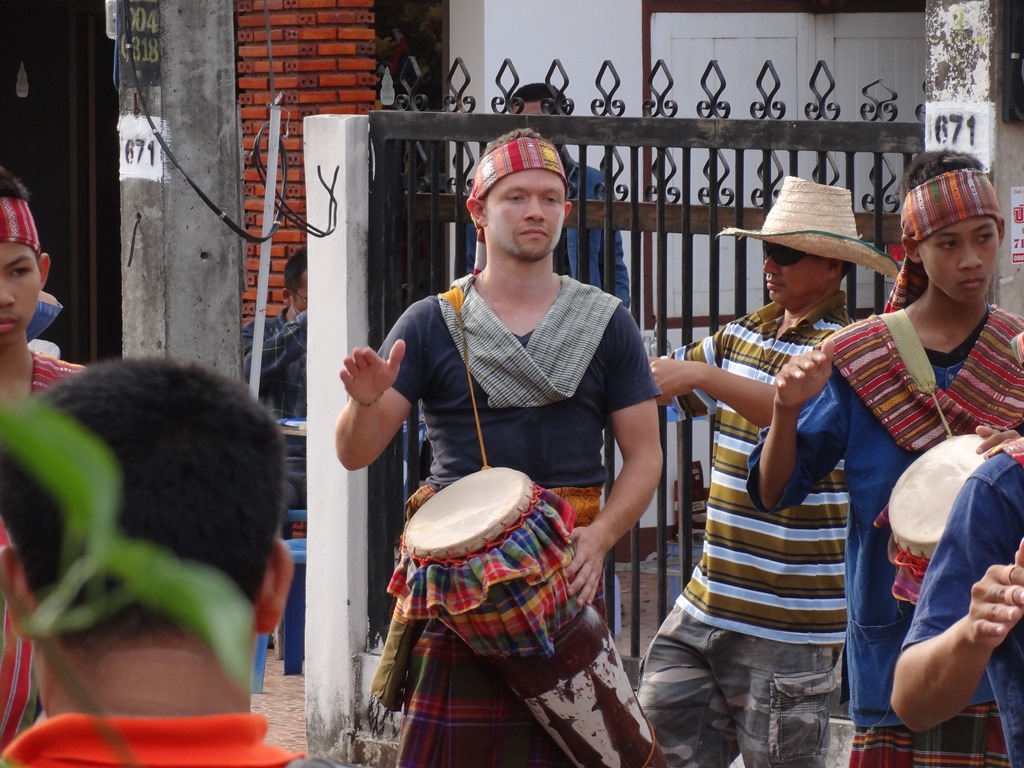
Antoine became a drummer for a festive parade
and Simon not only taught the macarena to these children
but check out this short video to see how he spent many evenings at the Study Centre
Phana Monkey Project would like to thank all the researchers and volunteers who have helped us so much throughout 2013. And most of all we thank you for your company — we have enjoyed ourselves this past year and we hope you and our readers have done so too. Good luck to you all in 2014!
It is amazing how much a dedicated volunteer researcher can achieve in a short time. Laura Brodey was with us for just under three weeks but she left a substantial body of work behind her when she left earlier this week. She located and tracked eight nursing mothers and analysed their interactions with other monkeys. She was particularly interested in seeing to what extent they were willing to entrust their babies to other monkeys and how far they allowed the babies to roam from them.
Here is one mother who interacted with another female for some time during which the two groomed each other: (as always, CLICK on an image for an enlarged view)
You can read Laura’s analysis of these monkeys’ behaviour by clicking on the RESEARCH PAPERS page above.
Laura also began a study of the termite mounds that she located within 10m of part of the “Buddha Path”. She used our hand-held GPS (Garmin Dakota 10) to help her map their location and she also recorded data about each mound. Here is one of them, an active mound and one of the largest:
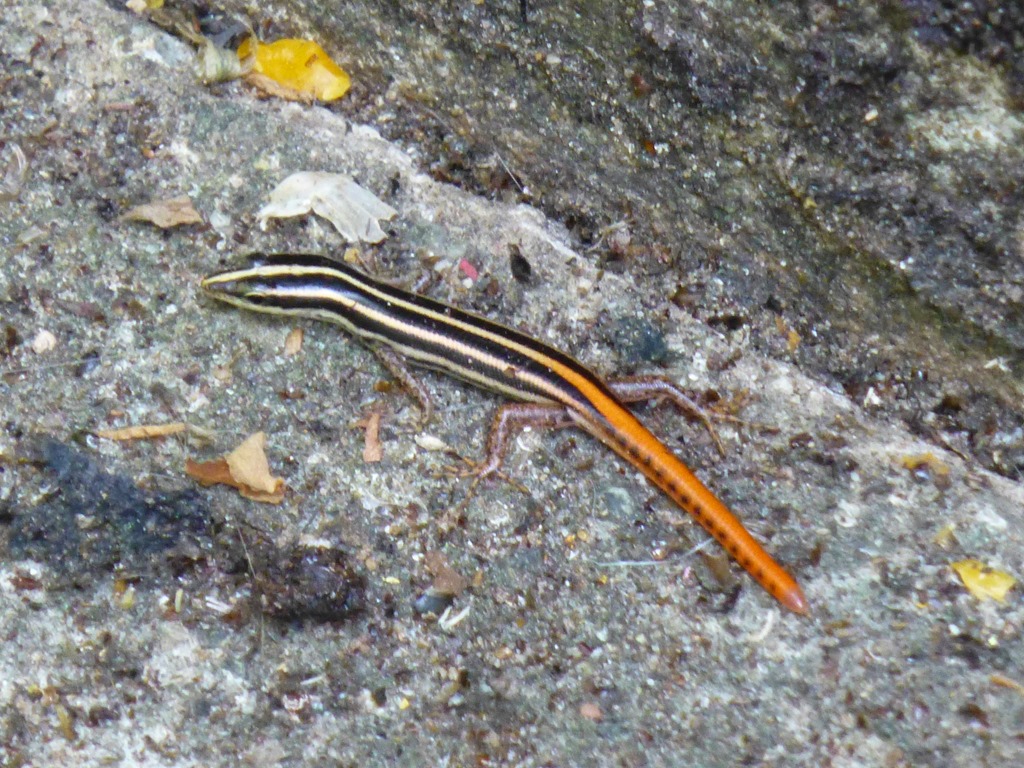
Laura also photographed a range of fauna in the forest, this being our first sighting of what appears to be some sort of orange-tailed skink:
We had seen this red-necked keelback snake before but these are better photos than we had got previously:
We have been seeing Indo-Chinese ground squirrels for a couple of years now, too, but they are very shy creatures and again this is a better shot than any we had before:
And like Elliot Capp and Liz Cassidy before her, Laura was always keen to photograph the butterflies:
Like these monkeys, we shall miss Laura in the forest and in Phana!
One troop of long-tailed macaques living in Don Chao Poo Forest, Phana, Amnat Charoen Province, Thailand, was chosen as a study into the ranging of the monkeys inside and outside the forest and the behaviours they evidenced during the course of a number of days.
The particular troop selected for the study is one which does not seem to compete openly for the human provisioning which the other three troops seem to rely heavily upon. It is also the troop which has been observed spending time in the grounds of Phana District Hospital, roosting on the edge of the forest adjoining the western perimeter of the hospital.
Felipe do Carmo Jorge, a primatologist from Brazil, spent a month with us and almost all of that time he spent on this project, which he devised and implemented himself. We are very grateful to him for his work, which has moved our knowledge of the resident long-tailed macaques considerably.
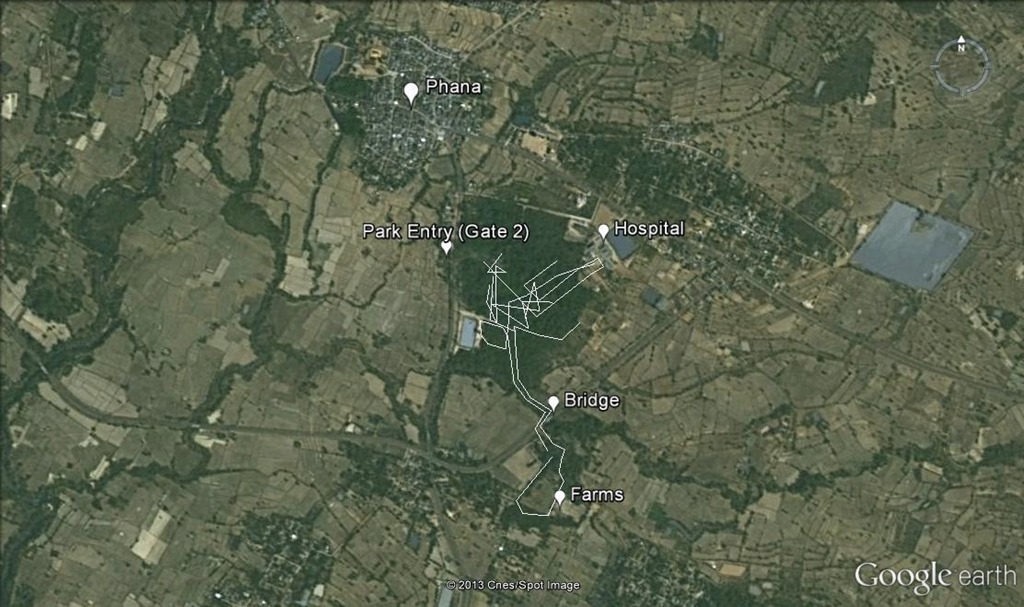
Here you can see the tracking he recorded
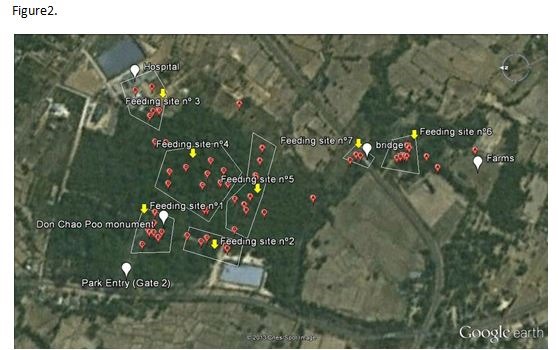
and the feeding sites he marked:
You can read his complete paper by clicking on the RESEARCH PAPERS page.
This paper is published here with grateful thanks to the author, Felipe do Carmo Jorge.
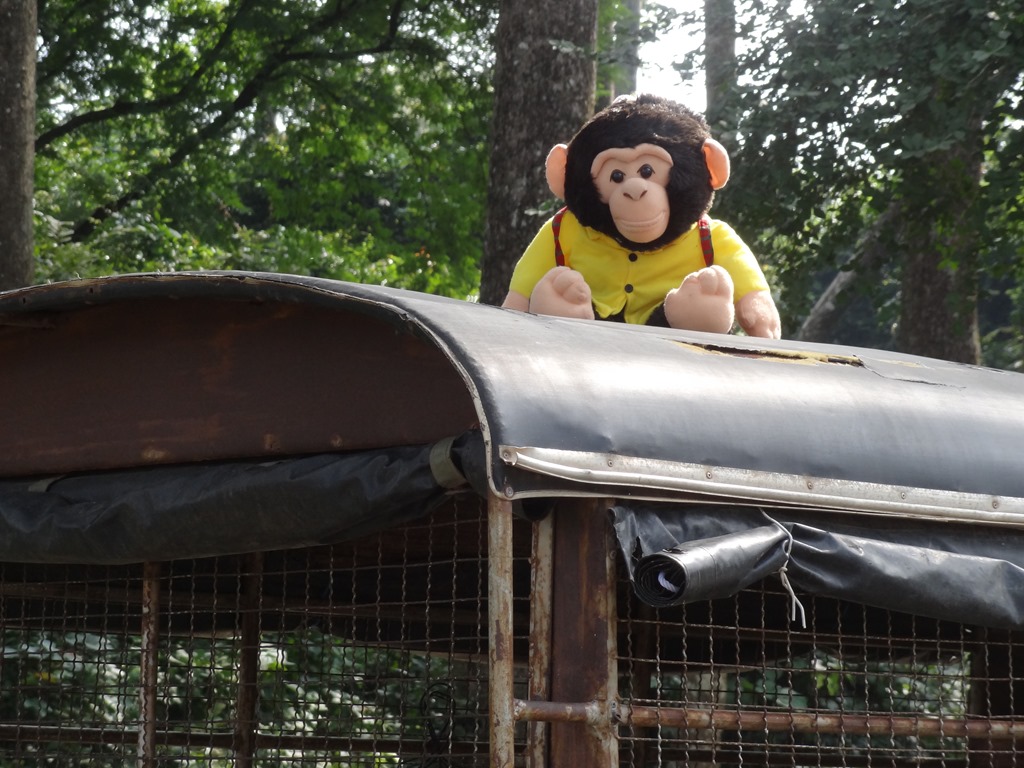
Is this an effective way to frighten a long-tailed macaque? Some of the people who visit Don Chao Poo Forest in Phana, Amnat Charoen Province, Thailand, seem to think so.
(CLICK on an image for an enlarged view)
There seems to be the possibility here for some fun research. Which cuddly toy are the monkeys most/ least afraid of? Yesterday I found a sub-adult male monkey tenderly grooming a cuddly dirty-white rabbit! Unfortunately I didn’t have my camera with me. Not for the first time I have resolved to ALWAYS have it with me.
Phana Hospital was built on land which was formerly part of the “protected” forest and many monkeys still regard it as part of their territory (see my previous post). The hospital car park displays this sign:
It warns people to beware of monkey bite! This is in the hospital car park because every day a noodle vendor waits there to feed people who come to visit patients, though the monkeys assume that he is there to feed them.
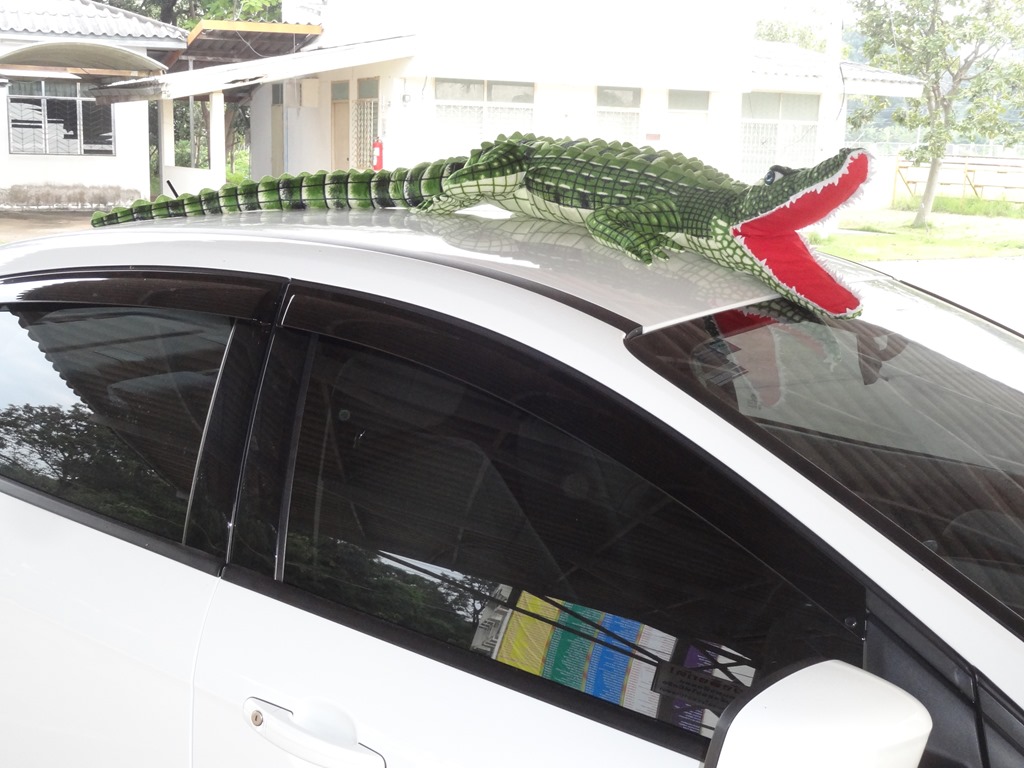
Another monkey-frightener is the shiny, plastic crocodile. This one has the force of Buddhist mythology behind it, because in the tales of the Buddha’s previous lives there are several in which crocodiles are shown as enemies of monkeys. The crocodiles always want to eat the monkeys in these stories but they are outwitted by the superior brain-power of the monkeys.
These plastic crocs are reproducing at a rate almost as fast as the monkeys and appropriately they are seen most often at the hospital where they keep monkeys off the smart cars belonging to doctors and nurses. At first just one doctor put her faith in a plastic crocodile but she has been followed by at least four others.
The conclusion has to be that green plastic crocodiles are an effective deterrent to long-tailed macaques. Would someone like to devise an experimental procedure for testing this hypothesis?
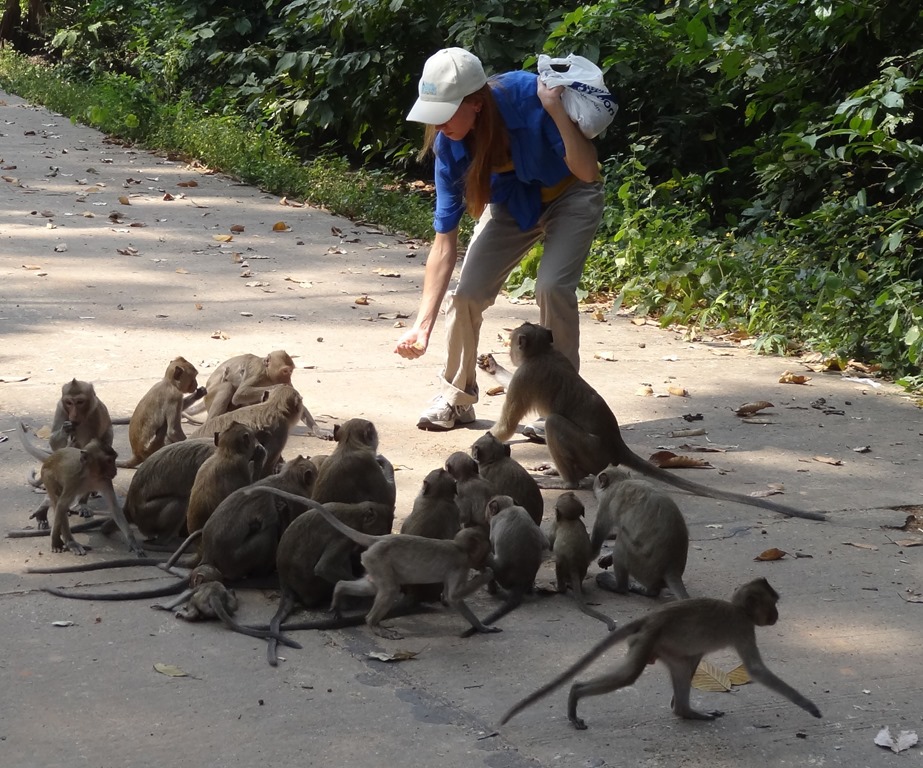
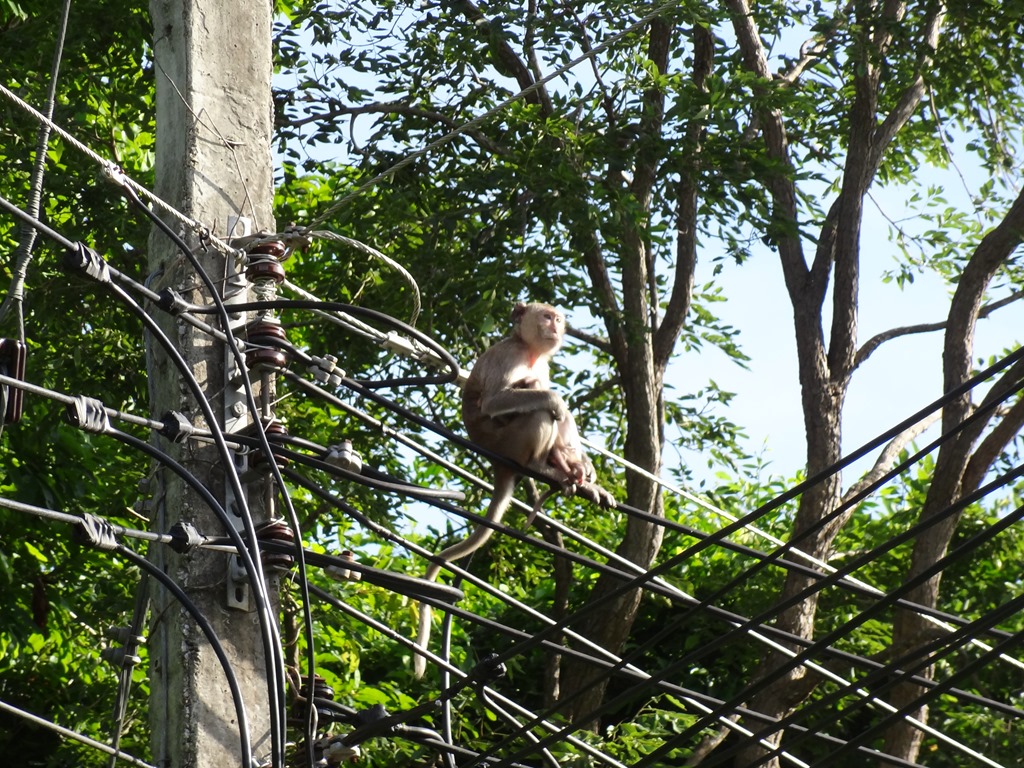
Most of the approximately 1,000 long-tailed macaques that live in Don Chao Poo Forest, Phana, can be found in the forest itself. There are two or three places where visitors often provide them with food. Many of the monkeys wait by the main gate, either just inside the forest or outside, along the road. One the of the surprising things about this provisioning by visitors is that although there is never enough food for all of them, the monkeys always alert others to the availability of food, so that when a visitor with food is spotted, monkeys swarm towards the source. And they do this every time, despite the fact that almost all of them will be disappointed.
But as the number of monkeys in the forest has increased, so too have the stories of marauding groups travelling further afield, to nearby villages and to the grounds of the Phana District Hospital. The hospital, it should be noted, was built about 12 years ago on ground that had been part of the forest. So as far as the monkeys are concerned, the hospital is their territory.
When we started to investigate stories of the monkeys invading the hospital, we found them very exaggerated. On most days we found none, and never more than 3 or 4. But we were visiting during the day. And then one morning we came across a large group moving into the forest from the direction of the hospital. That led to us going to the hospital early in the morning (between 7 am and 8.30 am) and again at about 5.30 pm. The results were quite different. On several occasions we found almost 200 monkeys at both ends of the day! So the monkeys are using the hospital grounds as a roosting place.
When we started to watch these monkeys more closely we found that they were also foraging for food, especially early in the morning. On one or two occasions we found that dustbins had been raided but that seemed to be because they had not been emptied as they normally would have been.
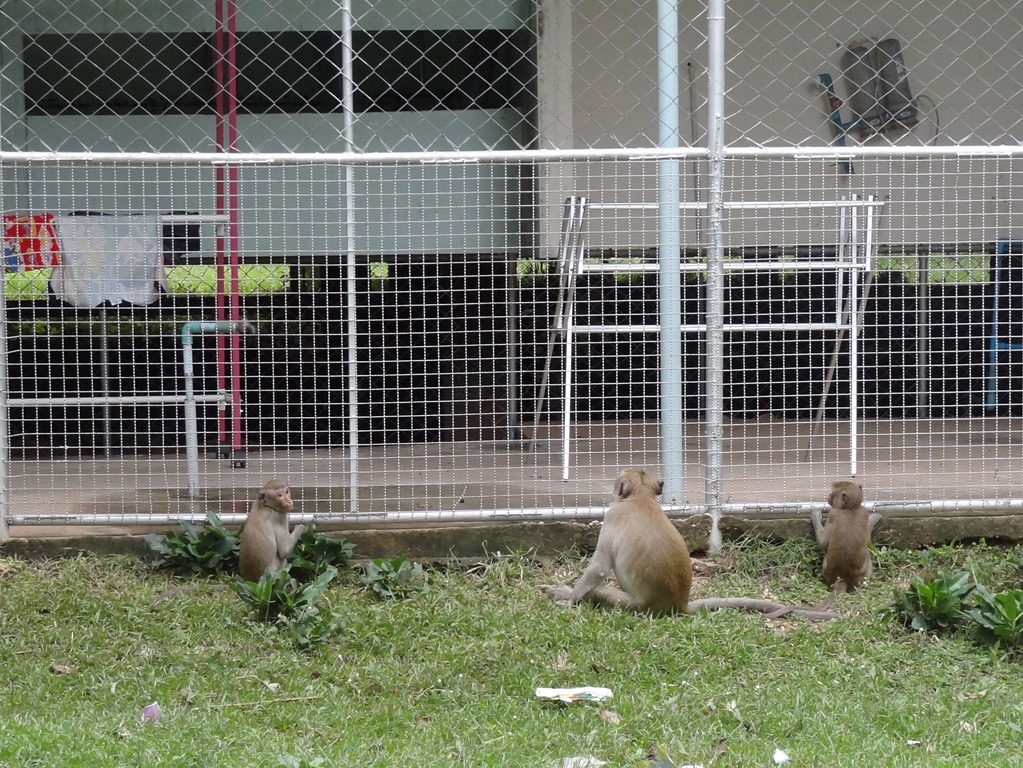
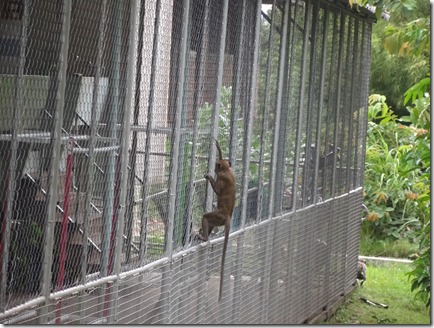
A few monkeys hang around behind the main wards and despite this grill they are often rewarded by people, especially young children, visiting patients.
This monkey hadn’t been so lucky and was getting a bit impatient.
So the hospital does have three main issues to address regarding these visits by the long-tailed macaques. The main problem, but perhaps not a difficult one to address, is to ensure that dustbins are emptied frequently and regularly. If possible, they should not contain food waste that attract the monkeys. Secondly, visitors to the hospital must be persuaded not to to feed the monkeys. They also need to obtain the co-operation of the noodle vendor who operates in the car parking area, so that he spreads the “no feeding monkeys” message, which will be to the vendor’s benefit as well as to the hospital’s.
On the part of the Phana Monkey Project, some research was required to get a better idea of the movements and habits of this group of monkeys which use the hospital in the ways I have described, particularly bearing in mind that they do not appear to be present through the main part of the day.
We were fortunate in that Felipe do Carmo Jorge, a primatologist from Brazil, was in Phana for a month in July and he tracked this group of monkeys and collected some very valuable data regarding their movements and behaviour. Excerpts from his paper will be posted here soon.
I have been starting the day by visiting Phana Hospital for the past week. We have often heard that the hospital is somewhat plagued by monkeys but when we visit to count them we rarely see more than 4 or 5. But my early morning visits have given us a completely different picture. This morning, for instance, I was there at 7.15 am and saw 105. But I was not surprised because the previous evening at 6.15 (18.15) there were 153 monkeys there!
Here are some of the monkeys preparing to leave the hospital in the morning.
Next stop, then, was to go home and get Pensri to cycle with me back to the forest to lay down some rice for the monkeys. We were going to put it on a section of the Buddha Path which is likely to be the route monkeys returning from the hospital would take. We put the rice down at 8.15 and within minutes about 180 monkeys were feeding, and almost all of them came onto the path from the hospital side.
And then we went to the ‘temple’ building inside the northern gate where there is another troop which gets food from humans. They were outside on the road, but came in pretty quickly when they saw us laying down the rice.
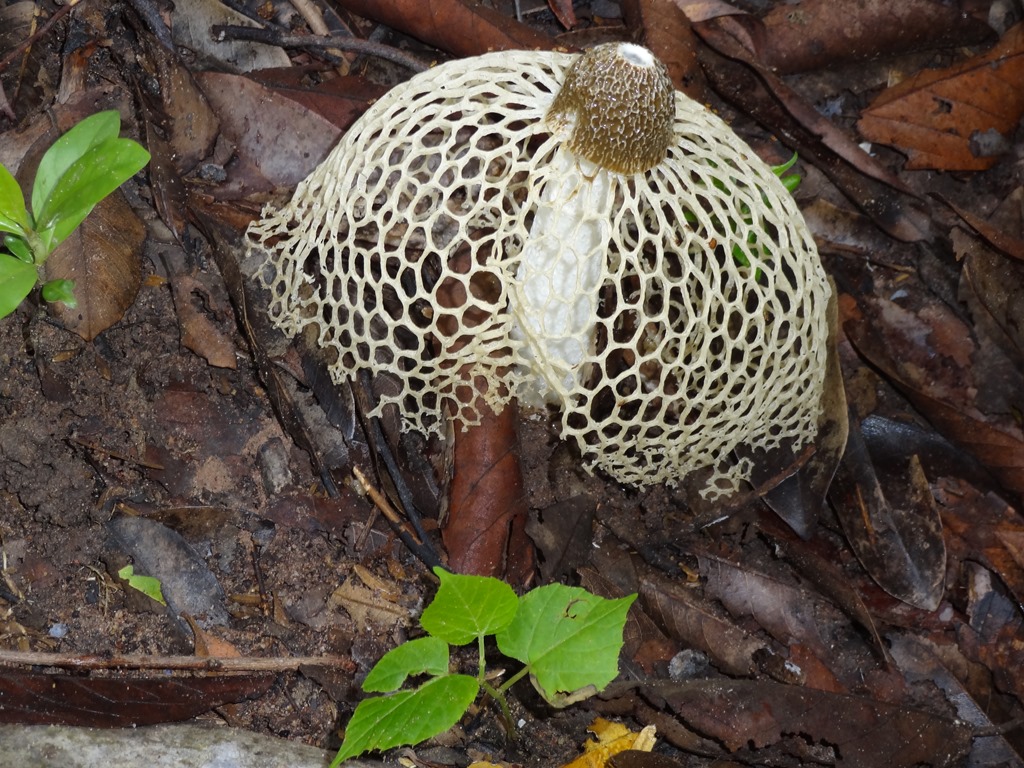
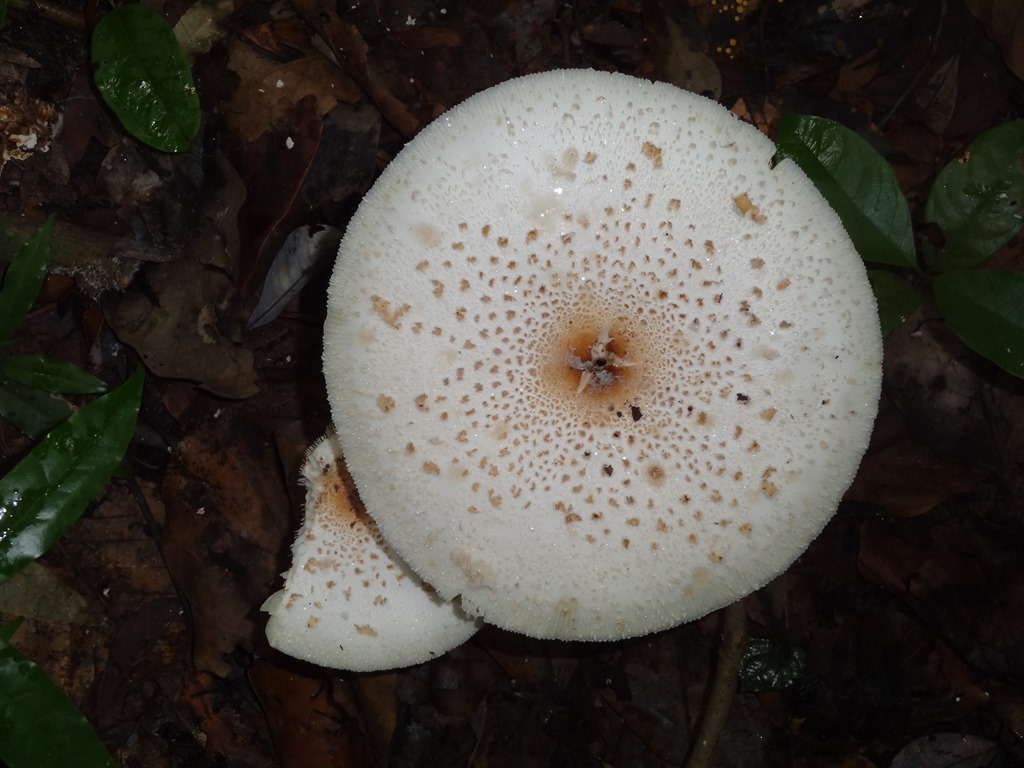
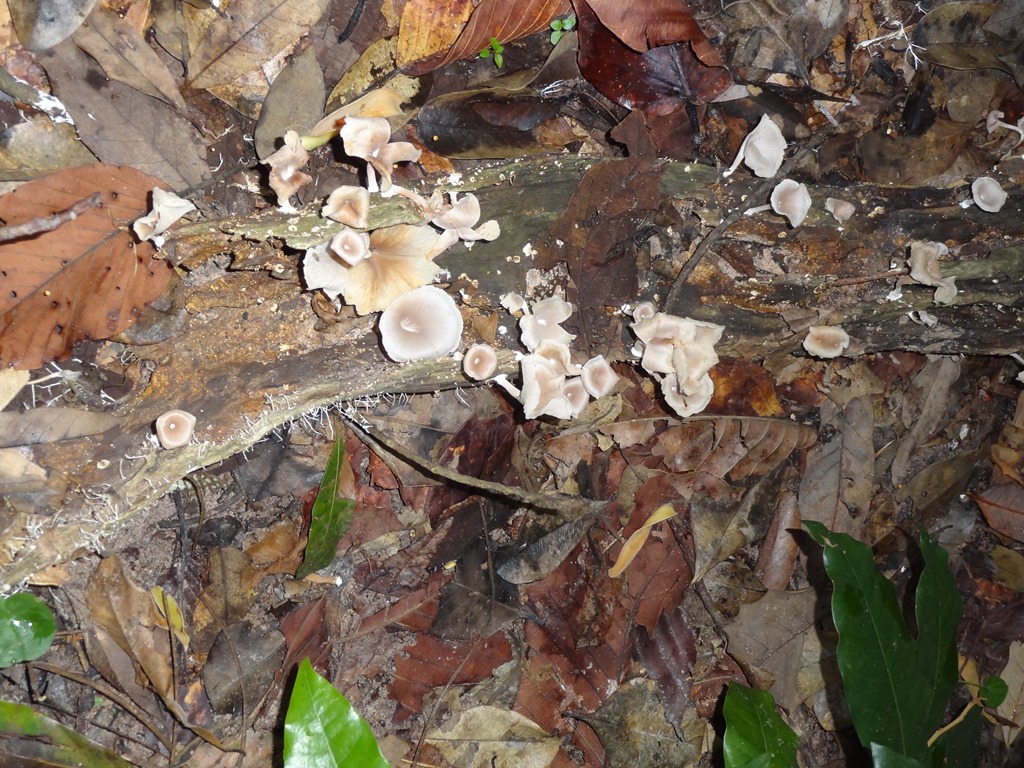
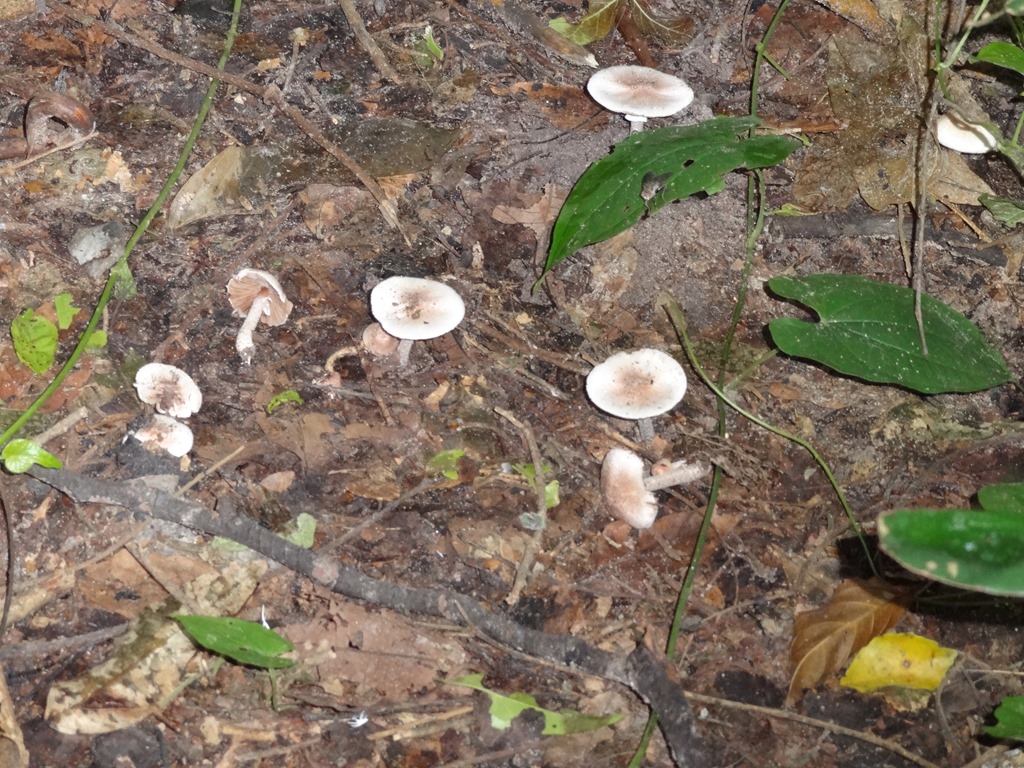
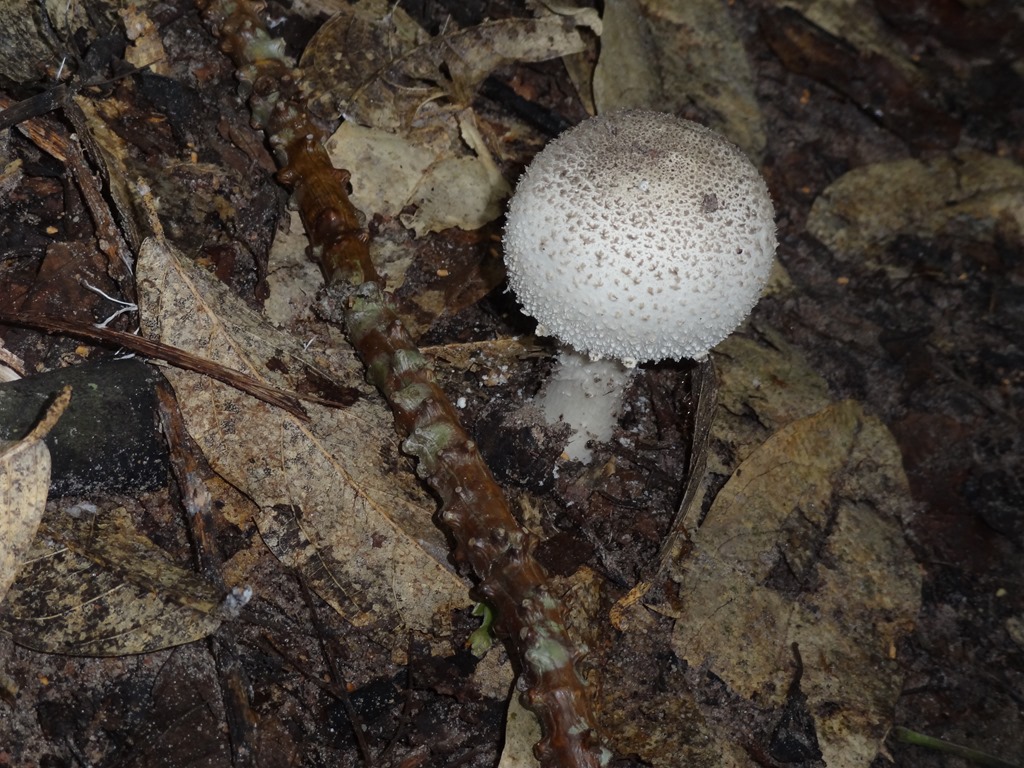
On the way from the first feeding place to this second one, we came across lots of mushrooms / toadstools. The damp morning after light rain during the night must have been ideal for them.
This one is a stink horn. At first we didn’t realise that the ‘netting’ was part of the fungus.
We have not yet identified this one, but it looks a lot like a chapatti!
These were growing on dead wood and so they are seen much more commonly:
And these are common, too, but pretty all the same:
And finally, we came across this solitary puff-ball type:
And so to breakfast. But none of these fungi were disturbed, in case you were wondering. It was toast and boiled eggs for us.
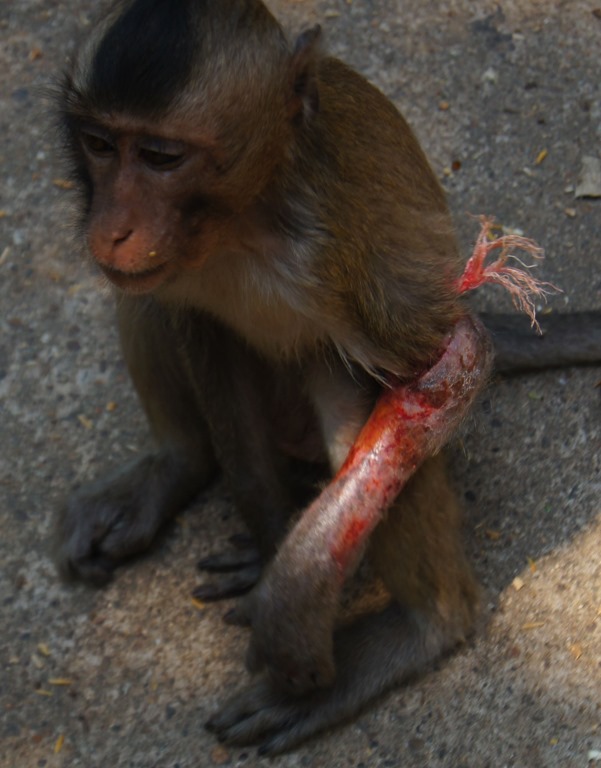
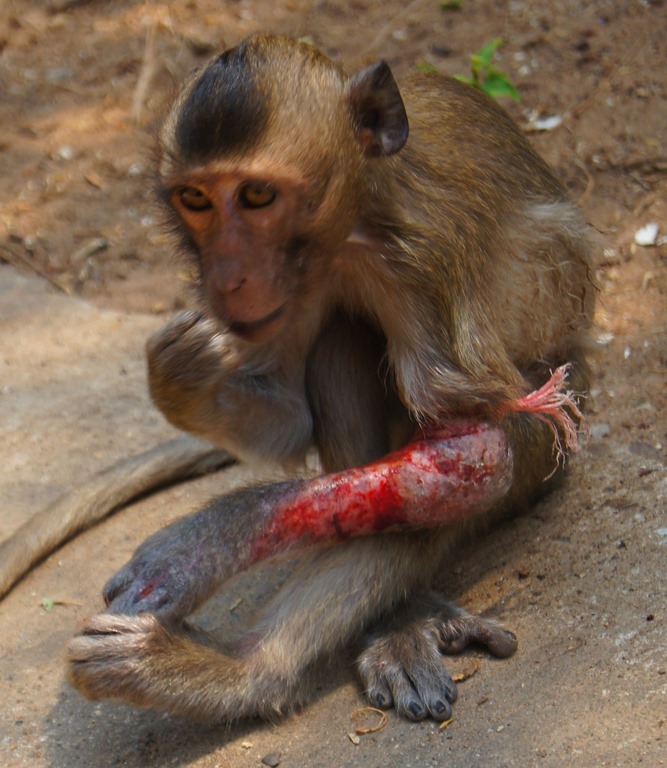
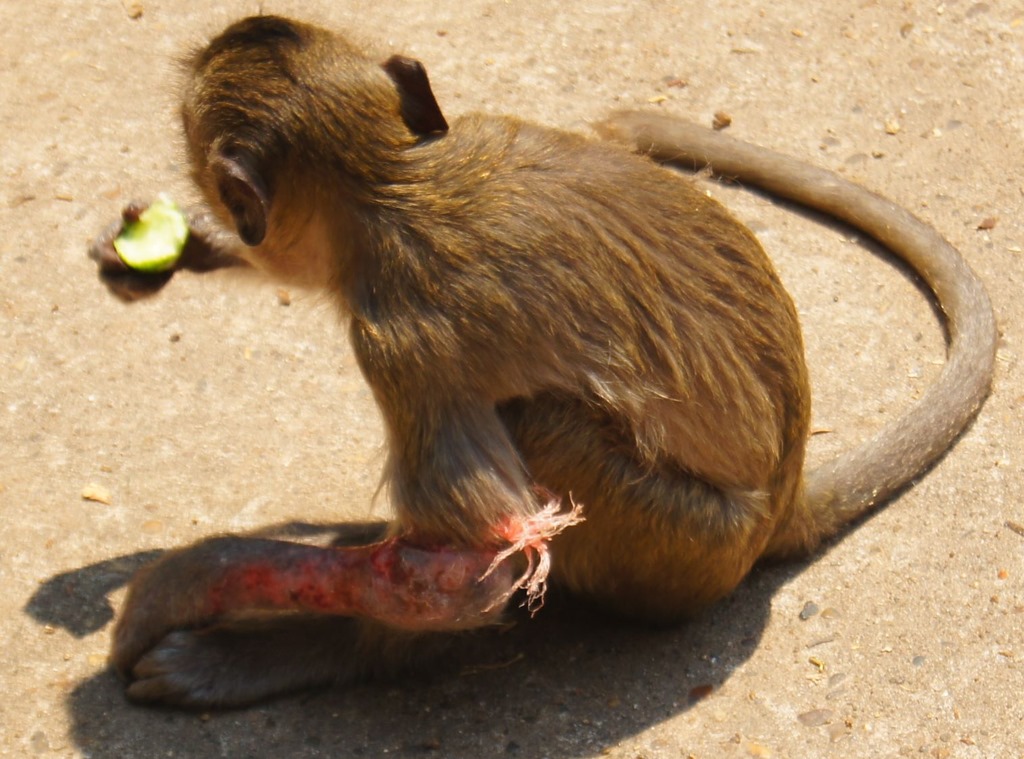
One of our juvenile long-tailed macaques gave us a lot of concern earlier this year. When we first saw him we feared for his life but he quickly showed amazing resilience and we reduced our pessimistic expectations to his losing a limb.
These photos were all taken in March in the couple of weeks after we first saw him. Be warned that they are somewhat distressing, though not nearly as distressing as it was to see him. But even so, our distress was tempered by admiration for his patient forbearance.
Our first thought was that the frayed strands at his elbow were exposed tendons, but the photographic evidence pointed fairly clearly to a rope of some kind. He spent a lot of time picking at it, trying to undo a knot, we thought. He also spent a lot of time licking the skin on his forearm.
The only explanation we could come up with was that somebody had attempted to capture him.
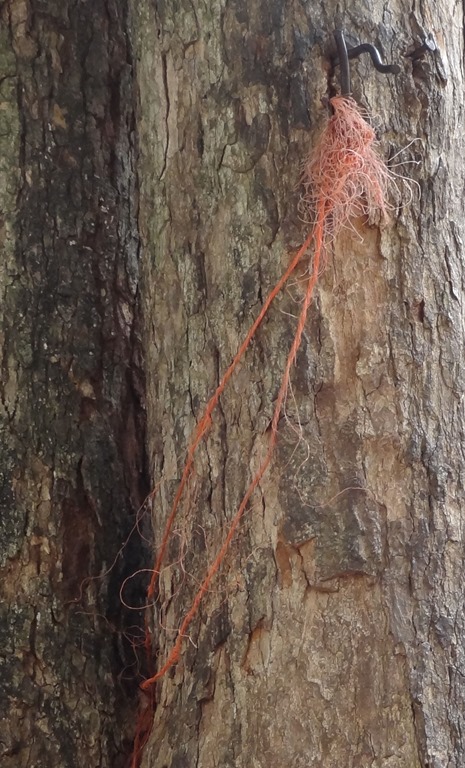
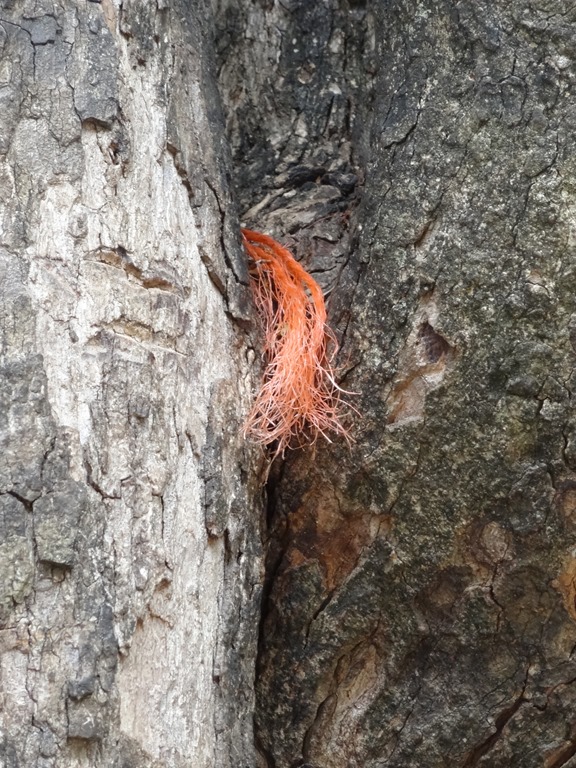
And then in mid-June or thereabouts I noticed this on a tree between the main gate and the Chao Poo shrine:
The long-tailed macaques in our forest love to play with everything they find and I have been amazed that there do not seem to have been any fatalities caused by pulling plastic bags over their head, or by strangulation as they wrap strips of cloth around their necks, and so on. But we are now convinced that this monkey’s injuries were caused by accidentally pulling a knot tight around his arm. So a rope tied to a spike in the tree and left after some ceremony or festival seems to have caused the agony this monkey must have suffered.
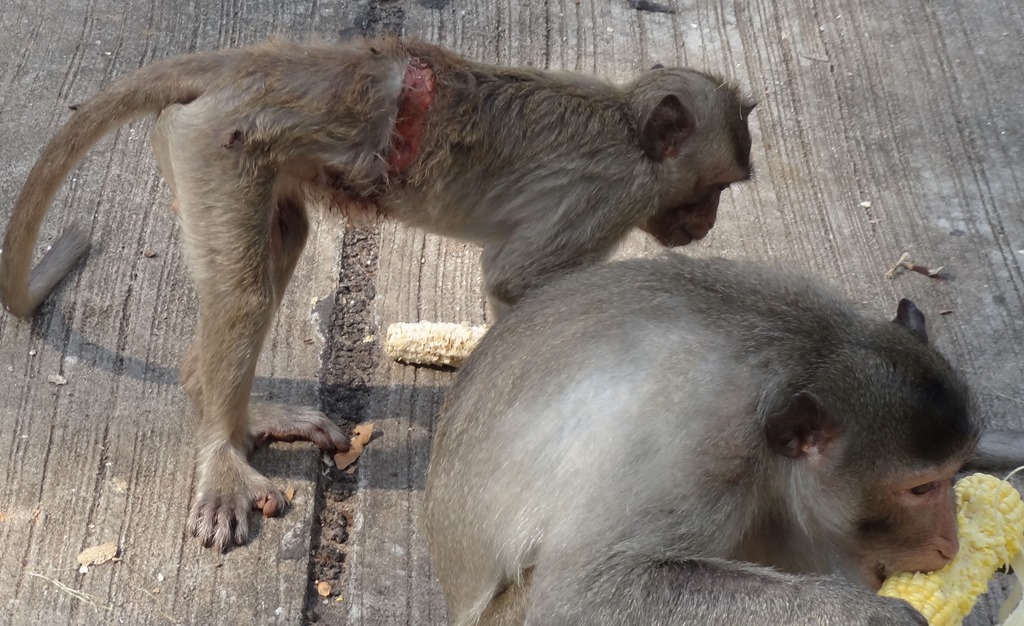
A very similar case was this monkey but here we had visual evidence (but not photographic, unfortunately, of what befell him.
Someone reported seeing a monkey struggling against a length of wire which was attached to a tree and in which he had become entangled. The monkey had escaped from the wire when I was taken to the spot, but a week or two later we found him and I took these photos.
In both cases the injuries were the result of long-tailed macaques renowned curiosity combined with unthinking (but not deliberately sadistic as we had at first suspected) carelessness on the part of humans.
The good news is that both these monkeys have survived though we see them infrequently. The first one still has his injured forearm although it has lost all functionality. As with most animals, long-tailed macaques are able to adapt remarkably well to the most severe injuries if they are lucky enough to survive them.
















![1150322_10201529701435257_506518819_n[1]](https://thaimonkeyforest.com/wp-content/uploads/2013/12/1150322_10201529701435257_506518819_n11.jpg "1150322_10201529701435257_506518819_n[1]")
































 Thai Monkey Forest